People who have undergone a mystical experience after consuming a psychedelic substance are more likely to engage in behaviors aimed at protecting or conserving the environment, according to new research published in the Journal of Humanistic Psychology.
Psychedelic drugs can cause drastic alterations in consciousness, and research has indicated that the substances can produce lasting changes in personality. The authors of the new research sought to better understand whether these changes had implications for people’s relationships with the natural world. They were particularly interested in whether the mystical qualities of a psychedelic experience played a role in influencing pro-environmental behaviors.
“Humans can be quite stubborn and rigid, so the idea that one experience can positively alter someone’s outlook, attitudes, and behavior, has always fascinated me,” said study author Kelly Paterniti of the Queen Mary University of London.
“I had heard several anecdotal stories of people who, following profound psychedelic experiences, had made remarkable changes to their lives. For example, one person quit a job in finance to become a fruit farmer, so he could be closer to nature. These kinds of stories really got me thinking. One of the most commonly reported sentiments following profound psychedelic experiences is this feeling of ‘oneness’ or ‘connectedness’ with nature and the universe.”
“So I became quite interested in whether this feeling equated to any tangible behavior. Did individuals’ behavior towards the environment improve following a psychedelic experience and did it improve in any tangible way that could be measured? That idea was worth exploring to me, particularly when you consider the current rate of environmental degradation.”
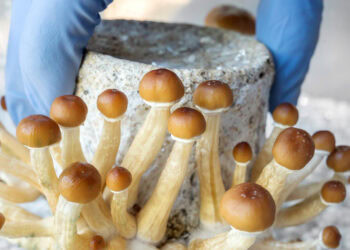
For their new study, Paterniti and her colleagues recruited participants from various psychedelic Facebook groups and nonpsychedelic-affiliated web forums. They ended up with a final sample of 240 adults who had previous experience with psychedelic drugs. Psilocybin-containing “magic” mushrooms were the most frequent psychedelic drug used by the participants, followed by lysergic acid diethylamide (LSD) and dimethyltryptamine (DMT).
At the beginning of the study, the participants were informed that they would be entered into a raffle for a $100 voucher. They were given the option of keeping or donating the voucher to an environmental organization in the event that they won.
The participants then completed the Mystical Experience Questionnaire, a validated assessment of mystical states occasioned by psychedelic use. The questionnaire asked participants to respond to several items assessing their most significant psychedelic experience. They also completed a personality assessment and a questionnaire that asked how often they engaged in a number of pro-environmental behaviors, such as waste reduction and reducing car use.
The researchers found that 134 participants met the criteria for a “complete” mystical state. These participants reported feeling a bond with something greater than themselves, an experience of oneness or unity with objects and/or persons around them, a sense of being outside time, a sense that the experience could not be described adequately in words, a feeling that the experience was profoundly sacred and holy, a feeling of peace and tranquility, and a sense that the psychedelic experience was more real than everyday reality.
High scores on the measure of mystical states did not appear to influence whether participants decided to donate their potential winnings in the raffle. But compared to those who didn’t met the criteria, those who experienced a “complete” mystical state tended to report engaging in more pro-environmental behaviors. They also tended to have higher levels of agreeableness and openness to experience.
“Initial findings suggest that people who report a profound psychedelic experience also report more pro-environmental behavior than those who had not had such an experience. This is quite an interesting finding that could have broader implications for how we view psychedelic experiences and our relationship to the environment,” Paterniti told PsyPost.
In particular, those who met the criteria for a complete mystical state tended to engage in more one-off domestic conservation actions and more eco-shopping and eating. “One-off domestic conservation actions involve isolated behavior aimed at conserving energy, such as purchasing an energy-efficient appliance,” the researchers explained. “Eco-shopping and eating encompass daily ethical considerations around consumerism, such as purchasing sustainable products and adopting a vegetarian diet. Both facets are primarily day-to-day actions, which function at an individual, rather than a global level.”
The findings are in line with a previous study, which was published in the Journal of Psychopharmacology in 2017.
That study found people who had used psychedelic drugs were more likely to report that they enjoyed spending time in nature and were more likely to see themselves as a part of nature. This heightened level of nature relatedness was not found among people who had consumed other types of recreational drugs like alcohol or stimulants. Those who felt their self-identity was embedded in nature, in turn, were more likely to report engaging in everyday pro-environmental behaviors, such as recycling and buying environmentally friendly products.
But Paterniti noted that the existing research has some limitations. In particular, it is unclear whether psychedelic substances cause people to become more environmentally friendly. It is possible, for instance, that people who are already environmentally friendly are more likely to be drawn to psychedelics.
“This is a correlational study, with small effect sizes, and further research is needed before we can get too excited about these findings,” Paterniti explained. “Overall, this area has such little existing research. I think it would be marvelous if more research was undertaken, particularly causational studies, which could help discern whether these differences are more than just correlational.”
The study, “The Relationship Between Psychedelic Use, Mystical Experiences, and Pro-Environmental Behaviors“, was authored by Kelly Paterniti, Stephen Bright, and Eyal Gringart.