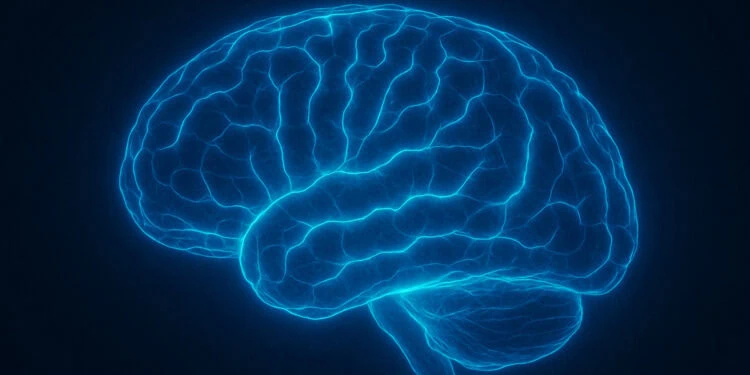

A neuroimaging study of adults treated for ADHD with psychostimulants reported that these individuals show increased surface complexity in their brains. They displayed higher gyrification in the right Rolandic operculum, left supplementary motor area, and several other regions compared to medication-naïve individuals with ADHD—not healthy controls, as was mistakenly stated. They also showed increased sulcal depth in the inferior and superior orbitofrontal regions. The paper was published in Psychiatry Research: Neuroimaging.
Attention-deficit/hyperactivity disorder, or ADHD, is a neurodevelopmental condition characterized by symptoms of inattention, hyperactivity, and impulsivity. It typically begins in childhood and is often identified when these behaviors begin to interfere with school or home life. In many individuals, ADHD persists into adulthood, affecting academic, occupational, and social functioning. People with ADHD may struggle with focusing, following instructions, staying organized, or sitting still.
The causes of ADHD are not fully understood, but brain imaging studies have revealed structural and functional differences in individuals with the condition, particularly in areas involved in attention, executive control, and emotional regulation. Symptoms and severity can vary widely, with some individuals showing predominantly inattentive symptoms, others showing hyperactive-impulsive behaviors, and many exhibiting a combination of both. Treatments often include behavioral therapy, educational support, and medication—particularly psychostimulants.
Study author Sherief Ghozy and his colleagues aimed to investigate whether long-term psychostimulant treatment leads to structural brain differences in adults with ADHD. They compared individuals who had taken ADHD medications—such as methylphenidate or amphetamines—with those who had never received such treatment. The authors hypothesized that any differences in brain morphology might reflect the effects of long-term stimulant use.
The research team used data from the UCLA Consortium for Neuropsychiatric Phenomics (OpenNeuro dataset ds000030), which includes structural magnetic resonance imaging (MRI) and clinical information. They analyzed data from 26 adults diagnosed with ADHD, 13 of whom had a history of stimulant treatment and 13 who were medication-naïve. All participants were between 23 and 40 years old and were free from other psychiatric or neurological conditions.
In addition to MRI data, the researchers used several standardized clinical measures: the Adult ADHD Clinical Diagnostic Scale (ACDS) to assess symptom severity and three questionnaires to measure impulsivity—Barratt Impulsiveness Scale (BIS), Dickman Impulsivity Inventory-II, and Eysenck’s Impulsivity Inventory.
Surface-based morphometric analysis revealed that individuals who had been treated with psychostimulants showed increased gyrification (cortical folding) in several brain regions, including the left supplementary motor area, left superior temporal gyrus, right Rolandic operculum, right fusiform gyrus, and left cuneus. Gyrification increases the brain’s surface area and is thought to be related to cognitive functioning.
These treated individuals also had greater sulcal depth in the right inferior orbitofrontal gyrus and in the left inferior and superior orbitofrontal regions. They additionally showed increased fractal dimension—a measure of cortical surface complexity—in the left superior orbitofrontal gyrus. These findings suggest that psychostimulant use may be associated with structural changes in brain regions involved in emotional regulation, reward, and decision-making.
Interestingly, the medication-naïve group exhibited significantly greater cortical thickness in the left superior frontal gyrus and bilateral supplementary motor areas. Cortical thickness is a different structural measure that may reflect neural development or preservation of brain tissue.
While the treated group exhibited significant differences in surface-based brain metrics, voxel-based analysis found no differences in overall gray matter volume between the two groups. Nor were there statistically significant differences in ADHD symptom severity, as measured by the ACDS.
On the impulsivity questionnaires, the only significant difference between groups was found on Eysenck’s Impulsivity Inventory: the medication-naïve group scored higher on venturesomeness, a trait associated with risk-taking. Among treated individuals, venturesomeness scores positively correlated with the gray matter volume of the right middle cingulate gyrus and negatively with the right superior occipital gyrus—suggesting a possible neuroanatomical basis for risk-related behaviors in ADHD.
“Our results suggest a limited treatment effect on ADHD scores and grey matter volume in adults. Despite significant surface-based metrics, these changes were not accompanied by improvements in the clinical scores,” the study authors concluded.
The study sheds light on neural structure specificities of individuals with ADHD treated with psychostimulants. However, it should be noted that the design of this study does not allow any causal inferences to be derived from the results. While the authors of this study interpret the observed differences as being the effect of psychostimulants, the design of the study itself does not exclude alternative explanations for the reported differences. Additionally, the number of participants whose data were analyzed in this study was small. Results on larger samples might differ.
The paper, “How psychostimulant treatment changes the brain morphometry in adults with ADHD: sMRI Comparison study to medication-naïve adults with ADHD,” was authored by Sherief Ghozy, Jennifer Meiza, Ahmed Morsy, Sadiq Naveed, Adam A. Dmytriw, Kevin Kallmasi, and Sara Morsy.