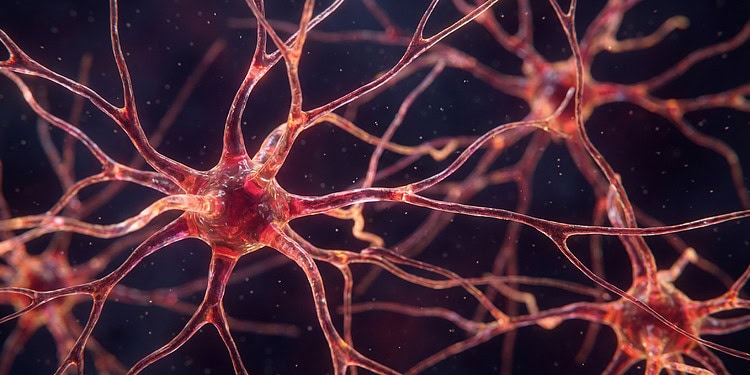

A study of common marmosets (a species of small New World monkey native to Brazil) found that giving ayahuasca before and during a period of isolation (meant to induce chronic social stress) might have prevented cortical atrophy caused by stress. While ayahuasca’s ability to preserve individual cell size (neuronal volume) was statistically significant, its effects on overall cortical volume and neuronal density could not be statistically confirmed as there were only two marmosets per experimental group. The paper was published in Translational Psychiatry.
Ayahuasca is a psychoactive plant brew traditionally used for spiritual and healing purposes by indigenous communities in the Amazon region. It is commonly prepared by combining the vine Banisteriopsis caapi with leaves of Psychotria viridis or another plant containing the psychedelic compound dimethyltryptamine, or DMT.
DMT primarily produces its effects by acting on serotonin receptors in the brain, especially the 5-HT2A receptor. When swallowed alone, DMT is normally broken down rapidly in the digestive system by monoamine oxidase enzymes. Harmala alkaloids in the vine inhibit monoamine oxidase, allowing DMT to remain active and produce effects lasting several hours. These effects typically include vivid visual experiences, altered perceptions of time and self, intense emotions, and feelings interpreted as spiritual insight.
Although preliminary research has examined possible applications of ayahuasca for treating depression, addiction, and related conditions, the evidence remains limited and ayahuasca is not an established substitute for standard medical or psychological treatment. Its legal status varies between countries, and its effects and risks depend on the brew’s composition, the user’s health, other substances taken, and the setting in which it is consumed.
Study author Luiz Roberto Fernandes Pereira and his colleagues note that various brain regions undergo changes in individuals suffering from depression. Among these regions, the somatosensory cortex stands out, as studies indicate that there is a 30% loss of dendritic spines (parts of neurons) in somatosensory neurons during depressive states, impairing signal processing in this brain region substantially. These authors wanted to explore whether ayahuasca, given its known effects on perception, might mitigate the adverse effects of depression on this region of the brain.
They conducted a study on 6 common marmosets (Callithrix jacchus), a small New World monkey native to northeastern Brazil. Study authors note that this particular species of primates is very convenient for scientific inquiry because their brains do not have gyri and convolutions, facilitating the examination of the areas of the brain of interest. They are also common, reproduce easily, and sexually mature by 1.5-2 years of age.
The marmosets were divided into three groups of 2 – the isolation group, the family group, and the ayahuasca group. They were between 7 and 9 months old at the start of the study and classified as juveniles. All 6 marmosets were housed with their families for the first 4 weeks of the study. After that, the family group remained with their families for the next 9 weeks.
The isolation and ayahuasca groups were separated from their families and kept in cages, completely isolated from other animals. The cages were enriched with natural tree branches, wooden swings, and a nest box to provide rest and comfort. The point of keeping them in isolation was to cause chronic stress and induce a psychophysiological condition akin to depression in humans.
The ayahuasca group received three doses of ayahuasca tea (1.67 mL/300g) by oral gavage (i.e., poured directly into their stomachs through a tube passed via the mouth and esophagus). They received the first ayahuasca dose three days before the start of the isolation. The two additional doses were given 25 and 50 days later. At the end of the experiment, the marmosets were euthanized using sodium thiopental and their tissues were examined by study authors.
Results showed that the marmosets in the isolation group suffered a significant reduction in neuronal volume (the volume of individual brain cells) compared to the family group, while the ayahuasca group had neuronal volume similar to the family group. This indicates that ayahuasca might have mitigated the adverse effects of isolation on neuronal volume.
“Although differences in neuronal density and cortical volume could not be statistically confirmed [because an overall sample size of two animals per group is too small to statistically evaluate whole-brain macrostructures], trends indicated potential preservation of cortical structure in the AG [the ayahuasca group]. These preliminary findings underscore ayahuasca’s potential to mitigate stress-induced cortical atrophy and highlight its influence on neural plasticity,” the study authors concluded.
The study contributes to the scientific understanding of potential therapeutic effects of ayahuasca. However, it should be noted that the study was conducted on marmosets, not on humans. While humans and marmosets share many physiological similarities, they are still very different species. Findings on humans might differ.
The paper, “Preliminary analysis of ayahuasca-induced anatomical alterations in the somatosensory cortex of juvenile non-human primates (Callithrix jacchus) subjected to chronic stress,” was authored by Luiz Roberto Fernandes Pereira, Wigínio Gabriel Lira-Bandeira, Andréa Silva Medeiros-Bandeira, Lílian Andrade Carlos de Mendonça, Fernando Vagner Lobo Ladd, Maria Lara Porpino de Meiroz Grilo, Jeferson Souza Cavalcante, Nicole Leite Galvão-Coelho, and Expedito Silva Nascimento Jr.