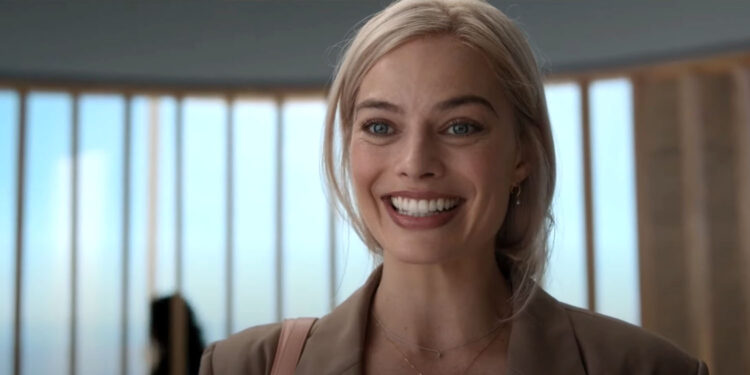

The “Barbie” movie, a cultural sensation upon its release in July 2023, may have done more than just entertain. According to a recent study published in JAMA Network Open, the film appears to have sparked a significant increase in public interest surrounding gynecologic care, all thanks to the film’s closing line, where Barbie says, “I’m here to see my gynecologist.”
Researchers found that in the week following the movie’s release, there was a marked rise in online searches for terms related to gynecologists, suggesting that the film might have played a role in boosting awareness about women’s health issues.
The researchers were intrigued by the potential impact of popular culture on health behavior. Given the massive reach of the “Barbie” movie, which sold 12.8 million tickets during its debut weekend alone, the researchers hypothesized that the film’s closing line, where Barbie declares her intent to see a gynecologist, might have encouraged viewers to learn more about gynecologic care.
“We’ve been interested in some of the important, yet often unrecognized, influences of various aspects of daily life on public health. Pop culture is one of them,” said study author Christopher Worsham, a critical care physician at Mass General Hospital, professor at Harvard Medical School, and the co-author of Random Acts of Medicine: The Hidden Forces That Sway Doctors, Impact Patients, and Shape Our Health and the Random Acts of Medicine newsletter.
“We’ve seen examples in the past of increased colonoscopies after Katie Couric broadcast hers live on TV, increases in BRCA gene mutation testing after Angelina Jolie wrote an op-ed in the New York Times, and concerning increases in youth suicide and online searches about methods of suicide after the show 13 Reasons Why was released on Netflix. The ‘Barbie’ movie was so popular last year, and it concluded with this unique joke where Barbie enthusiastically shows up for her gynecologist’s appointment, and we thought maybe this might increase interest in gynecologists.”
To explore the impact of “Barbie”’s closing line, the researchers conducted a cross-sectional study analyzing online search trends in the United States. They focused on a list of 34 search queries that were related to gynecologic care, women’s health, or medical care in general.
These queries were divided into categories such as “gynecologist,” “gynecologist definition,” “gynecologist appointment,” “women’s health,” “doctor,” and “doctor’s appointment.” This categorization allowed the researchers to pinpoint any changes specifically related to gynecology while also checking for broader trends in health-related searches that could serve as control data.
The researchers used data from Google Trends and Glimpse to track weekly online search trends from a year before the movie’s release up to three months afterward. This timeline helped them establish a baseline of search activity before the movie’s influence and then compare it to search behavior after the film was released on July 21, 2023. By using statistical methods, including autoregressive integrated moving average (ARIMA) models, they predicted what search volumes should have been without the movie’s influence and then compared these predictions to the actual observed search volumes.
In the week following the release of the “Barbie” movie, there was a 51.3% increase in searches for terms related to “gynecologist” and a 154.1% increase in searches for “gynecologist definition.” These spikes were statistically significant and pointed to a sudden surge of interest in understanding what a gynecologist is and what they do.
“We were surprised to find that there was a measurable effect of a single joke in a 2 hour long comedy movie,” Worsham told PsyPost. “When we did some research into the film, we read that one of director Greta Gerwig’s goals with the final line of the movie was to make it clear that gynecological care is normal, and so it was fun that we were able to find concrete evidence that it was effective in some way.”
Interestingly, while there was a clear increase in informational searches, there was no corresponding rise in searches for “gynecologist appointment.” This suggests that while people were curious or perhaps more informed about gynecology, this interest did not immediately translate into actions like scheduling appointments.
Furthermore, the study found no significant changes in search terms related to broader health interests, such as “doctor” or “doctor’s appointment.” This lack of change in unrelated health searches reinforces the idea that the spike in gynecologist-related searches was specifically tied to the “Barbie” movie.
“We didn’t see spikes in searches for gynecological care, gynecologist appointments, women’s health care, or medical care more broadly,” Worsham said. “Taken together, it was evidence that a single joke in a comedy movie could have a significant impact on the public’s knowledge of health care — presumably, many of these searches were by people who didn’t know what a gynecologist was or did — even if we didn’t see it immediately translate into searches for gynecological care.”
While the findings of this study are intriguing, there are important limitations to consider. One of the primary limitations is the reliance on search trends as a measure of public interest and behavior.
“One thing we don’t know is who was making these searches,” Worsham noted. “When we submitted the paper for peer review, one of the reviewers asked something along the lines of ‘How do we know it’s not a bunch of teenage boys who don’t know what a gynecologist is?’ Our response to that was, well, we don’t know—and it may well be a bunch of teenage boys making these searches. But wouldn’t it be great if thousands of teenage boys now knew what a gynecologist was, and that women have to see them for their unique health care needs?”
Looking ahead, the researchers expressed interest in continuing to study the broader impact of popular culture on public health.
“We’re always looking to uncover some of the hidden, yet important, aspects of our broader public health and health care systems,” Worsham said. “Like it or not, popular culture is part of our public health system, and this study adds to existing ones that make this clear. The unanswered questions moving forward are about the ways can we take advantage of this in ways that make people healthier.”
“I wanted to note that the lead author of this study, Eva Sénéchal, is an PhD student at McGill who worked on this as a side project!” he added.
The study, “Online Search Interest in Gynecologists After the Release of the Film Barbie,” was authored by Eva Senechal, Charles F. Bray, Christopher M. Worsham, and Anupam B. Jena.