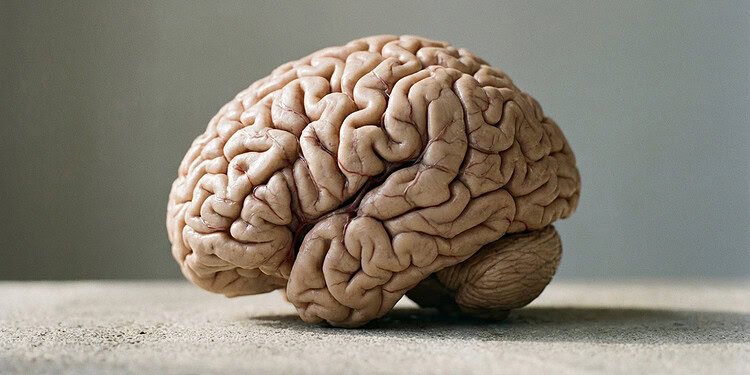

As children grow into adolescence, corresponding regions on the left and right sides of their brain function less identically, reflecting a transition toward specialized mental labor. A recent study observed that individuals with superior intelligence scores experience this functional division at an accelerated rate. These findings were published in the journal *Developmental Cognitive Neuroscience*.
The human brain features two distinct halves. These left and right hemispheres frequently communicate to manage everything from basic sensory input to high-level reasoning. Historically, discussions of brain organization have focused on spatial lateralization. This concept suggests that certain cognitive domains, like language processing or spatial awareness, rely heavily on one side of the brain.
Both hemispheres actually cooperate constantly to support cognitive demands. To understand this cooperation, neuroscientists measure functional homotopy. This concept describes the similarity in brain activity between mirroring regions on the left and right hemispheres. High functional homotopy means both sides of the brain are performing identical or highly synchronized roles. Lower functional homotopy indicates that the hemispheres are differentiating their duties to operate somewhat independently.
Researchers Li-Zhen Chen and Xi-Nian Zuo initiated this investigation to understand how this interhemispheric coordination evolves as children mature. Chen and Zuo are cognitive neuroscience researchers based at Beijing Normal University. They wanted to track the maturation of brain networks from early childhood into adolescence to see how physical brain organization is linked to cognitive performance.
During early childhood, neural networks are usually broadly distributed. Young brains maintain high levels of synchronized communication across the two hemispheres. Over time, the brain develops greater functional specialization. This developmental shift allows the mind to transition from generalized networks to specialized configurations capable of supporting advanced reasoning.
To observe these changes, Chen and Zuo analyzed longitudinal data and intelligence test scores. The cohort included 178 participants between the ages of six and nearly seventeen. The researchers obtained multiple resting-state functional magnetic resonance imaging scans from the participants over several years. This scanning technique allowed the researchers to observe spontaneous brain activity while the participants rested in the scanner with their eyes open.
Measuring this communication involves evaluating blood oxygen changes in the brain over time. The scanning technology tracks how oxygenated blood moves to active neurons. When the oxygenation patterns match perfectly between mirroring brain regions across the left and right halves, it indicates high synchronization. A drop in this measurement designates that the corresponding regions have developed distinct, localized firing patterns.
Alongside the brain scans, participants completed standard cognitive assessments to measure their intelligence quotients. The researchers divided the participants by age, grouping them into children under twelve and adolescents twelve and older. They also categorized the participants into average, high, and superior intelligence groups based on their behavioral testing outcomes.
To quantify the changes in the brain, the team used a mathematical metric to evaluate the whole-brain functional connectivity profiles. This measurement allowed them to map how similarly the two sides of the brain communicated with the rest of the nervous system. By comparing these maps across ages and intelligence levels, they could precisely trace the rate of hemispheric specialization.
The analysis revealed an age-related decrease in matching left-right brain activity. Younger children showcased higher similarity between their brain hemispheres. Older adolescents demonstrated lower global similarity, displaying a more adult-like pattern of hemispheric independence.
Brain development follows a specific physical path as a person ages, mapped from core sensorimotor regions up to advanced cognitive regions. Areas that handle fundamental sensory information, such as vision and touch, mature early in life. Regions that process abstract ideas and integrate multiple types of sensory information mature much later.
The most pronounced decline in hemispheric harmony occurred within these higher-order association networks. These neural networks manage advanced tasks related to memory, attention, and executive control. Primary regions responsible for basic sensory processing exhibited weaker age-related changes across the general sample. As adolescents approach adulthood, their brain systems essentially delegate different pieces of complex cognitive tasks to separate hemispheres.
During early childhood, interconnected neural systems that handle internal thought processes behave similarly on both sides of the brain. When older adolescents use these same networks to recall memories or imagine future events, the left and right sides operate differently. The left side handles the language elements of a concept, while the right side manages the social or emotional elements.
When comparing the neuroimaging data to intelligence scores, distinct developmental patterns emerged. In the childhood group, the correlation between brain similarity and intelligence was relatively weak. By adolescence, lower synchronized brain activity was linked to higher intelligence scores.
Tracking the participants over time revealed divergent developmental trajectories among the intelligence groups. Children in the superior intelligence group experienced the fastest overall rate of decline in hemispheric similarity. By age seventeen, this group exhibited the lowest levels of symmetric brain activity compared to their peers.
The superior intelligence group also displayed neural changes in different physical locations. While the average and high intelligence groups only showed notable specialization in advanced association networks, the superior group showed these changes uniformly across the entire brain. Even their primary sensory and visual networks developed high levels of hemispheric independence.
Modern theories of neurodevelopment suggest that highly intelligent individuals integrate brain networks more efficiently. An accelerated drop in synchronized activity likely reflects an earlier, more advanced state of hemispheric specialization. By dividing labor efficiently across the left and right halves of the brain, individuals may use fewer physical resources to complete complex mental operations.
The study design presents certain limitations that researchers intend to address in future analyses. The calculated direct correlation between intelligence scores and brain symmetry was not statistically significant at every data point, reflecting the natural variability in human development. The researchers also focused exclusively on the outer layer of the brain, known as the cerebral cortex.
Some integral communication hubs reside deeper within the subcortical regions of the brain. Structures like the thalamus relay sensory information and participate in intellectual processing, but this study did not evaluate their developmental patterns. Exploring these regions could expand similar mapping techniques to include the entire central nervous system.
The observed sample size also restricted the ability to analyze biological sex differences in brain development. While the researchers controlled for broad sex differences mathematically, a larger group of participants is required to map out specialized developmental pathways for boys and girls. Tracking these differences could eventually help medical professionals understand atypical brain development patterns in learning disabilities and cognitive disorders.
The study, “Intellectual ability and cortical homotopy development in children and adolescents,” was authored by Li-Zhen Chen and Xi-Nian Zuo.