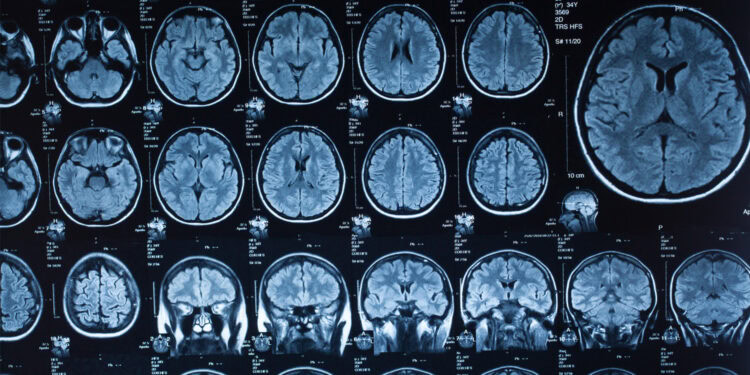

Childhood trauma can leave lasting marks on human development, and a new study links these early adverse experiences to higher rates of procrastination in young adults. By scanning the brains of over a thousand participants, researchers mapped how trauma-related changes in neural networks might elevate anxiety and lower self-control, paving the way for chronic delay. The research was published in the journal NeuroImage.
Procrastination is often dismissed as simple laziness or poor time management. Psychologists generally view chronic procrastination as a failure of self-control. When faced with a stressful or unpleasant task, people may delay doing it as a way to find temporary relief from negative feelings. This concept is known as the short-term emotion repair theory. While putting off a difficult project provides immediate comfort, it interferes with long-term goals.
Experiencing abuse or neglect in childhood can disrupt the development of systems in the brain that handle emotion and cognitive control. This early adversity can make individuals highly sensitive to negative emotions, elevating their baseline stress. It can also reduce their ability to suppress immediate impulses in favor of future rewards.
Researchers at Southwest University in China wanted to see if the neurobiological changes associated with childhood trauma might explain the tendency to put things off. The study was led by psychologist Tingyong Feng along with Luo Xu and colleagues. They hypothesized that early traumatic events alter large-scale brain networks. These structural and functional changes would subsequently raise a person’s baseline anxiety and degrade their ability to maintain self-control.
To test this framework, the research team recruited undergraduate students with no history of psychiatric disorders, dividing them into a primary discovery group of 760 participants and a validation group of 429 participants. Every individual completed a series of standardized questionnaires. These surveys assessed their history of physical and emotional abuse or neglect, general tendency to procrastinate, trait anxiety, and baseline self-control. Trait anxiety refers to a person’s general, everyday level of stress and worry, rather than temporary anxiety tied to a specific passing event.
The participants then underwent functional magnetic resonance imaging. This brain scanning technique measures blood flow to track brain activity while a person is resting. By observing which areas of the brain activate in sync, researchers can map out functional networks. The team focused on the strength of the connections between 268 different brain regions, looking for patterns that corresponded with the behavioral survey scores.
In the first part of their analysis using the behavioral survey data, the researchers found that higher scores on the childhood trauma questionnaire predicted higher levels of procrastination. When they introduced the other survey variables into their statistical models, they found that trait anxiety and self-control acted as mediators. The data indicated that childhood trauma was associated with higher trait anxiety and lower self-control. These two emotional and cognitive states in turn predicted the urge to procrastinate.
Next, the researchers used a statistical technique to analyze the brain scans from the participants in the discovery group. They searched the entire brain to find specific patterns of neural connectivity that could predict the severity of a participant’s childhood trauma. Their models successfully identified a set of brain connections that correlated with the initial survey scores. To ensure their computer model was reliable, they tested it on the brain scans of the students in the validation group. The model accurately predicted trauma scores in this independent group based solely on their resting neural connectivity.
The neural connections identified by the model primarily involved several major brain networks. These included the frontoparietal network, which is responsible for goal-directed behavior, and the salience network, which helps the brain detect and react to emotional stimuli. The researchers observed weaker connectivity in areas related to top-down cognitive control, such as the prefrontal cortex. At the same time, they saw stronger connections between visual processing areas and the cerebellum. These latter regions are highly active when processing emotional cues and learning fear responses.
The researchers noted that these brain patterns align with a recognized framework called the triple-network model of procrastination. In this model, chronic delay arises from an imbalance between brain networks that manage self-control, emotion regulation, and future planning. The weaker connectivity in the prefrontal cortex suggests a diminished capacity to stay focused on long-term goals. The stronger connections between the salience network and visual areas suggest a hyperactive threat-detection system. Under these conditions, visual inputs are more readily interpreted as threatening or stressful, which elevates anxiety.
The researchers then merged the neurological data with the behavioral data. They found that the exact brain network patterns associated with childhood trauma predicted higher procrastination scores. Just as with the survey data, this relationship was bridged by the participants’ levels of trait anxiety and self-control. The altered brain connectivity predicted higher anxiety and lower self-control, which ultimately mapped onto higher procrastination.
The study relies on a cross-sectional design, meaning all data was collected at a single point in time. This approach prevents researchers from proving that childhood trauma directly causes brain changes or procrastination later in life. The researchers noted that longitudinal studies, which track the same individuals over many years, are required to confirm the direction of these effects.
The observed associations between the brain networks and behavioral traits were also relatively modest in size. Modest effects are common in brain imaging research, partly due to the limits of current scanning technology and the natural variations in how human brains are wired. The reliance on self-reported questionnaires for assessing childhood trauma can also introduce memory biases or measurement errors.
The research team recommended that future studies test more diverse populations, as the current data came exclusively from healthy college students. Including physiological markers and specific behavioral tests could also refine our understanding of how early life stress changes the brain.
The study, “Early Wounds, Delayed Consequences: Brain-Behavior Modeling Reveals Neural Pathways Linking Childhood Trauma to Procrastination,” was authored by Luo Xu, Yao Yin, Xueke Wang, Ting Xu, Xi Zhang, and Tingyong Feng.