People with higher levels of social anxiety are more likely to remember faces they saw while making mistakes, and this may be due to how their brains respond to errors in the moment. A new study published in Cognitive, Affective, & Behavioral Neuroscience suggests that social anxiety is linked to enhanced neural activity in the brain’s monitoring system during errors, which in turn predicts stronger memory for those moments. This finding could help explain why social anxiety persists over time and may eventually guide more targeted treatments.
The authors of the study sought to better understand how social anxiety affects the way people process and remember social situations. According to psychological models, individuals with social anxiety tend to focus more on their own mistakes and perceived flaws in social settings. This heightened self-focus can lead to biased memories, where negative moments are more likely to be remembered than positive or neutral ones. These memory biases can reinforce anxious beliefs and behaviors, creating a cycle that maintains or worsens social anxiety over time.
While previous research has shown that people with social anxiety exhibit stronger brain responses to errors, it remained unclear whether those neural responses had any lasting impact—such as changing how people remember what happened during social mistakes. The goal of the new study was to test whether brain activity related to error monitoring could help explain the memory biases seen in socially anxious individuals.
“My interest started when I was doing clinical rotations as an undergraduate. There, I saw that the usual treatments didn’t always work well for complicated brain problems. This made me want to use brain imaging to understand the brain better,” said study author Kianoosh Hosseini Ghalebin, a cognitive neuroscience PhD candidate at Florida International University.
“My path led me to pursue a PhD in Cognitive Neuroscience at Florida International University (FIU), working with Dr. George Buzzell and the Neural Dynamics of Control Laboratory, within the Center for Children and Families (CCF).”
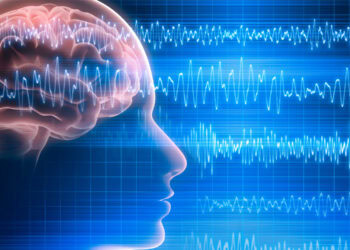
“As I got further into my PhD work, I became really interested in neural oscillations, which are like the brain’s electrical rhythms,” Hosseini explained. “I liked them because they offer a direct way to see what the brain is doing while it’s happening. These rhythms don’t just reflect ongoing brain activity; they can also be manipulated externally. For instance, stimulating specific brain regions at particular frequencies can alter cognitive functions and related behaviors. This ability to both measure and change brain activity makes these rhythms a powerful tool for understanding why complex conditions arise in the brain.”
“Building on this, I became especially interested in social anxiety, given its high prevalence and the persistent challenge it poses for treatment. Cognitive models suggest that biased thinking and memory—especially focusing on and remembering mistakes—are key reasons why social anxiety lasts. Meanwhile, brain research has found different brain activity in people with social anxiety, like their brain being extra sensitive to mistakes (i.e., enhanced error monitoring) in a part called the mediofrontal cortex.”
“Working together with Drs. Buzzell, Pettit, and Mattfeld at FIU/CCF, we saw a good opportunity to connect these two ideas—enhanced error monitoring and biased thinking and memory in individuals with social anxiety—by using neural oscillations, particularly the theta rhythms recorded over the mediofrontal cortex, as a way to observe in real time the brain activity that might be causing these cognitive biases.”
“Our research is based on the idea that this enhanced error monitoring, reflected in these oscillations, could lead to people remembering negative social events more strongly and in a biased way,” Hosseini continued. “This mechanism might help explain why social anxiety is so persistent. Ultimately, identifying such concrete neural mechanisms could pave the way for more targeted and effective interventions, moving beyond symptom descriptions to directly address the underlying brain processes that maintain social anxiety.”
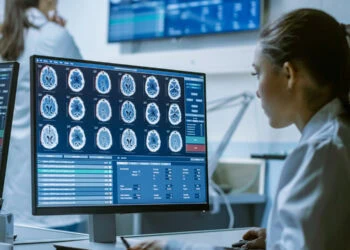
To investigate this, the researchers developed a novel experimental task called the Face-Flanker task. Participants completed this task while their brain activity was recorded using electroencephalography (EEG). The task was designed to simulate a socially evaluative situation: participants were told their performance would be observed and judged, and each trial featured a unique face image in the background.
During each trial, participants saw an array of five arrows and had to respond to the direction of the center arrow while ignoring the others. The background included a face from a diverse database of neutral expressions. The task was structured to induce mistakes, especially on trials where the surrounding arrows pointed in the opposite direction from the center arrow.
After completing the task, participants were given an unexpected memory test. They were shown a mix of faces—some they had seen during the task and some they had not—and asked to identify which ones were familiar. This allowed the researchers to assess whether participants were more likely to remember faces that had appeared during error trials compared to correct ones.
Fifty-four adults initially took part in the study, but after excluding those who made too few mistakes or had unusable data, the final behavioral analysis included 32 participants. Of these, 24 participants had EEG recordings suitable for analyzing brain activity. Participants also completed a self-report questionnaire measuring social anxiety symptoms.
The researchers focused on a specific type of brain activity known as theta oscillations, particularly those originating in the medial frontal cortex—a region known to play a key role in monitoring errors. They analyzed both the power (strength) and synchrony (timing consistency) of these brain signals. They also examined how strongly the medial frontal cortex synchronized with sensory areas of the brain, especially those involved in processing visual information.
The results revealed a consistent pattern. People with higher levels of social anxiety showed stronger synchronization of theta waves in the medial frontal cortex and between that region and visual sensory areas during errors. This enhanced brain synchrony was not present during correct responses, suggesting it was specific to error processing.
“A couple of our findings were particularly interesting,” Hosseini told PsyPost. “What stood out was the specific nature of the brain activity linked to social anxiety symptoms. Instead of just seeing a general increase in the strength (power) of error-related theta brain waves, we found that higher social anxiety was specifically associated with the synchrony—the coordinated timing—of these waves.
“This was evident both within the mediofrontal cortex (MFC), a key region for error processing, and notably, in the communication between the MFC and sensory (visual) processing areas. This finding provides a more nuanced picture than simply concluding that social anxiety involves generally increased error monitoring. It suggests a specific mechanism involving potentially altered communication between error detection and sensory processing regions.”
Importantly, social anxiety symptoms were also associated with a memory bias: individuals with higher anxiety were more likely to recognize faces that had appeared during their mistakes. This was true even though, on average, the group as a whole did not show a significant memory difference between error and correct trials. The memory bias was more pronounced in those whose brains showed the strongest synchronization between the frontal and sensory regions during mistakes. In other words, the more their brain circuits responded to errors, the more likely they were to remember the faces they saw during those moments.
This finding provides a potential explanation for why social anxiety persists. If people with social anxiety are more likely to remember their social errors—and this is linked to how their brains respond to mistakes—it could lead to a distorted self-image over time. They may replay negative social memories more often, fueling worry and avoidance in future interactions.
“Our research highlights two key findings regarding individuals with higher social anxiety symptoms,” Hosseini said. “First, they demonstrate heightened brain activity when registering their own mistakes, reflecting more intensive error monitoring. Second, they show an enhanced ability to recall contextual details that were present when those errors occurred, even without actively trying to memorize them. This combination points toward a potential brain mechanism contributing to social anxiety: the act of monitoring errors more intensely may inadvertently strengthen the memory trace for associated information present during those moments.”
“Building on this, our more recent (unpublished) research adds a layer of specificity: this memory bias appears selective for social information. We found that higher social anxiety predicted better memory specifically for faces present during errors, but showed no such relationship for non-social objects present during errors. This distinction is significant; it implies the underlying mechanism isn’t simply a general memory boost around errors for anxious individuals, but is specifically tuned to enhance the encoding of social cues during mistakes. This provides a more direct potential pathway linking error processing biases to the maintenance of social anxiety.”
The researchers emphasized that their task allowed them to isolate the effect of error-related brain activity on memory formation in a way that past studies could not. Because each trial used a unique face and was followed by a surprise memory test, the researchers could more precisely link neural activity at the time of the error to later memory performance.
However, the study has some limitations. It included a relatively small number of participants, and most were young adults, predominantly female and Hispanic, from a university population. These factors limit how broadly the findings can be generalized. Also, while the results show a link between brain responses to errors and memory biases, they cannot prove causation.
“This was a proof-of-concept study with a relatively small sample size, primarily undergraduate students, so the findings need replication in larger, more diverse groups,” Hosseini noted. “Also, our study design is correlational, meaning we can show associations between error monitoring, incidental memory bias, and social anxiety, but we cannot definitively prove causation—such as that social anxiety results in enhanced error monitoring, which then causes a memory bias that maintains social anxiety. Longitudinal studies and methods that can probe causality are needed to track these factors over time and better understand the causal relationships.”
Future research could explore how these brain-based memory biases interact with other aspects of social anxiety, such as rumination after social events. It is also important to investigate whether similar patterns emerge with different types of memory, like intentional recall or emotional memory, and whether this brain activity is specific to social stimuli or occurs with other types of mistakes.
The researchers hope that identifying how brain signals shape memory in social anxiety could help inform new interventions. For instance, non-invasive brain stimulation might be used to modify the neural circuits involved in error processing, potentially reducing the lasting impact of social mistakes on memory and self-perception.
“Our ultimate goal is to identify concrete neural mechanisms involved in social anxiety, such as the oscillatory dynamics linking error monitoring and memory bias,” Hosseini said. “Determining these mechanisms is important because it could eventually inform the development of targeted and effective treatments, potentially through causal interventions like non-invasive brain stimulation aimed at modulating the specific neural circuits identified.”
“Building on our current findings, we plan to use longitudinal studies to determine if this link between error monitoring and memory bias prospectively predicts changes in social anxiety symptoms over time. Furthermore, we hope to investigate how these error- and memory-related processes interact with other key features of social anxiety, such as post-event rumination, to gain a more comprehensive understanding of the disorder’s neurocognitive underpinnings.”
“Finally, I would like to acknowledge the invaluable support from the Center for Children and Families (CCF) at Florida International University and express my sincere gratitude to my co-authors, Jeremy W. Pettit, Fabian A. Soto, Aaron T. Mattfeld, and George A. Buzzell, for their essential contributions to this research,” Hosseini added.
The study, “Toward a mechanistic understanding of the role of error monitoring and memory in social anxiety,” was authored by Kianoosh Hosseini, Jeremy W. Pettit, Fabian A. Soto, Aaron T. Mattfeld, and George A. Buzzell.