Subscribe
The latest psychology and neuroscience discoveries.
My Account
  • Mental Health
  • Social Psychology
  • Cognitive Science
  • Neuroscience
  • About
No Result
View All Result
PsyPost
PsyPost
No Result
View All Result
Home Exclusive Mental Health

Brain scans show healthy individuals on the psychopathy spectrum have reduced empathy

by Zachary Durisko
June 14, 2015
in Mental Health
Photo credit: melisslissliss (Creative Commons)

Photo credit: melisslissliss (Creative Commons)

Share on TwitterShare on Facebook

Psychopathy exists on a continuum and new research shows that even healthy individuals with some psychopathic traits have reduced empathy.

A research team led by Ana Seara-Cardoso of University College London published a study in March in the journal Cognitive, Affective, & Behavioral Neuroscience showing that healthy men with more psychopathic tendencies also have altered activity in the brain regions typically required for empathy.

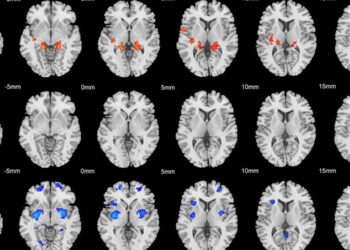
Previous research has shown that observing others in distress evokes empathy and activation in associated brain regions (the anterior insula, inferior frontal gyrus, and the border between the mid- and anterior cingulate cortex). Individuals with clinical levels of psychopathy do not experience such empathy and have reduced or blunted activation in these brain regions.

It is thought that this lack of empathic response may contribute to psychopaths’ inappropriate or immoral behavior. Interestingly, recent work has suggested that psychopathic traits may exist on a continuum throughout the general population, with only extreme psychopaths receiving a clinical diagnosis. It has even been proposed that such subclinical psychopaths may be more likely to rise to positions of power in corporate or political hierarchies.

This new study directly tested the notion that the patterns of brain region activity in response to others’ pain exist on the continuum of psychopathic traits in the general population.

Researchers showed images of hands and feet in painful or non-painful situations to 46 healthy adult men and assessed brain activation in the regions known to underlie empathy. Although subclinical, individuals that scored higher on a standardized test of psychopathy showed altered empathic activation.

Interestingly, just as in clinical psychopaths, two different dimensions of psychopathy interacted in opposing directions. Although the two dimensions of psychopathy correlate strongly, individuals with higher levels of affective-interpersonal traits (i.e., “manipulative” psychopathy) exhibited a reduced empathic response whereas individuals with more lifestyle-antisocial traits (i.e., “aggressive” psychopathy) had a stronger empathic response.

These two subgroups of psychopathy have yet to be fully explored, but this study at least supports that the same pattern of psychopathic traits and empathic responses exists for both extreme, clinical psychopaths and nonclinical psychopaths in the general population.

Google News Preferences Add PsyPost to your preferred sources

This research suggests that the neural relationships and brain activity underlying more extreme clinical levels of psychopathy may apply to nonclinical psychopathy in the general population.

Previous Post

Hacking the nervous system

Next Post

Love and money: How low-income dads really provide

RELATED

ADHD symptoms appear to influence women’s orgasms
ADHD Research News

Cognitive deficits underlying ADHD do not explain the link with problematic social media use

March 7, 2026
Scientists identify distinct neural dynamics linked to general intelligence
Borderline Personality Disorder

Scientists identify brain regions associated with auditory hallucinations in borderline personality disorder

March 7, 2026
Trigger warning sign comic style, caution alert notice, bold red and yellow warning graphic for sensitive content, online psychology news, mental health awareness, psychological triggers, PsyPost psychology news website, mental health topic warning, pop art warning sign, expressive warning graphic for psychological topics, relevant for mental health and psychology discussions, eye-catching digital poster.
Mental Health

How the wording of a trigger warning changes our psychological response

March 6, 2026
Emotion dysregulation helps explain the link between overprotective parenting and social anxiety
Mental Health

Dating and breakups take a heavy emotional toll on adolescent mental health

March 6, 2026
Brain scans reveal two distinct physical subtypes of ADHD
ADHD Research News

Brain scans reveal two distinct physical subtypes of ADHD

March 6, 2026
Stimulant medications normalize brain structure in children with ADHD, study suggests
ADHD Research News

Long-term ADHD medication use does not appear to permanently alter the developing brain

March 5, 2026
Language learning rates in autistic children decline exponentially after age two
Anxiety

New neuroscience study links visual brain network hyperactivity to social anxiety

March 5, 2026
Narcissistic students perceive student-professor flirting as less morally troubling
Alzheimer's Disease

Simple blood tests can detect dementia in underrepresented Latin American populations

March 4, 2026

STAY CONNECTED

LATEST

New psychology research sheds light on why empathetic people end up with toxic partners

Cognitive deficits underlying ADHD do not explain the link with problematic social media use

Scientists identify brain regions associated with auditory hallucinations in borderline personality disorder

People with the least political knowledge tend to be the most overconfident in their grasp of facts

How the wording of a trigger warning changes our psychological response

Dating and breakups take a heavy emotional toll on adolescent mental health

Abortion stigma persists at moderate levels in high-income countries

Brain scans reveal two distinct physical subtypes of ADHD

PsyPost is a psychology and neuroscience news website dedicated to reporting the latest research on human behavior, cognition, and society. (READ MORE...)

  • Mental Health
  • Neuroimaging
  • Personality Psychology
  • Social Psychology
  • Artificial Intelligence
  • Cognitive Science
  • Psychopharmacology
  • Contact us
  • Disclaimer
  • Privacy policy
  • Terms and conditions
  • Do not sell my personal information

(c) PsyPost Media Inc

Welcome Back!

Login to your account below

Forgotten Password?

Retrieve your password

Please enter your username or email address to reset your password.

Log In

Add New Playlist

Subscribe
  • My Account
  • Cognitive Science Research
  • Mental Health Research
  • Social Psychology Research
  • Drug Research
  • Relationship Research
  • About PsyPost
  • Contact
  • Privacy Policy

(c) PsyPost Media Inc