![[Adobe Stock]](https://sp-ao.shortpixel.ai/client/to_webp,q_glossy,ret_img,w_750,h_375/https://www.psypost.org/wp-content/uploads/2024/06/brain-scan-750x375.jpg)
A neuroimaging study conducted in China found that survivors of childhood trauma tend to have reduced cortical volume and surface area in the brain. Specifically, decreased surface area was identified in a cluster of neural cells in the left precentral gyrus, postcentral gyrus, and paracentral lobule. Reduced cortical volume was observed in a cluster involving the left postcentral gyrus. The study was published in Neuroscience.
Childhood trauma refers to deeply distressing experiences during childhood that overwhelm a child’s ability to cope. These experiences can include abuse, neglect, the loss of a caregiver, domestic violence, or chronic instability.
Experiencing trauma in childhood can disrupt emotional, cognitive, and social development. It can affect the brain’s stress response systems, leading to heightened anxiety, emotional dysregulation, or dissociation. Children exposed to trauma may develop trust issues, low self-esteem, and difficulties in forming healthy relationships. If left unaddressed, the effects of trauma can persist into adulthood, increasing the risk of developing mental health disorders.
The study, led by Chengming Wang and his colleagues, aimed to examine neurobiological changes associated with childhood trauma. The researchers sought to identify brain regions showing significant differences in cortical surface area and volume between individuals with and without a history of childhood trauma. They also examined the functional connectivity of these regions based on the structural differences they observed.
The study included 215 healthy adults between the ages of 18 and 44, with an average age of 26. Ninety-three of the participants were men. A clinical evaluation confirmed that none of the participants had a history of psychiatric or neurological disorders, psychiatric treatment, or substance abuse.
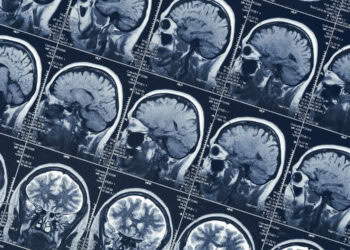
Participants completed the Childhood Trauma Questionnaire – Short Form, a self-report assessment of childhood trauma experiences. Based on their responses, 57 individuals were classified as survivors of childhood trauma, while 158 were not. All participants also underwent magnetic resonance imaging (MRI) of their brains.
The results showed that participants who had experienced childhood trauma were more likely to be men. Compared to those without trauma histories, trauma survivors tended to have lower cortical volume and reduced surface area. More specifically, reduced surface area was found in a cluster comprising the left precentral gyrus, postcentral gyrus, and paracentral lobule. Decreased cortical volume was observed in a cluster involving the left postcentral gyrus.
The precentral gyrus plays a role in controlling voluntary movement by sending motor commands to muscles. The postcentral gyrus is responsible for processing sensory input from the body, including touch, pressure, and proprioception. The paracentral lobule integrates motor and sensory functions, particularly those related to the lower limbs and pelvic region.
The researchers also conducted a functional connectivity analysis. They found that areas with lower cortical volume exhibited reduced connectivity with the bank of the superior temporal sulcus, the inferior parietal gyrus, and the supramarginal gyrus. In contrast, the regions with reduced surface area showed increased functional connectivity with the left postcentral gyrus, the superior parietal gyrus, and the supramarginal gyrus.
Using the structural and functional brain differences they identified, the researchers developed a statistical model to distinguish between individuals with and without childhood trauma. This model achieved a prediction accuracy of 78%.
“The childhood trauma group exhibits abnormalities in cortical structure and functional connectivity which are related to aberrant emotional and cognitive functions. These findings may serve as neuroimaging biomarkers of childhood trauma”, study authors concluded.
This study contributes to the growing body of research on the neurobiological characteristics of individuals who have experienced childhood trauma. However, it is important to note some limitations. For example, 74% of the participants were classified as not having experienced childhood trauma. Given that the prediction model had a 78% accuracy rate, its performance is only slightly better than a model that classifies all participants as trauma-free. Additionally, due to the brain’s capacity for functional redundancy—where similar functions can be performed by different neural networks—studies examining the neural correlates of complex psychological traits often produce varied results. As a result, findings from other studies on this topic may differ.
The paper “Alteration of cortical structure and functional connectivity in childhood trauma” was authored by Chengming Wang, Shufei Zhang, Yunjun Yang, Zhifeng Xu, Zezhi Li, Wei Zheng, and Huawang Wu.