
A longitudinal study tracking thousands of children from birth to mid-adolescence suggests that young people who develop psychotic disorders tend to have smaller heads throughout their early lives. Published in Psychological Medicine, the research indicates that these head size differences are largely tied to overall body height, pointing toward a broader pattern of altered physical growth rather than an isolated issue with brain expansion. The findings also point to distinct trajectories between males and females who experience milder psychotic symptoms.
Psychosis is a psychiatric condition in which a person loses some contact with reality. It often involves hallucinations, which are sensory experiences of things that are not present, and delusions, which are firmly held false beliefs. Psychosis exists on a spectrum, with clinical psychotic disorders like schizophrenia at the severe end, which disrupt daily life and typically emerge in late adolescence or early adulthood. A much larger segment of the population reports isolated psychotic experiences, such as occasionally hearing a voice or feeling unusually suspicious, without meeting the threshold for a clinical illness.
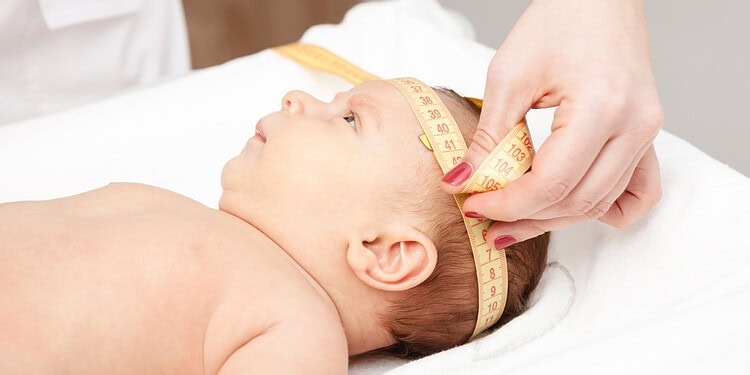
Even though psychotic disorders usually appear in young adulthood, the neurodevelopmental model of schizophrenia proposes that the underlying biological roots of these conditions begin during fetal development and early childhood. Adults diagnosed with schizophrenia tend to have slightly smaller total brain volumes than peers without the condition, even before they ever take psychiatric medications. Because performing brain scans on thousands of infants and children is costly and impractical, scientists often rely on head circumference, a simple tape-measure reading around the widest part of the skull that is routinely recorded by pediatricians, as an indirect indicator of early brain size.
“The study was motivated by the need to identify inexpensive and accessible biomarkers of psychosis risk,” study co-author Kate Merritt, a lecturer in human neuroscience in the Division of Psychiatry at University College London, told PsyPost. “If we can identify people who are more likely to develop psychosis, this could eventually help us target preventative interventions toward those at greatest risk.”
“Much of our work focuses on using MRI to identify biological markers that predict outcomes in psychosis, but MRI is expensive and not widely accessible,” Merritt explained. “We therefore wondered whether a much simpler measure, head circumference, might provide useful information. Head circumference is correlated with brain volume, so we looked at whether differences in head growth might be associated with psychosis risk.”
Prior research examining infant head size and later mental health has produced mixed results. Some studies, including a 2005 study of Swedish twins, found that babies born with smaller head circumferences and lower birth weights were more likely to develop schizophrenia as adults. Other studies found larger head sizes, no link at all, or differences that only appeared in females or vanished by early childhood. Most of this earlier work only looked at measurements taken at birth or during the first few months of life, leaving it unknown how head growth unfolds through later childhood and adolescence.
Scientists have also questioned whether a smaller head reflects a biological process restricted to the brain or a whole-body growth pattern. For example, a 2007 study of over 1.3 million Swedish men indicated that shorter adult height and lower body mass index were associated with a higher risk of schizophrenia. Similarly, a 2007 birth cohort study found that women who developed schizophrenia-spectrum disorders grew in height about one centimeter per year slower during early childhood than women without these conditions.
To determine whether head growth trajectories differ across the psychosis spectrum and whether those differences are independent of overall body size, Merritt, lead author Sarah A. Ashley of University College London, and their colleagues examined data from the Avon Longitudinal Study of Parents and Children. This population-based project tracked children born to pregnant women in the Southwest of England between April 1991 and December 1992.
The researchers analyzed an overall sample of 3,866 participants, including 2,177 females and 1,689 males, who had complete background records and at least one head circumference measurement between birth and age 15. Head measurements were collected across up to 22 time points, with major assessments occurring during the first year of life, at age 7, and at age 15. On average, participants had about eight head circumference measurements recorded over their childhood.
When the participants reached age 17 or 18, trained psychologists interviewed them using a semi-structured assessment to evaluate whether they had experienced hallucinations, delusions, or thought interference since age 12. Thought interference refers to the belief that one’s private thoughts are being broadcast out loud, inserted into one’s mind, or taken away by an outside force. Based on these interviews, 339 participants (8.8 percent of the sample, comprising 218 females and 121 males) were classified as having definite psychotic experiences.
Within that group, 62 individuals (1.6 percent of the sample, comprising 49 females and 13 males) met the operational criteria for a psychotic disorder. This meant their experiences occurred at least once a month over the preceding six months and caused severe distress, impaired their social or work functioning, or prompted them to seek professional help. The remaining 3,527 participants served as the comparison control group.
To confirm that external head measurements accurately reflected internal brain size in their sample, the researchers also analyzed structural magnetic resonance imaging (MRI) brain scans from a subset of 347 participants at age 20. From these scans, they calculated total intracranial volume, which is the total space inside the skull cavity occupied by the brain and surrounding fluids.
In their statistical models, the authors controlled for several maternal and birth factors that can influence physical growth. These included the mother’s highest level of education, her pre-pregnancy body mass index, the length of the pregnancy, and the baby’s weight at birth. In a secondary step, the researchers added the child’s height across development to see if head size differences persisted when accounting for overall physical stature.
The neuroimaging analysis confirmed that childhood head circumference was a reliable proxy for young adult brain size. Head size at birth showed a moderate positive correlation with total intracranial volume at age 20, while head measurements taken at ages 7 and 15 showed strong correlations with adult intracranial volume across both males and females.
When looking at growth trajectories over time, the researchers found that young people who met criteria for a psychotic disorder at age 18 had consistently smaller head circumferences than the control group from birth right through to age 15. Across the developmental span, the psychotic disorder group had an average head circumference about 0.26 centimeters smaller than controls in the statistical model, a small fraction of overall head size. The gap did not widen or narrow as the children aged, indicating that the modeled gap was similar in size from birth through adolescence.
The difference remained after accounting for maternal education and maternal body mass index, and shrank only slightly, to about 0.20 centimeters, when length of pregnancy and birth weight were added, though at that point it fell just short of statistical significance. Sensitivity checks looking strictly at birth, age 7, and age 15 also found smaller head sizes in the psychotic disorder group at each milestone, with the differences reaching statistical significance at ages 7 and 15.
When the team examined the larger group of 339 young people who reported broader psychotic experiences, they discovered contrasting patterns between males and females. Females with psychotic experiences had consistently smaller head circumferences across childhood and adolescence compared to female controls, averaging about 0.27 centimeters smaller in the unadjusted trajectory model.
In contrast, males with psychotic experiences had larger head circumferences than male controls across the overall trajectory model, averaging about 0.35 centimeters larger. In the age-by-age checks, however, males with psychotic experiences had smaller heads at birth and larger heads at ages 7 and 15. Both of the overall sex-specific patterns remained intact after adjusting for maternal and birth characteristics.
The smaller head sizes seen in the psychotic disorder group and among females with psychotic experiences stand in contrast to findings in autism spectrum disorder, a neurodevelopmental condition characterized by differences in social communication and restricted or repetitive behaviors. “For me, one of the most interesting aspects of this finding is what it tells us when considered alongside our work in autism spectrum disorder,” Merritt noted. “In a separate paper, we found the opposite pattern, with larger head circumference associated with autism. This suggests that patterns of brain growth may differ across different forms of neurodevelopmental risk, rather than there being a single pattern of atypical brain development.”
The picture shifted when the researchers factored in the children’s height over time. After controlling for height across development, the head circumference differences between the psychotic disorder group and the control group shrank and were no longer statistically significant. The same thing happened among females with psychotic experiences: once height was taken into account, their smaller head size was no longer statistically significant. The raw height differences between groups at age 15.5 were small and not statistically tested: females in the psychotic disorder group averaged about 1.6 centimeters shorter than female controls, while the 13 males in that group averaged slightly taller than male controls.
In males with psychotic experiences, however, controlling for height did not change the outcome, and their head circumferences remained larger than those of male controls. Together, these results suggest that for individuals with psychotic disorders and females with psychotic experiences, a smaller head circumference may reflect a broader, whole-body growth restriction rather than an issue confined to brain growth.
The authors noted that hormones regulating early physical development might help explain why general growth restriction and sex differences appear across the psychosis spectrum. One candidate they pointed to is insulin-like growth factor-I, a hormone that manages both fetal and childhood physical growth and naturally circulates at different levels in males and females. Early environmental stressors, such as maternal infections during pregnancy or nutritional deficiencies, could also influence both overall physical stature and future mental health risk.
“The key takeaway is that head circumference is a potentially useful, inexpensive measure for understanding developmental differences associated with psychosis risk,” Merritt said. “However, these findings reflect differences between groups and cannot currently be used to predict psychosis in an individual. We would not want people to interpret a smaller head circumference as meaning that someone will develop psychosis. There are many factors that contribute to psychosis risk, and head circumference would need to be considered alongside other measures.”
As with all research, there are some caveats to consider when interpreting these findings. Because the study followed participants over nearly two decades, not every child had their head measured at every possible age, and the researchers had to rely on statistical modeling to chart continuous trajectories across gaps in time. In addition, the classification of psychotic disorder at age 18 was based on structured research interviews rather than formal clinical diagnoses from a medical doctor.
The total number of participants who met the criteria for a psychotic disorder was relatively small at 62 people, and only 13 of them were male. Because of this small male sample size in the disorder group, the researchers may not have had enough statistical power to detect sex differences among those with full psychotic disorders, and findings involving males in that group should be viewed cautiously. Future studies using larger, independent birth cohorts will be needed to verify these sex-specific growth patterns and examine the biological mechanisms that link early physical growth to adult mental health.
“In the longer term, we are interested in whether head circumference could be combined with other developmental, genetic and environmental risk measures to improve our ability to identify individuals who might benefit from early intervention,” Merritt added.
The study, “Course of head growth from birth to adolescence across the psychosis spectrum,” was authored by Sarah A. Ashley, Kate Merritt, Francesca Solmi, Pedro Luque Laguna, Yanakan Logeswaran, Derek K. Jones, David Linden, Anthony S. David, and Abraham Reichenberg.