PsyPost
  • Mental Health
  • Social Psychology
  • Cognitive Science
  • Neuroscience
  • About
No Result
View All Result
Join
My Account
PsyPost
No Result
View All Result
Home Exclusive Mental Health

Classical music boosts language recovery and brain connectivity in stroke survivors

by Bianca Setionago
August 2, 2024
Reading Time: 2 mins read
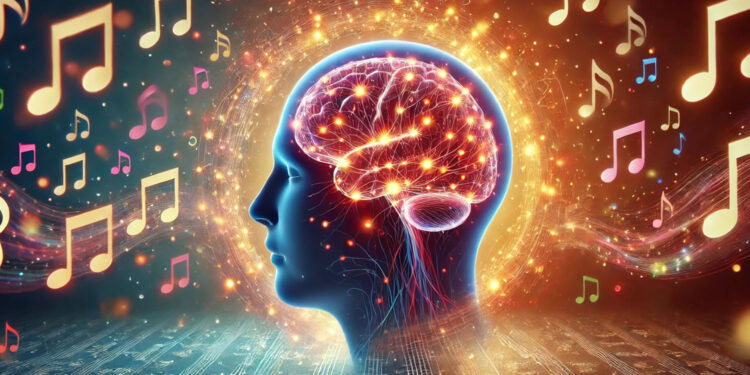
(Photo credit: DALL·E)

(Photo credit: DALL·E)

Share on TwitterShare on Facebook

Listening to classical music could help stroke survivors recover language skills and increase brain connectivity, according to a new study published in the Annals of Physical and Rehabilitation Medicine.

Stroke-induced aphasia, a condition that impairs language abilities (e.g. speaking, writing, reading, or understanding), is a significant cause of disability worldwide. Traditional views held that these cognitive deficits were due to localized brain damage. However, recent research highlights the role of disrupted neural networks in the brain.

Led by Maryane Chea, researchers at the Paris Brain Institute in Sorbonne University, France, were intrigued by the potential of music therapy to aid recovery.

Previous studies have shown that music can enhance cognitive functions after a stroke, potentially through enhancement of brain connectivity. Hence, the team aimed to explore whether listening to classical music could improve language abilities and brain connectivity in stroke survivors.

The study involved four right-handed patients (1 female and 3 male) who had experienced strokes in the left hemisphere of their brains. These patients were aged on average 58 years old, and were randomized to one of two conditions, both of which lasted for 4 weeks.

In the first condition, the participants listened to classical music by composers such as Haydn, Mozart, and Beethoven for 2 hours daily, for 2 weeks. This was in addition to their standard care. Upon reaching 2 weeks, participants were switched to only receive standard care.

In the second condition this order was reversed, where participants received two weeks of standard care, followed by two weeks of combined standard care and listening to classical music.

Patients underwent cognitive and neuroimaging assessments at multiple points during the study. The researchers utilized language tests, as well as employed advanced imaging techniques (EEG and MRI) to evaluate changes in brain connectivity.

Google News Preferences Add PsyPost to your preferred sources

The results were promising. The stroke-induced aphasia patients demonstrated improvements in language test scores after the music therapy sessions, compared to when receiving standard therapy.

EEG measurements also indicated enhanced functional brain connectivity, allowing more complex information to be transmitted throughout the brain.

Only one participant completed the full MRI follow-up, and they demonstrated increased connectivity in several brain regions after music therapy. This included the corpus callosum, the brain matter which connects the two hemispheres.

The researchers explained the benefit of their study design, “in terms of feasibility, our music-assisted intervention was a relatively inexpensive and non-tiring treatment that was well-received by all participants, even though no-one had prior musical training. Using a limited selection of classical music did not hinder their adherence to the therapy protocol. The cumulative duration of music sessions in this study was 20 [hours], within the range of previous music assisted rehabilitation studies.”

However, the study had limitations. The small sample size and patient heterogeneity mean that the findings are preliminary. Additionally, the evaluations were not blind to the treatment conditions. Future studies with larger, more diverse samples and blind evaluations are needed to confirm these findings.

The study, “Listening to classical music influences brain connectivity in post-stroke aphasia: a pilot study,” was authored by Maryane Chea, Amina Ben Salah, Monica N. Toba, Ryan Zeineldin, Brigitte Kaufmann, Agnès Weill-Chounlamountry, Lionel Naccache, Eléonore Bayen, and Paolo Bartolomeo.

RELATED

Sticky attention in autism: Scientists make unexpected discovery when analyzing eye-tracking data
Autism

Eye-tracking study reveals visual preferences in toddlers with autism

June 7, 2026
Antidepressant escitalopram boosts amygdala activity
Alzheimer's Disease

Thalamus size identified as an early indicator of future memory struggles

June 7, 2026
Submechanophobia: The psychology behind the fear of sunken objects
Anxiety

Submechanophobia: The psychology behind the fear of sunken objects

June 7, 2026
New psychology research shows people consistently overestimate how much others lie and cheat
Depression

Antidepressants and talk therapy show similar results, but medication leads in severe depression cases

June 7, 2026
Bright medical professional examining brain MRI scans in a clinical setting for neurological or psychological research.
Mental Health

Brain scans link tissue reductions to aggression in schizophrenia

June 6, 2026
Ozempic and similar drugs may lower dementia risk for diabetes patients
Anxiety

Popular weight loss and diabetes drugs show no biological link to mental illness

June 6, 2026
Mental health might be emerging as a source of political identity, study finds
Mental Health

Mental health might be emerging as a source of political identity, study finds

June 6, 2026
Intolerance of uncertainty is tied to emotion labeling in people with autistic traits
Autism

Intolerance of uncertainty is tied to emotion labeling in people with autistic traits

June 6, 2026

Follow PsyPost

The latest research, however you prefer to read it.

Daily newsletter

One email a day. The newest research, nothing else.

Google News

Get PsyPost stories in your Google News feed.

Add PsyPost to Google News
RSS feed

Use your favorite reader. We also syndicate to Apple News.

Copy RSS URL
Social media
Support independent science journalism

Ad-free reading, full archives, and weekly deep dives for members.

Become a member

Trending

  • Study finds no association between frequency of video game play and spatial abilities
  • The location of your body fat is linked to how fast your brain ages
  • Psychopathy and Machiavellianism often look identical, but daily behavior suggests otherwise
  • Not having children isn’t linked to lower happiness, but having more than you wanted is
  • Visual experience physically shapes the brain’s feedback loops

Science of Money

  • New study sheds light on how self-control and confidence shape your financial well-being
  • Economists pull apart the two reasons to raise the minimum wage
  • Can ChatGPT beat the S&P 500? Eight months of daily picks suggest no
  • When inheritances shrink inequality, and when they widen it: A six-country look at the tipping point
  • Why winning makes some gamblers bet bigger: the psychological traits behind the “house money” effect

PsyPost is a psychology and neuroscience news website dedicated to reporting the latest research on human behavior, cognition, and society. (READ MORE...)

  • Mental Health
  • Neuroimaging
  • Personality Psychology
  • Social Psychology
  • Artificial Intelligence
  • Cognitive Science
  • Psychopharmacology
  • Contact us
  • Disclaimer
  • Privacy policy
  • Terms and conditions
  • Do not sell my personal information

(c) PsyPost Media Inc

Welcome Back!

Login to your account below

Forgotten Password?

Retrieve your password

Please enter your username or email address to reset your password.

Log In

Add New Playlist

Subscribe
  • My Account
  • Cognitive Science Research
  • Mental Health Research
  • Social Psychology Research
  • Drug Research
  • Relationship Research
  • About PsyPost
  • Contact
  • Privacy Policy

(c) PsyPost Media Inc