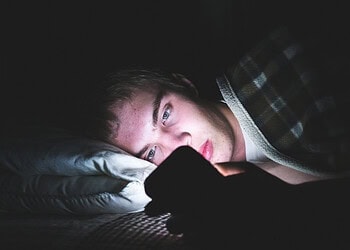
A recent UK study has found that pandemic-related news can exacerbate symptoms of paranoia and hallucinations among those with increased fear of COVID-19 and among those with low political trust. The findings were published in the journal Psychiatry Research.
While there has been great discussion about the mental health impact of the COVID-19 pandemic, study authors Barbara Lopes and colleagues say there is a lack of data concerning how the pandemic may be affecting symptoms of psychosis — and particularly, symptoms of paranoia and hallucinations.
Paranoia refers to the irrational belief that one is being persecuted or conspired against, and hallucinations are sensory experiences of people, places, and things that are not actually there. Since both paranoia and hallucinations can be triggered by experiences of stress, loneliness, and social deprivation, Lopes and team propose that the two experiences might be exacerbated during the COVID-19 pandemic. This may be especially likely given the persistent domination of pandemic-related topics in the news.
Lopes and colleagues conducted an online experiment to explore how pandemic-related news exposure relates to experiences of paranoia, hallucinations, and compulsive buying among UK residents.
A sample of 361 adults was recruited at the onset of the pandemic on March 26, 2020. Half the sample was then assigned to watch a BBC News segment outlining the rising death toll in the UK amid COVID-19, and the other half was assigned to watch a news segment discussing an environmental project (control group). After watching the video, participants completed measures of non-clinical paranoia, predisposition to hallucinations, compulsive buying, and fear of COVID-19.
Among those who watched the coronavirus news, COVID-19-related fear was linked to heightened paranoia, hallucinations, and compulsive buying. Political trust also played a role in this group. Those who watched the COVID-19 news segment — and had lower political trust — showed more paranoia, hallucinations, and compulsive buying. These findings suggest that heightened COVID-19 fear and political distrust are two factors that, when combined with COVID-19 news-watching, can contribute to symptoms of psychosis.
Interestingly, this was not the case in the control condition. Among those who watched the environmental news segments, neither fear of COVID-19 nor political trust were significantly associated with psychosis symptoms. The authors infer that COVID-related content, such as negative news about the pandemic, can “further accentuate the relationship between the outbreak and poor mental health outcomes.”
As the researchers predicted, students, followed by employed people, showed the highest levels of paranoia and hallucinations. This was unsurprising, Lopes and team say, as students tend to show heightened psychological distress, and employed people face new risks unknown to unemployed people. These risks include getting infected at work or losing one’s job.
The researchers say their findings shed light on political trust as a predictor of paranoia, explaining that a lack of political trust can lead to added mental stress during an already stressful situation, such as a public health crisis. “Lower political trust is also associated with more hallucinations and compulsive buying when one is exposed to COVID-19 news only, suggesting that when people with decreased political trust are exposed to this type of news they are likely to engage in maladaptive behaviors of this kind to cope with their COVID-19-related paranoia and hallucinations,” Lopes and colleagues say.
Prompted by their study’s findings, the authors propose certain recommendations for media outlets, suggesting that they should refrain from sensationalist reporting and incorporate “significant gains and progress made in the fight against COVID-19,” rather than focusing on negative news.
The study faced several limitations, such as a small sample size and the fact that data was collected very early in the pandemic. Still, the findings shed light on political trust and fear of COVID-19 as relevant to experiences of psychosis during the pandemic. The authors propose that the UK population would benefit from digital cognitive behavioral therapy (CBT) that incorporates aspects of mindfulness and is adapted to address fears and distress surrounding the pandemic.
The study, “Paranoia, hallucinations and compulsive buying during the early phase of the COVID-19 outbreak in the United Kingdom: A preliminary experimental study”, was authored by Barbara Lopes, Catherine Bortolon, and Rusi Jaspal.