Subscribe
The latest psychology and neuroscience discoveries.
My Account
  • Mental Health
  • Social Psychology
  • Cognitive Science
  • Neuroscience
  • About
No Result
View All Result
PsyPost
PsyPost
No Result
View All Result
Home Exclusive Cognitive Science

Dark chocolate lovers show higher tolerance for bitterness in chocolate ice cream

by Elsevier
July 24, 2013
in Cognitive Science
Share on TwitterShare on Facebook

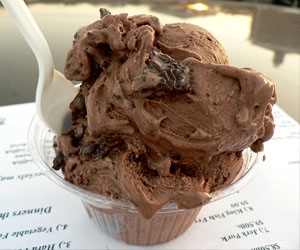
Chocolate ice creamTo make the inherent bitterness of cocoa in chocolate ice cream more palatable, manufacturers add high levels of fat and sugar. Yet, bitterness is an integral part of the complex flavor of chocolate.

In a new study published in the August issue of the Journal of Dairy Science®, investigators report that consumers who prefer dark chocolate in solid form tolerate twice the amount of bitter ingredients in chocolate ice cream than those who prefer milk chocolate. Elimination of some added sugar and fats in chocolate ice cream may be acceptable, and perhaps preferable, to some consumers.

“Our primary goal was to determine whether rejection thresholds for added bitterness in chocolate ice cream could be predicted by individual preferences for solid milk or dark chocolate,” says senior author John E. Hayes, Assistant Professor of Food Science and Director of the Sensory Evaluation Center, College of Agricultural Sciences, The Pennsylvania State University, University Park, PA. “Estimating rejection thresholds could be an effective, rapid tool to determine acceptable formulations or quality limits when considering attributes that become objectionable at high intensities.”

The research team produced a control sample of plain chocolate ice cream and samples with varying levels of sucrose octaacetate, a food-safe bitter ingredient used to alter the chocolate ice cream’s bitterness without disturbing other the sensory qualities of the samples, like texture.

These samples were offered in pairs to 96 members of the Penn State community who were non-smokers between the ages of 18 and 45. Forty-six participants preferred milk chocolate. All participants were asked to indicate which of the two blind samples they preferred. They each tasted one spoonful of ten different samples, rinsing with water between pairs.

As expected, the group that preferred solid dark chocolate showed a significantly higher rejection threshold – about twice as high — for sucrose octaacetate in the chocolate ice cream than the group that preferred milk chocolate.

“These results suggest that this approach could be used to make chocolate ice cream with less added sugar to be marketed for dark chocolate lovers, though this needs to be formally tested,” says Dr. Hayes. “Rejection thresholds can also be applied to other dairy foods in quality control or product optimization applications as a means to determine specific concentration limits associated with preferences.”

Further, the research team has demonstrated that the use of the rejection threshold methodology can be used effectively with solid, and not just liquid, foods.

Google News Preferences Add PsyPost to your preferred sources
Previous Post

Going through the motions improves dance performance

Next Post

When bar fights get mean, bystanders intervene

RELATED

Cognitive Science

Intelligent people are better judges of the intelligence of others

April 6, 2026
A surprising body part might provide key insights into schizophrenia risk
Cognitive Science

Brain scans reveal how a woman voluntarily enters a psychedelic-like trance without drugs

April 4, 2026
Schemas help older adults compensate for age-related memory decline, study finds
Cognitive Science

Your body exhibits subtle physiological changes when you engage in self-deception

April 3, 2026
Psychotic delusions are evolving to incorporate smartphones and social media algorithms
Cognitive Science

Brain scans shed light on how short videos impair memory and alter neural pathways

April 3, 2026
Cannabis intoxication broadly impairs multiple memory types, new study shows
Cannabis

Cannabis intoxication broadly impairs multiple memory types, new study shows

April 3, 2026
ChatGPT acts as a “cognitive crutch” that weakens memory, new research suggests
Artificial Intelligence

ChatGPT acts as a “cognitive crutch” that weakens memory, new research suggests

March 30, 2026
Verbal IQ predicts political participation and liberal attitudes twice as strongly as performance IQ
Cognitive Science

Trying harder on an intelligence test does not actually improve your score

March 27, 2026
Brain rot and the crisis of deep thought in the age of social media
Cognitive Science

Massive analysis of longitudinal data links social media to poorer youth mental health

March 27, 2026

STAY CONNECTED

RSS Psychology of Selling

  • New research reveals the “Goldilocks” age for social media influencers
  • What today’s shoppers really want from salespeople, and what drives them away
  • The salesperson who competes against themselves may outperform the one trying to beat everyone else
  • When sales managers serve first, salespeople stay longer and sell more confidently
  • Emotional intelligence linked to better sales performance

LATEST

Intelligent people are better judges of the intelligence of others

People consistently devalue creative writing generated by artificial intelligence

Psilocybin slows down human reaction times and impairs executive function during the acute phase of use

Psychological traits of scientists predict their theories and research methods

“Falling back” makes us more miserable than “springing forward,” new study finds

The psychology of schadenfreude: an opponent’s suffering triggers a spontaneous smile

The four types of dementia most people don’t know exist

Are women more likely to regret one-night stands? Only when they sleep with men

PsyPost is a psychology and neuroscience news website dedicated to reporting the latest research on human behavior, cognition, and society. (READ MORE...)

  • Mental Health
  • Neuroimaging
  • Personality Psychology
  • Social Psychology
  • Artificial Intelligence
  • Cognitive Science
  • Psychopharmacology
  • Contact us
  • Disclaimer
  • Privacy policy
  • Terms and conditions
  • Do not sell my personal information

(c) PsyPost Media Inc

Welcome Back!

Login to your account below

Forgotten Password?

Retrieve your password

Please enter your username or email address to reset your password.

Log In

Add New Playlist

Subscribe
  • My Account
  • Cognitive Science Research
  • Mental Health Research
  • Social Psychology Research
  • Drug Research
  • Relationship Research
  • About PsyPost
  • Contact
  • Privacy Policy

(c) PsyPost Media Inc