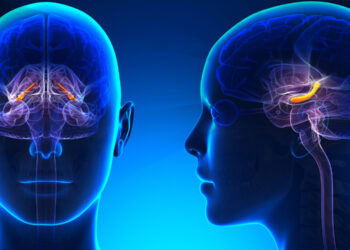
Two studies conducted in Israel have found that individuals with major depressive disorder are more inclined to distract themselves from positive emotions in response to pleasant stimuli, compared to healthy individuals. This behavior effectively reduces the duration of their pleasant emotional experiences. The research was published in the Journal of Psychopathology and Clinical Science.
Depression or major depressive disorder (MDD) is a serious mental health condition characterized by persistent and intense feelings of sadness, hopelessness, and a lack of interest or pleasure in activities. Individuals with major depressive disorder often experience significant impairments in their daily life, affecting work, relationships, and overall well-being. Symptoms can also include changes in appetite and sleep, fatigue, difficulty concentrating, feelings of worthlessness or guilt, and in severe cases, thoughts of death or suicide.
An important precursor of depression, but also its symptom, is rumination, particularly negative rumination. Rumination is a cognitive process that involves repeatedly thinking the same thoughts, which are often sad or dark. Negative rumination can lead to a worsening of mood, increased anxiety, and a heightened risk of developing mental health disorders like depression, as it involves dwelling on problems or negative feelings. Rumination can also be positive, when it is imbued with positive emotions. Such rumination can be constructive leading to problem-solving or a deeper understanding of one’s emotions and experiences.
Studies indicate that depressed individuals are more likely than healthy individuals to use emotion regulation strategies that decrease pleasant emotions and increase unpleasant ones. They are prone to diverting their attention away from pleasant topics and towards negative ones. Rumination about specific topics is an important strategy that can be used to regulate the emotions one experiences.
In two studies, Yael Millgram and his colleagues sought to investigate how healthy individuals and those with depression differ in their active choices of thoughts in response to pleasant and unpleasant stimuli. They hypothesized that individuals with depression are more likely to distract themselves from pleasant memories and ruminate on unpleasant ones.
The first study included 38 students diagnosed with major depressive disorder and 39 healthy controls, all from Hebrew University in Israel. The researchers identified potential participants through a large group of students and confirmed diagnoses of major depressive disorder through clinical procedures.
These researchers trained participating students to use rumination (“Think about your initial emotional response to the event and what made you feel that way and repeat it over and over in your mind. Do not try to alter the initial meaning of the event”) and distraction (“Think about something neutral and unrelated to the event. Focus on the details of the neutral event and repeat them in your mind. Do not think about the original event”) to regulate their emotions about an event.
The researchers then asked participants to recall either a pleasant (e.g., “an instance where you felt wanted and loved”), or an unpleasant (e.g., “an instance where you felt lonely”) event that occurred in the past six months. After reflecting on their current feelings, participants chose between rumination and distraction in response to the memory, using an electronic device. They had one minute to apply the chosen strategy, followed by another assessment of their feelings. This process was repeated twice: once with participants choosing spontaneously between rumination and distraction, and once with instructions to choose the strategy they believed would improve their mood.
The goal of the second study was to test whether depressed individuals are more likely than healthy controls to distract themselves from pleasant emotions in their daily lives. It involved 61 students with major depressive disorder and 62 healthy controls. This ecological momentary assessment study required participants to report four times a day on their current mood, their mood over the past two hours, and their use of distraction and rumination during that time. They also reported on their desire to feel happy, calm, sad, or anxious in the past two hours. The data collection phase lasted for ten days.
The first study’s results indicated that individuals with depression were more likely to choose distraction over rumination in response to pleasant memories, compared to healthy controls. However, there were no significant differences in their responses to negative memories. When instructed to choose a strategy that they thought would make them feel better, no difference was observed between the two groups.
In the second study, individuals with depression reported using distraction more frequently than healthy controls to avoid pleasant emotions. However, both groups used positive rumination similarly. Interestingly, participants with depression also distracted themselves more from unpleasant emotions but engaged in negative rumination more than the controls.
Considering their motivation for specific emotions, individuals with depression showed a higher inclination to experience negative emotions like sadness and anxiety in their daily lives. However, there was no significant difference between the two groups in their motivation to experience positive emotions.
“In Study 1, depressed individuals were more likely than controls to choose distraction (vs. positive rumination) in response to pleasant memories, resulting in decreases in pleasant affect and increases in unpleasant affect. Whereas healthy individuals preferred positive rumination over distraction in response to pleasant memories, reflecting pro-hedonic preferences, depressed individuals were agnostic,” the study authors concluded.
“This pattern of emotion regulation was also evident in daily life (Study 2), as depressed individuals were more likely than controls to distract from pleasant emotions (but were equally likely to ruminate about them). These findings suggest that distraction from pleasant emotions may characterize depression and that at least in some cases, depressed individuals actively choose to use it.”
The study sheds light on important psychological mechanisms found in depression. However, it should be noted that all participants were students. Results on other demographic and age groups might not be the same.
The paper, “Choosing to Avoid the Positive? Emotion Regulation Strategy Choice in Depression”, was authored by Yael Millgram, Shir Mizrahi Lakan, Jutta Joormann, mor Nahum, Orly Shimony, and Maya Tamir.