Our brains are remarkably dynamic, constantly shifting between states of activity that reflect our thoughts, perceptions, and awareness. A new study published in Communications Biology suggests that this dynamism is key to distinguishing between consciousness and unconsciousness. Researchers found that the brain “explores” a diverse range of connectivity patterns when we are awake, but during states like deep sleep or anesthesia, the brain becomes more predictable and rigid, its functional activity corresponding more closely with its structural wiring.
Consciousness—our ability to experience, perceive, and respond to the world—has long been one of the most puzzling topics in neuroscience. Researchers have sought reliable, objective markers to distinguish between conscious and unconscious states, both to deepen our understanding of awareness and to improve clinical tools for diagnosing and managing conditions like comas or anesthesia.
Brain connectivity can be classified into two types: structural connectivity and functional connectivity. Structural connectivity refers to the physical wiring of the brain, the fixed networks of neurons and pathways that form its architecture. Functional connectivity, on the other hand, reflects the brain’s activity patterns, showing how different regions work together dynamically at any given moment.
Previous research has shown that the brain’s functional connectivity constantly shifts between different configurations, reflecting various cognitive processes. The new study aimed to address whether the shifting patterns of functional connectivity could reliably differentiate between conscious and unconscious states by focusing on brain dynamics in people who were awake, under general anesthesia, or in deep sleep.
“Consciousness remains one of the most intriguing topics in neuroscience—something deeply fundamental and yet not fully understood,” explained study authors Alain Destexhe and Rodrigo Cofré, who are both affiliated with the Paris-Saclay Institute of Neuroscience.
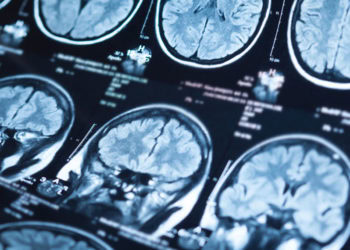
“We are broadly interested in the whole spectrum of consciousness states, from the unconscious states to those induced by psychedelics. Our interest lies in unraveling the dynamic functional mechanisms that underlie conscious awareness and how they differ when consciousness is perturbed. Resting-state functional MRI (fMRI) gives us a unique way to observe the brain in action, allowing us to capture spontaneous activity and its transitions, which may reflect deeper processes related to consciousness.”
For their study, the researchers analyzed fMRI data from two datasets. The first involved 16 healthy participants scanned during three states: awake, under general anesthesia (using the intravenous drug propofol), and after recovery. The second dataset included 18 healthy participants scanned during wakefulness and deep sleep (N3 stage).
The analysis focused on “phase coherence,” which measures how synchronized different brain regions are at any given moment. This approach enabled the researchers to identify recurring patterns of brain activity and track their transitions over time. Using statistical clustering techniques, these patterns were grouped into distinct categories, or “states,” for each condition. The frequency and distribution of these states were then analyzed across conscious and unconscious conditions.
To characterize brain dynamics, the study employed two key measures. Shannon entropy quantified the diversity of brain activity patterns, with higher entropy indicating a broader repertoire of states. Structure-function coupling assessed how closely the brain’s functional activity aligned with its physical wiring, as determined by structural MRI. The researchers also used a Markov chain model to evaluate the likelihood of transitions between states, providing insights into the stability and flexibility of brain dynamics in various conditions.
The results revealed significant differences in brain dynamics between conscious and unconscious states. During wakefulness, the brain exhibited a diverse and flexible repertoire of activity patterns, reflected in high Shannon entropy. These patterns were less reliant on the brain’s structural connectivity, indicating that the conscious brain explores states independent of its physical wiring. Frequent transitions between states during wakefulness underscored the dynamic and adaptable nature of the conscious brain.
In contrast, unconscious states, such as those induced by general anesthesia or deep (N3) sleep, showed reduced diversity in brain activity patterns. Shannon entropy was significantly lower, indicating that the brain explored a narrower range of states. Additionally, functional activity in unconscious states closely aligned with the brain’s structural connectivity, suggesting that the unconscious brain relies more on its anatomical wiring. Transitions between states were also less frequent, reflecting a more rigid and repetitive dynamic.
“In simple terms, our brain’s activity patterns are far more dynamic when we’re awake and conscious,” Destexhe and Cofré told PsyPost. “These rich dynamical patterns of brain connectivity appear to be essential for awareness. Under anesthesia or deep sleep, however, the brain is still very active but relies on less dynamic patterns, closer to the anatomical connectivity, and shows fewer transitions. These findings bring us closer to identifying objective and reliable indicators of consciousness, which could one day help us better understand and even track awareness in clinical settings.”
Interestingly, the researchers observed that certain activity patterns typically associated with unconsciousness occasionally appeared during wakefulness, and vice versa. This finding suggests that consciousness may exist on a spectrum, with overlapping features between states of awareness and unawareness. Despite these overlaps, the overall findings consistently demonstrated that rich and dynamic brain activity is a hallmark of consciousness.
“We were surprised by the robustness and generalizability of our results,” the researchers said. “Additionally, we were surprised to find that certain connectivity patterns more associated with unconsciousness can appear in small bursts even when we’re awake, and vice versa. This suggests that consciousness isn’t necessarily an all-or-nothing state; rather, it may be a fluid spectrum with overlapping features, raising intriguing questions about the boundaries between states of awareness and unawareness.”
As with all research, the study includes some limitations. The data came from two different research groups using distinct scanning and preprocessing methods, which may have introduced variability. Additionally, the study focused on one anesthetic, and the effects of other drugs on brain dynamics remain unexplored. Deep sleep, which involves more than just a loss of consciousness, may also introduce complexities not fully addressed in this study.
“While our method is robust and seems applicable across different states such as general anesthesia and deep sleep, there are still limitations in how data is collected and preprocessed in different studies,” Destexhe and Cofré explained. “For example, differences in data acquisition settings and preprocessing techniques can introduce subtle variability. Additionally, while we studied the effects of one anesthetic (propofol), other drugs may have different effects on brain dynamics.”
Future research could expand these findings by exploring other unconscious states, such as those induced by different anesthetics or psychedelics. Using alternative brain imaging techniques could also provide complementary insights. Ultimately, the goal is to develop universal markers of consciousness that can be applied in diverse clinical and research contexts.
“Long-term, we hope to develop generalizable markers of consciousness that could be used across various clinical scenarios, from general anesthesia monitoring to assessments of consciousness in patients with brain injuries,” Destexhe and Cofré said. “We’re also interested in exploring other imaging methods like EEG, which may offer additional insight into the brain’s conscious and unconscious states. We would also like to generalize our results further to psychedelic states.”
“This study underscores the centrality of the brain’s dynamic patterns to consciousness. A deeper understanding of these dynamics holds promise not only for advancing scientific knowledge but also for practical medical applications, such as assessing brain states in patients with traumatic brain injuries or comatose states, or for monitoring the depth of anesthesia and altered states under psychedelics. Ultimately, we hope this work inspires further research to extend these methods across additional species, alternative anesthetics, and diverse data acquisition techniques.”
The study, “Dynamical structure-function correlations provide robust and generalizable signatures of consciousness in humans,” was authored by Pablo Castro, Andrea Luppi, Enzo Tagliazucchi, Yonatan S. Perl, Lorina Naci, Adrian M. Owen, Jacobo D. Sitt, Alain Destexhe, and Rodrigo Cofré.