Subscribe
The latest psychology and neuroscience discoveries.
My Account
  • Mental Health
  • Social Psychology
  • Cognitive Science
  • Neuroscience
  • About
No Result
View All Result
PsyPost
PsyPost
No Result
View All Result
Home Exclusive Cognitive Science

Evil geniuses? People high in Machiavellianism may have superior reasoning abilities

by Eric W. Dolan
October 3, 2018
in Cognitive Science
(Photo credit: Feodora)

(Photo credit: Feodora)

Share on TwitterShare on Facebook

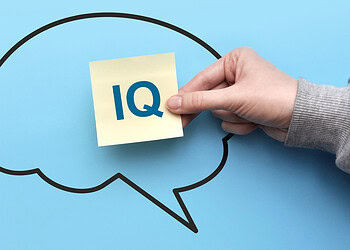
Fluid intelligence — a measure of a person’s adaptive reasoning and problem-solving skills — might be associated with one of the “dark triad” personality traits. A new study published in Personality and Individual Differences has found preliminary evidence that fluid intelligence is linked to Machiavellianism.

“The Dark Triad is a novel topic dealing with the more negative side of human character. We became interested in the controversy within the literature regarding the supposed redundancy of psychopathy and current measures of Machiavellianism,” explained study author Christopher Marcin Kowalski of the University of Western Ontario.

“In self-report studies, the two traits appear to be redundant, but when other methods are used, such as in experiments, they are more easily differentiated.”

“We were also interested in the ‘evil genius’ idea of Machiavellianism. Intuitively, one would expect Machiavellian individuals to also be highly intelligent because of their strategic and manipulative tendencies (for example, Theodore Kaczynski), but previous literature has not supported this idea,” Kowalski said.

“One reason for this lack of relationship could be that past research has predominantly focused on crystallized intelligence (learned and cultural in nature), rather than fluid intelligence (i.e., reasoning or performance ability) which is more consistent with theoretical accounts of Machiavellianism.”

The study of 128 Polish high school students found that individuals with more Machiavellian tendencies tended to have higher levels of fluid intelligence. People who are high in Machiavellianism agree with statements like “It’s wise to keep track of information that you can use against people later.”

But neither narcissism nor psychopathy were found to be significantly related to fluid intelligence.

“More research on the topic should be conducted before making any sweeping conclusions,” Kowalski told PsyPost. “The main takeaway from this study, I think, is that individuals who are high in Machiavellianism may in fact have superior reasoning ability that would allow them to better manipulate people around them. I say this with some caution, however.”

Google News Preferences Add PsyPost to your preferred sources

The study — like all research — includes some limitations. “The IQs of the participants were higher than average, and therefore not representative of the population,” Kowalski noted.

“As well, although non-significant (perhaps because of the small sample), there was a negative relationship between psychopathy and fluid intelligence that warrants clarification by future research. If there is a relationship between psychopathy and fluid intelligence, is it due to actual deficits in intelligence or do psychopaths just put less thought and effort into taking intelligence tests?”

The study, “The Dark Triad traits and intelligence: Machiavellians are bright, and narcissists and psychopaths are ordinary“, was authored by Christopher Marcin Kowalski, Katarzyna Kwiatkowska, Maria Magdalena Kwiatkowska, Klaudia Ponikiewska, RadosÅ‚aw Rogoza, and Julie Aitken Schermer.

Previous Post

Beliefs about homosexuality predict intentions to discriminate

Next Post

Study finds selfish people have fewer children and earn less money

RELATED

Shifting genetic tides: How early language skills forecast ADHD and literacy outcomes
Cognitive Science

The biological roots behind the chills you get from music and art

March 22, 2026
Machiavellianism most pronounced in students of politics and law, least pronounced in students of social work, nursing and education
Cognitive Science

Intelligence predicts progressive views, but only after college

March 21, 2026
Genetic factors likely confound the link between c-sections and offspring mental health
Cognitive Science

Neuroscientists just upended our understanding of Pavlovian learning

March 21, 2026
Your music playlist might reveal subtle clues about your intelligence
Cognitive Science

New neuroimaging study maps the brain networks behind scientific creative thinking

March 19, 2026
Your music playlist might reveal subtle clues about your intelligence
Cognitive Science

Your music playlist might reveal subtle clues about your intelligence

March 19, 2026
The psychological reason we judge groups much more harshly than individuals
Cognitive Science

First test of a new neuroscience theory shows how smart brains coordinate information

March 18, 2026
New psychology research identifies a key factor behind support for harsh leaders
Cognitive Science

New psychology research reveals the cognitive cost of smartphone notifications

March 18, 2026
Actively open-minded thinking protects against political extremism better than liberal ideology
Cognitive Science

Outdoor athletes show superior color detection in their peripheral vision

March 17, 2026

STAY CONNECTED

RSS Psychology of Selling

  • What actually makes millennials buy products on sale?
  • The surprising coping strategy that may help salespeople avoid burnout
  • When saying sorry with a small discount actually makes things worse
  • How dark and light personality traits relate to business owner well-being
  • Why mobile game fail ads make you want to download the app

LATEST

Study links psilocybin receptor activation to sustained structural brain changes

People with cannabis disorder do not seem to pay increased attention to pictures of cannabis

In sickness and in health? How a medical condition impacts your chances of finding and keeping love

How to make friends: Scientists have uncovered some intriguing new details

Albert Einstein’s brain: What have scientists discovered?

The biological roots behind the chills you get from music and art

Lab-grown brain models reveal unique electrical patterns in different types of autism

Efforts to make AI inclusive accidentally create bizarre new gender biases, new research suggests

PsyPost is a psychology and neuroscience news website dedicated to reporting the latest research on human behavior, cognition, and society. (READ MORE...)

  • Mental Health
  • Neuroimaging
  • Personality Psychology
  • Social Psychology
  • Artificial Intelligence
  • Cognitive Science
  • Psychopharmacology
  • Contact us
  • Disclaimer
  • Privacy policy
  • Terms and conditions
  • Do not sell my personal information

(c) PsyPost Media Inc

Welcome Back!

Login to your account below

Forgotten Password?

Retrieve your password

Please enter your username or email address to reset your password.

Log In

Add New Playlist

Subscribe
  • My Account
  • Cognitive Science Research
  • Mental Health Research
  • Social Psychology Research
  • Drug Research
  • Relationship Research
  • About PsyPost
  • Contact
  • Privacy Policy

(c) PsyPost Media Inc