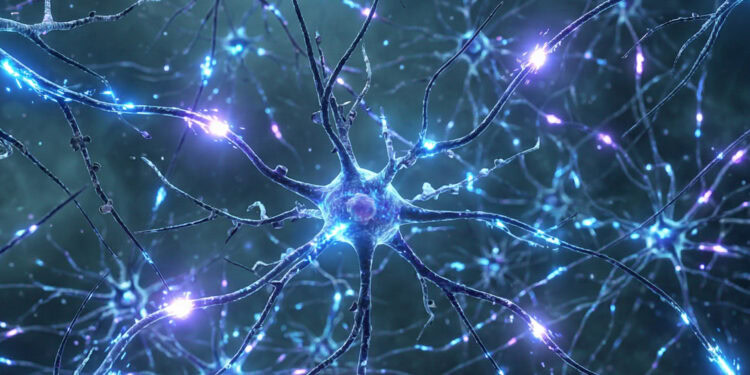
Visual experience physically shapes the brain’s feedback loops
Mice wearing specialized goggles reveal that the brain’s internal visual networks rewire themselves to match the exact patterns they see in the world. The study shows how visual feedback loops actively learn to predict our surroundings.
Read moreDetails
Scientists have found a geospatial link between soil fertility and national intelligence scores
An exploratory study in Scientific Reports suggests an intriguing correlation between a nation's soil fertility and its average IQ. This preliminary research suggests the nutritional quality of local earth might indirectly influence global cognitive development.
Read moreDetails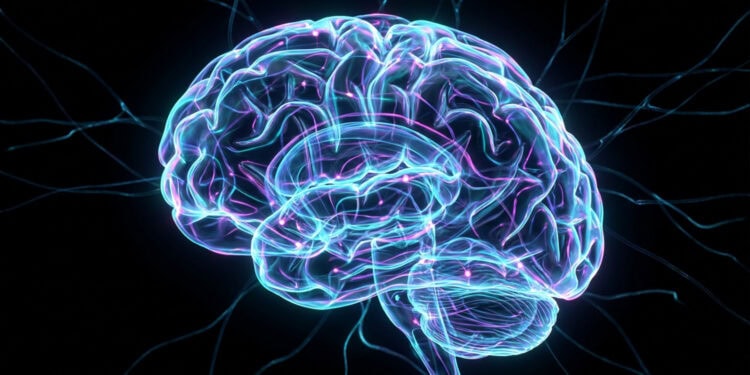
Fetal brain scans can predict a toddler’s vocabulary size years before they learn to speak
A new study reveals that the size of a specific language-processing region in a fetus's brain can predict how many words that child will be able to say at two to three years of age.
Read moreDetails
Scientists discover how coffee interacts with the gut microbiome to affect the human brain
Regularly drinking coffee modifies your gut microbiome, which in turn influences mood, stress, and memory. New research reveals that both caffeinated and decaf coffee offer distinct, measurable benefits for psychological well-being and digestive health.
Read moreDetails
New research shows the brain relies on whole faces, not just eyes, to decode emotions
Are the eyes really the window to the soul? New electroencephalogram research provides evidence that the brain works much harder to evaluate an expression when the rest of the face is hidden.
Read moreDetails
How partisan loyalty affects our ability to spot false claims
When readers encounter expected political viewpoints, they often fall for misinformation. A new study reveals that reading surprisingly opposed viewpoints on trusted platforms forces people to think harder, dramatically improving their ability to spot false claims.
Read moreDetails
New study suggests the brain applies different standards of beauty to paintings and architecture
A recent study found that the human brain applies different standards of beauty depending on the type of visual art it evaluates. Architects and painters weigh visual features like symmetry and complexity quite differently.
Read moreDetails
How learning to read alters the brain’s approach to spoken language
Learning to read does more than help you understand written text. A new brain imaging study reveals that formal reading education physically changes the neurological pathways humans use to process and decode spoken language.
Read moreDetails
The psychology of paradoxical thinking: Extreme arguments in favor of a controversial topic can reduce overall support
Presenting people with highly exaggerated arguments in favor of a controversial topic might actually make them oppose it more strongly. New research suggests that this unconventional persuasion technique can effectively shift opinions on morally charged social issues.
Read moreDetails
The cognitive difference between amateur and expert chess players
A new study reveals that novice chess players rely heavily on visual pattern recognition rather than complex mental calculations. Training beginners to memorize board arrangements could be the fastest way to improve their game.
Read moreDetails
General intelligence and a strong work ethic are the best predictors of college grades
What makes a successful college student? Researchers analyzing data from over 35,000 graduates found that general cognitive ability and a strong work ethic predict college grades better than any specialized academic skills.
Read moreDetails
Does the smell of pine make you smarter?
Can you recreate the mental benefits of a forest walk simply by diffusing tree essential oils indoors? A new study suggests the answer is no, finding no cognitive or mood improvements from smelling fir or cypress oils.
Read moreDetails
The strange psychology of the Medusa effect
When you view a photograph of someone holding another photograph, you subconsciously judge the person in the nested image as possessing less of a mind. A recent study reveals just how remarkably stubborn this visual bias really is.
Read moreDetails
New psychology research suggests a brisk walk can boost your creativity an hour later
Want to generate better ideas? A new study tracking daily movement and imagination found that taking a brief, brisk walk can visibly boost your verbal creativity roughly an hour later.
Read moreDetails
Neuroscientists discover the brain’s memory center starts “full” and prunes itself down to optimize learning
Far from a blank slate, the infant brain begins with an overabundance of random neural connections. Neuroscientists discovered how trimming this excess wiring transforms the hippocampus into a powerful, structured memory machine.
Read moreDetails