
Excessive smartphone users show heightened brain reactivity to social exclusion
A new fMRI study finds that people with excessive smartphone habits show increased activity in brain regions associated with social pain when excluded. This suggests hypersensitivity to rejection may drive compulsive connectivity.
Read moreDetails
The psychology behind the deceptive power of AI-generated images on Facebook
A recent study highlights how content farms use AI-generated images to manipulate human emotions. Researchers found that specific visual tropes trigger psychological shortcuts, making users more likely to overlook signs of deception.
Read moreDetails
Gen Z reports highest anxiety levels as screen time increases
Approximately 19% of American adults live with an anxiety disorder. A new survey suggests that for young people, heavy social media use is a major driving factor behind these rising numbers.
Read moreDetails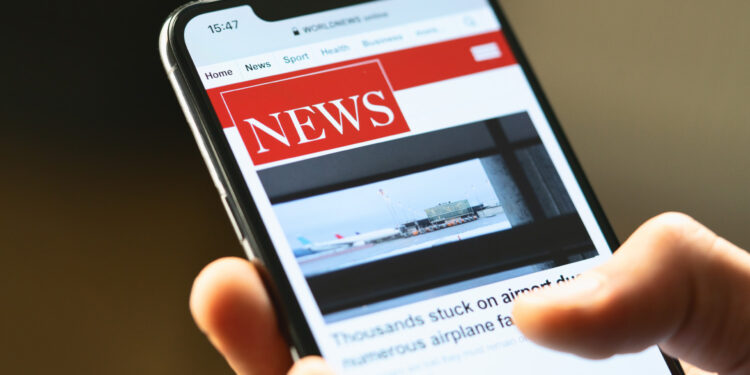
Scientists demonstrate how reliable news sources are weaponized to spread falsehoods
The line between real and fake news is blurring. A paper in Nature Human Behaviour demonstrates that accurate stories from reputable outlets are often co-opted by misinformation spreaders to validate conspiracy theories and misleading worldviews.
Read moreDetails
New research uncovers a seemingly universal preference for lower-quality news on social media
Researchers analyzed 11 million posts to find that while political bias varies by site, the preference for low-quality news is universal online.
Read moreDetails
Social media surveillance of ex-partners linked to worse breakup recovery
Four studies show that both active surveillance and passive exposure to an ex-partner's social media content predict worse recovery outcomes.
Read moreDetails
Large meta-analysis links TikTok and Instagram Reels to poorer cognitive and mental health
A systematic review of 98,000 people finds that engaging with short-form videos is associated with poorer cognitive performance.
Read moreDetails
Nonmedical TikTok creators outperform doctors in engagement on SSRI videos
A new study finds that influencers get more views than medical professionals when discussing antidepressants. The key difference lies in presentation: influencers use upbeat video tones to discuss negative side effects, while doctors remain neutral.
Read moreDetails
Higher social media engagement linked to reduced performance on cognitive assessments
A new analysis suggests that adolescents who increase their social media use over time tend to score slightly lower on reading and memory tests.
Read moreDetails
Personalization algorithms create an illusion of competence, study finds
While personalization algorithms keep users engaged, they may create a false sense of expertise. A new experiment reveals that curated content feeds limit information exploration, causing learners to form distorted views while remaining surprisingly confident.
Read moreDetails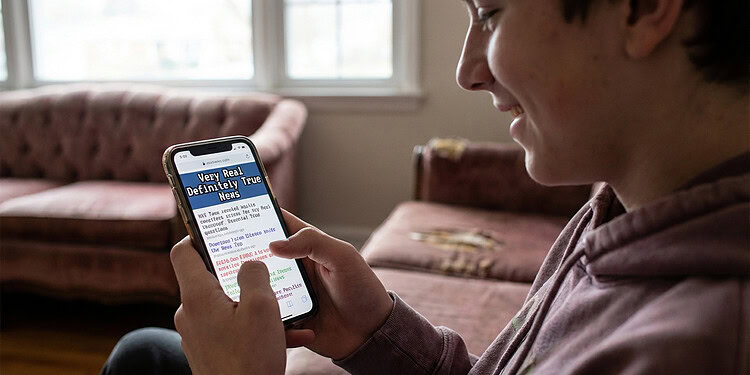
Young people underestimate their exposure to misinformation, new research shows
New research finds teenagers view misinformation narrowly, as something concerning world events or scams. This perception makes them vulnerable to false content in their everyday social media feeds, which they don't scrutinize as carefully.
Read moreDetails
Distinct neural pathways link fear of missing out and negative emotions to compulsive phone use
A new longitudinal study suggests that specific patterns in the brain’s default mode network can predict the severity of problematic smartphone use months or years later.
Read moreDetails
Active short video use linked to altered attention and brain connectivity
A new study shows that people who frequently engage with short video platforms through actions like commenting and liking tend to show lower alerting efficiency. Brain scans point to a possible link with communication between attention and self-related processing networks.
Read moreDetails
This university’s failed TikTok ban revealed a troubling fact
The link between TikTok and disordered eating may be a cycle, not a one-way street. New research shows individuals with existing symptoms increase their viewing of diet content, a pattern a university ban did not interrupt.
Read moreDetails
Can an algorithm predict a politician’s future just by analyzing their tweets?
A new statistical model can sort politicians into their real-world groups based only on who they interact with online, and it may even spot the signs of future political campaigns before they are announced.
Read moreDetails