
A new study published in Scientific Reports offers insight into how the perception of one’s body influences one’s sense of gender identity. An experiment involving the illusion of owning an opposite-sex body led people to embrace a more equal identification with both genders.
While it appears that the way a person perceives their body is linked to their gender identity, it has yet to be established exactly how the two are connected. Study authors Pawel Tacikowski and colleagues describe gender identity as “a collection of thoughts and feelings about one’s own gender, which may or may not correspond to the sex assigned at birth.” They explain that while past research viewed gender identity as consisting of two exclusive categories of male and female, the current theories see it as a “spectrum of associations with both genders.”
The researchers wanted to explore whether a full body ownership illusion — an experience that simulates owning a different body than one’s own — would influence an individual’s gender identity. Three studies explored this idea.
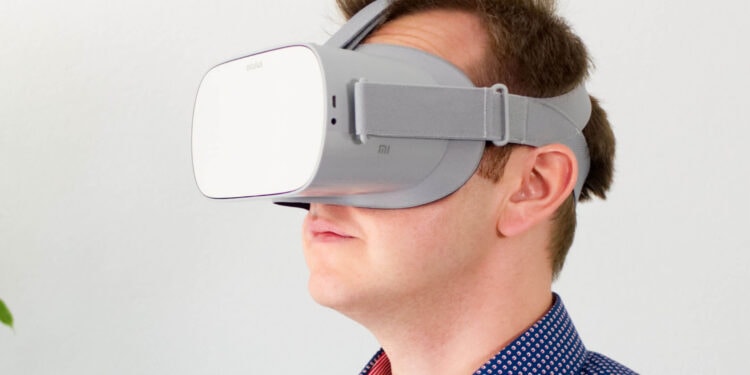
An initial experiment had subjects participate in four conditions. During each condition, subjects wore a head-mounted display which played a video from the first-person perspective of another person’s body — either a male or a female.
In two experimental conditions, the participants watched the stranger’s body being stroked with an object while simultaneous touches were being administered to the same body part on their own bodies. In these conditions, the touch experiences were in sync, causing the illusion that the stranger’s body was their own (synchronous conditions). In two control conditions, the participants received touches that were out of sync with the video, breaking the illusion (asynchronous conditions). Before and after each condition, the subjects completed ratings of how masculine and feminine they felt.
The illusion was successful — subjects reported a greater sense of ownership of the strangers’ bodies during the conditions when the touches on the video were in line with the tactile experiences they received. Interestingly, when experiencing the synchronous conditions during the opposite sex illusion, subjects reported feeling more like the opposite gender than at baseline. Specifically, females reported feeling less feminine than at baseline, and males reported feeling less masculine than at baseline.
A second study extended these findings by showing that such an illusion can also change implicit attitudes about one’s gender identity. This time, the Implicit Association Test (IAT) was used to measure the participants’ gender identity. The researchers found that during illusory ownership of the opposite-sex body, subjects demonstrated a greater balance of implicit associations with both genders.
A final experiment further showed that the opposite-sex body illusion can influence subjects’ explicit gender-related beliefs about their own personality. Participants were asked to rate how much they identified with a series of traits that were either stereotypically feminine or masculine. In general, females tended to choose traits that were stereotypically feminine and men tended to choose stereotypically masculine traits. However, during the illusory conditions, participants rated both masculine and feminine traits similarly high.
Tacikowski and colleagues discuss several possible explanations for this effect, saying that the illusion of owning an opposite-sex body may have “increased a cognitive conflict within the existing beliefs about oneself at the implicit level”, leading subjects to adjust their self-beliefs in order to resolve the conflict.
The authors express that their findings offer new insight into the fluidity of gender identity, showing that the relationship between one’s body perception and sense of gender is “dynamic, robust, and direct.” The findings also spark further questions. “Future studies should address the important question of how transgender people, with and without gender dysphoria, update their sense of own gender during the body-sex-change illusion and whether the illusion could partly alleviate distress by reducing the incongruence between the body and subjective gender,” the authors say.
The study, “Fluidity of gender identity induced by illusory body‑sex change”, was authored by Pawel Tacikowski, Jens Fust, and H. Henrik Ehrsson.