The story of an extraordinary romance fraud is making global headlines as its victim is mocked around the world for her naïveté.
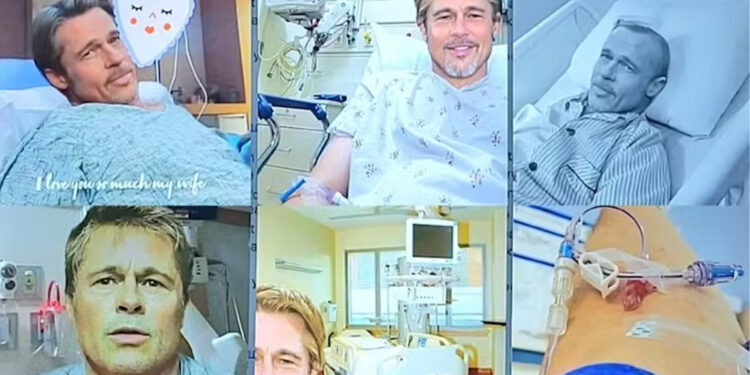
The story of Anne, a French woman in her 50s, was recently broadcast on the French TV channel TFI. Anne explained how she ended up paying 830,000 Euros ($1.2 million) to swindlers posing as a sickly Brad Pitt, who was supposedly in love with her. The scammers sent fake selfies generated by artificial intelligence.
Anne was ruined financially by the fraud and has attempted to take her own life three times. TF1 withdrew the report from all its platforms because of the wave of harassment that ensued.
Yet research shows that victims of romance fraud do not lack judgment as much as people assume. On the contrary, a large proportion of victims are highly educated.
As an expert in the field of technology fraud, I want to shed some light on the typical pattern of romance fraud and expose the psychological factors that make victims vulnerable to this type of scam.
A scam that exploits emotions
Romance fraud, also known as romance scam, is a form of extortion that exploits human emotions.
Fraudsters use fictitious romantic relationships, often created online, to extract money or goods from their victims. According to the Canadian Anti-Fraud Centre, 420 reports of romance fraud were identified in 2022, representing total losses of $59 million.
This type of fraud affects men as much as women, and victims often share similar psychological and behavioural profiles.
How do fraudsters operate?
Although scammers use a variety of strategies, sentimental scams tend to follow a predictable pattern.
Initial contact
The fraudster initiates contact on dating sites or social networks. Working under a carefully constructed fictitious identity, he or she displays high social status and presents himself or herself as living abroad or often on the move. This staging avoids the need for face-to-face meetings, while at the same time reinforcing his or her credibility.
Change of platform
The fraudster offers to continue the conversation on another platform, with the aim of diverting the victim from the original dating site or social network. These sites or social networks may delete the victims’ profiles, thus reducing the fraudsters’ chances of being able to complete the fraud.
Impossibility of meeting in person
There are many excuses for avoiding a face-to-face meeting, including travel, work commitments and family problems. Today, thanks to technological advances, some fraudsters use artificial intelligence tools to create false images or imitate voices, making their manipulations even more sophisticated. This was the case for Anne.
Building trust
The fraudster seeks to seduce his victim through frequent, thoughtful exchanges. He or she uses romantic messages or poems, regular phone calls, and even sends small gifts. This “love bombing” creates an intense emotional attachment and makes the victim more vulnerable to further requests.
Soliciting money
Whether it’s an alleged financial or health problem, the time inevitably comes when, once trust has been established, the fraudster solicits a money transfer. The first requests, generally modest so as not to arouse suspicion, gradually increase.
Threats and manipulation
If the victim begins to express doubts and refuses to respond to requests for money transfers, the fraudster may sometimes resort to threats, even going as far as talking about ending the relationship. In this case, the fraudster adopts a harsh, even offensive tone, seeking to emotionally destabilize the victim and force him or her to give in.
Underlying psychological factors
Love scams belong to the family of mass marketing frauds, a category of frauds that encompasses any deceitful act designed to extract money from a victim through deceptive or misleading means.
Victims of this type of fraud are often people in search of meaning, who are emotionally vulnerable.
They generally have a more impulsive personality but also a benevolent one. They have more trust in authority, and are more inclined to comply with perceived demands from authority figures (whether real or fictitious). Victims have a strong need to maintain consistency with their previous commitments. That may lead them to maintain interaction with a fraudster even when they have doubts.
Although it is mocked and misunderstood, romance fraud is based on complex psychological mechanisms that exploit victims’ trust, emotions and vulnerability. By understanding these dynamics, it becomes possible to raise awareness and better protect people from these sophisticated scams, which have become ubiquitous in our connected world.
This article is republished from The Conversation under a Creative Commons license. Read the original article.