Subscribe
The latest psychology and neuroscience discoveries.
My Account
  • Mental Health
  • Social Psychology
  • Cognitive Science
  • Neuroscience
  • About
No Result
View All Result
PsyPost
PsyPost
No Result
View All Result
Home Exclusive Cognitive Science

Female brain volume changes in sync with hormones, study finds

by Max Planck Gesellshaft
October 11, 2016
in Cognitive Science
Share on TwitterShare on Facebook

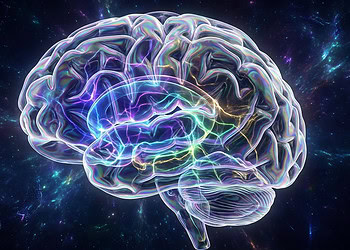
Although it has already been known for some time that the brain does not remain rigid in its structure even in adulthood, scientists at the Max Planck Institute for Human Cognitive and Brain Sciences made a surprising discovery: The brain is not only able to adapt to changing conditions in long-term processes, but it can do this every month. The researchers observed that in women, in parallel to the rhythm of the level of estrogen across their menstrual cycle, the structures of the Hippocampus vary — a brain area that is crucial for memories, mood and emotions.

Each month, women experience the up and down of hormones during their menstrual cycle. And from month to month these variations appear to not just influence the switching between fertile and infertile days. The fluctuating hormone levels also change the structure of the brain in astonishing regularity, as demonstrated by the results of the study on the hormonal influence on the brain structure at the Max Planck Institute for Human Cognitive and Brain Sciences in Leipzig.

“We found, that in parallel to the rising estrogen levels leading up to ovulation, the Hippocampus also increases in volume–the volume of the grey matter as well as that of the white matter”, explains Claudia Barth, first author of the corresponding paper published in the renowned magazine Nature Scientific Reports. How these fluctuations of the brain structures precisely affect the behaviour and specific cognitive abilities remains a mystery. But the neuroscientists do have a theory: “The Hippocampus plays a crucial role in our memories, our mood, and our emotions. In mice it has already been proven that it is not just this brain structure but also different behaviours which underlie a type of monthly cycle.”

Whether these observations are also valid for humans has to be proven in further studies. After testing the results of this first pilot study on the connection between the level of estrogen and the Hippocampus in a larger group of study participants, the researchers will scrutinise the effects on the behaviour. “If it appears, for instance, that women in certain phases of their cycle are particularly receptive, these women could undergo therapy”, she explains. This could take place at a specific time point when a woman is in a position to do so.”

With these findings, the neuroscientists have laid the foundations for their overall goal: Investigating the relationships of premenstrual dysphoric disorder (PMDD), a disorder which affects one in twelve women in the days leading up to her time of the month. These women complain of severe physical and psychological symptoms such as listlessness or mood swings comparable to a depressive episode. “To get a better understanding of this disorder, we first have to find out which monthly rhythm the brain of a healthy woman follows. Only then can we reveal the differences in persons affected by PMDD”, says Julia Sacher.

Google News Preferences Add PsyPost to your preferred sources
Previous Post

How the microbiota in your gut affects your mood, sleep and stress levels

Next Post

New treatment strategy could cut Parkinson’s disease off at the pass

RELATED

Psychologists implant false beliefs to understand how human memory fails
Memory

Psychologists implant false beliefs to understand how human memory fails

March 14, 2026
Researchers identify two psychological traits that predict conspiracy theory belief
Cognitive Science

The hidden brain benefit of getting in shape that scientists just discovered

March 11, 2026
Scientists use “dream engineering” to boost creative problem-solving during REM sleep
Cognitive Science

Genetic factors drive the link between cognitive ability and socioeconomic status

March 10, 2026
Scientists use “dream engineering” to boost creative problem-solving during REM sleep
Cognitive Science

Everyday mental quirks like déjà vu might be natural byproducts of a resting mind

March 10, 2026
Scientists use “dream engineering” to boost creative problem-solving during REM sleep
Cognitive Science

Scientists use “dream engineering” to boost creative problem-solving during REM sleep

March 10, 2026
Researchers identify two psychological traits that predict conspiracy theory belief
Artificial Intelligence

Brain-controlled assistive robots work best when they share the workload with users

March 8, 2026
How common is anal sex? Scientific facts about prevalence, pain, pleasure, and more
Cognitive Science

New psychology research reveals that wisdom acts as a moral compass for creative thinking

March 6, 2026
Hemp-derived cannabigerol shows promise in reducing anxiety — and maybe even improving memory
Alcohol

Using cannabis to cut back on alcohol? Your working memory might dictate if it works

March 5, 2026

STAY CONNECTED

LATEST

Suicide risk in older adults with autistic traits is linked to depression and isolation more than autism itself

Psychologists reveal a key trigger behind narcissists’ passive-aggressive behavior

New psychology study reveals we consistently underestimate our power in close relationships

Psilocybin might not be the most psychoactive ingredient in magic mushrooms, new research suggests

Feminist beliefs linked to healthier romantic relationship skills for survivors of childhood trauma

AI generates nude images that outrank real photographs in sexual appeal, study finds

Regular exercise reduces anxiety and depression in people with chronic insomnia

Children with attention disorders struggle to process whole faces during social interactions

PsyPost is a psychology and neuroscience news website dedicated to reporting the latest research on human behavior, cognition, and society. (READ MORE...)

  • Mental Health
  • Neuroimaging
  • Personality Psychology
  • Social Psychology
  • Artificial Intelligence
  • Cognitive Science
  • Psychopharmacology
  • Contact us
  • Disclaimer
  • Privacy policy
  • Terms and conditions
  • Do not sell my personal information

(c) PsyPost Media Inc

Welcome Back!

Login to your account below

Forgotten Password?

Retrieve your password

Please enter your username or email address to reset your password.

Log In

Add New Playlist

Subscribe
  • My Account
  • Cognitive Science Research
  • Mental Health Research
  • Social Psychology Research
  • Drug Research
  • Relationship Research
  • About PsyPost
  • Contact
  • Privacy Policy

(c) PsyPost Media Inc