New research sheds light on the brain circuits involved in addiction to opioids like fentanyl. The findings, published in Cell Reports, indicate that that chronic opioid exposure triggers a series of changes in the brain that results in a hypodopaminergic state. This state may underlie the mechanism of anxiety-like behaviors during acute opioid withdrawal.
Opioid addiction has become a global epidemic, with millions of people suffering from its devastating effects. Opioids are highly addictive drugs that act on the brain’s reward system, producing feelings of pleasure and euphoria. However, with prolonged use, opioids can lead to a range of negative emotional states, including anxiety, depression, and irritability, which can trigger relapse.
“Fentanyl abuse has been linked to a surge in overdose deaths, particularly in North America,” said lead author Jun Wang, an associate professor of neuroscience and therapeutics at Texas A&M University Health Science Center. “As a powerful opioid, fentanyl is up to 100 times more potent than morphine and can cause respiratory depression, leading to death. Studying fentanyl abuse can help identify risk factors and inform public health strategies to prevent overdose deaths.”
The researchers aimed to investigate the neurobiological mechanisms underlying negative emotional states and anxiety-like behaviors that occur during acute opioid withdrawal. The researchers were interested in exploring the role of a specific population of neurons, called the striatal direct pathway medium spiny neurons (dMSNs), which are known to be involved in drug addiction and reward-seeking behaviors.
To conduct the study, Wang and his colleagues used animal models of opioid addiction and withdrawal. They exposed the animals to either chronic morphine or fentanyl, two commonly used opioids, and then monitored their behavior during withdrawal. They also used a variety of techniques, including electrophysiology and optogenetics, to study the activity of neurons in the brain.
The researchers found that chronic exposure to morphine or fentanyl recruits specific types of brain cells in the striatum, a brain region that is critical for reward processing and decision-making. Specifically, opioid exposure activates mu-opioid receptors (MORs), which are expressed on a type of neuron called direct pathway medium spiny neurons (dMSNs). This activation triggers a series of changes in the brain’s GABAergic system, which is involved in regulating anxiety and other emotional states.
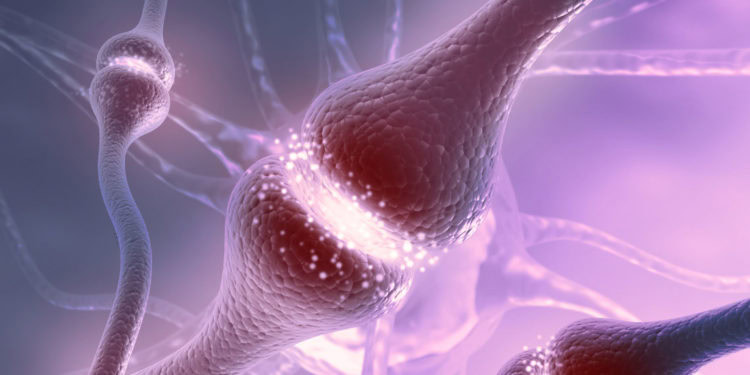
The researchers also found that the activation of dMSNs in striatal patches results in a hypodopaminergic state, meaning that there is a decrease in the activity of dopamine neurons in the brain. Dopamine is a neurotransmitter that plays a key role in reward processing, motivation, and movement control. A decrease in dopamine activity can lead to a range of negative emotional states, including anxiety and depression.
During fentanyl withdrawal, the dopaminergic neurons become more suppressed, which can contribute to negative emotions. The researchers discovered that if they stop dMSNs from activating, it reduces withdrawal symptoms and anxiety-like behaviors.
The study suggests that the hypodopaminergic state induced by chronic opioid exposure may underlie the mechanism of anxiety-like behaviors during acute opioid withdrawal. Opioid withdrawal is a highly aversive state that is characterized by a range of physical and emotional symptoms, including anxiety, irritability, and restlessness. The study findings suggest that the negative emotional states associated with opioid withdrawal may be driven by changes in the brain’s reward and motivation systems.
“Do not touch fentanyl at all,” Wang advised.
The researchers conclude that their findings provide valuable insights into the mechanisms underlying opioid-induced negative emotional states that drive relapse. By understanding the neural mechanisms that underlie opioid addiction, researchers can develop more effective treatments for this devastating condition. The study also highlights the importance of addressing the negative emotional states associated with opioid addiction, as these can be a major barrier to recovery.
“Fentanyl use is a big problem in the United States,” Wang said. “More research is needed to stop fentanyl abuse.”
The study, “Striatal m-opioid receptor activation triggers direct pathway GABAergic plasticity and induces negative affect“, was authored by Wei Wang, Xueyi Xie, Xiaowen Zhuang, Yufei Huang, Tao Tan, Himanshu Gangal, Zhenbo Huang, William Purvines, Xuehua Wang, Alexander Stefanov, Ruifeng Chen, Lucas Rodriggs, Anita Chaiprasert, Emily Yu, Valerie Vierkant, Michelle Hook, Yun Huang, Emmanuel Darcq, and Jun Wang.