PsyPost
  • Mental Health
  • Social Psychology
  • Cognitive Science
  • Neuroscience
  • About
No Result
View All Result
Join
My Account
PsyPost
No Result
View All Result
Home Exclusive Mental Health Addiction

Flow experiences on TikTok and Instagram linked to mental health issues

by Eric W. Dolan
April 6, 2023
Reading Time: 3 mins read
Share on TwitterShare on Facebook

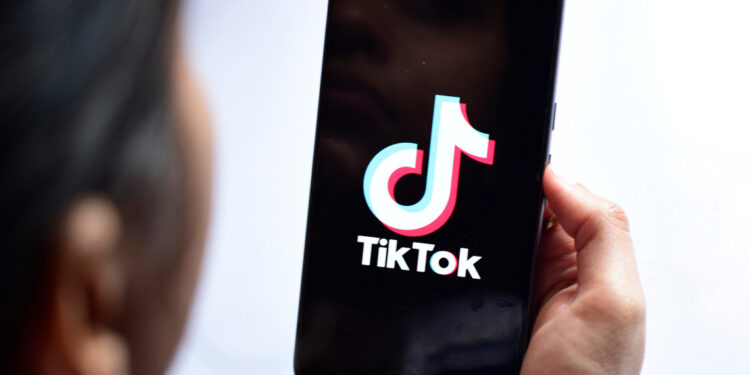
Greater experiences of “telepresence” — which refer to a user’s sense of immersion in the world created by social media apps — among both TikTok and Instagram users are linked to higher levels of depression and anxiety, according to new research published in Cyberpsychology, Behavior, and Social Networking.

The study examined “flow” experiences resulting from social media use. Flow was first introduced by psychologist Mihaly Csikszentmihalyi in the 1970s to describe a mental state that occurs when someone is fully immersed in an activity. In the context of social media, flow experiences may occur when someone is scrolling through their feed and is fully engrossed in the content they are consuming.

“My research interests include the relationship between smartphone and social media use and psychological well-being,” said study author James A. Roberts, the Ben H. Williams Professor of Marketing in the Hankamer School of Business at Baylor University

“Given these interests, I am very familiar with the different social media apps available. My personal experience with TikTok suggests that it is potentially highly addictive. The popularity of Instagram across a wide range of age groups (especially teens and young adults) and its recent ties to teen eating disorders drew my attention to it.”

The researchers recruited participants who lived in the United States, were at least 18 years old, and had used TikTok and/or Instagram. The sample included 195 Instagram users (mean age = 38) and 225 TikTok users (mean age = 37). Objective measures of time spent on social media were obtained by having the participants check their phone for the exact amount of time spent on the relevant apps.

To assess flow experiences, the researchers adapted the Facebook Flow Questionnaire by replacing “Facebook” with either “TikTok” or “Instagram.” The questionnaire assessed five different dimensions: focused attention, enjoyment, curiosity, telepresence, and time distortion. The participants also completed measures of the fear of missing out (FOMO), social media addiction, anxiety, and depression.

The researchers found that 24% of TikTok users and 28% of Instagram users would qualify as addicted according to diagnostic criteria. Among the flow subscales, telepresence was found to have the highest correlation with social media addiction, mind wandering, FOMO, and anxiety and depression.

Those with a high level of telepresence agree with statements such as “Using [Tiktok/Instagram] often makes me forget where I am and what currently happens around me” and “While using [Tiktok/Instagram], the world generated by the sites I visit is more real for me than the real world.”

Google News Preferences Add PsyPost to your preferred sources

TikTok users reported higher levels of overall flow, as well as higher levels of enjoyment and time distortion, compared to Instagram users. “People become so engrossed while using TikTok that they will neglect other activities,” Roberts said.

The study may have a limitation because it did not investigate how people use social media platforms differently, such as passive vs. active usage. Previous research suggests that passive usage of social media, such as so-called “doom scrolling,” can lower psychology well-being. But some research also indicates that active use, such as talking with others, can improve well-being.

“Research is still needed that strives to better understand why people use a particular social media,” Roberts said. “The reasons are many and likely impact the well-being of the user differently. And, how someone uses social media (actively or passively) has also been found to drive user experience.”

“I think social media may be, as Thoreau presciently stated nearly 170 years ago about mankind’s inventions, ‘They are but improved means to an unimproved end …’ These social media may provide an escape from everyday worries, although a suboptimal coping strategy,” the researcher added.

The study, “Instagram and TikTok Flow States and Their Association with Psychological Well-Being“, James A. Roberts and Meredith E. David.

RELATED

New psychology research reveals your face might determine how easily people remember your name
Addiction

A single dose of psilocybin outperforms nicotine patches for quitting smoking

April 27, 2026
Psychology textbooks still misrepresent famous experiments and controversial debates
Social Media

Feeling angry makes people more likely to share news from low-credibility sources

April 24, 2026
Girl taking a selfie on her smartphone, enjoying a drink, smiling and outdoors, illustrating social media, happiness, and modern communication.
Social Media

Short video addiction is linked to lower life satisfaction through loneliness and anxiety

April 21, 2026
Study finds altered brain responses to anticipated threat in individuals with alcohol use disorder
Addiction

Can a common parasite medication calm the brain’s stress circuitry during alcohol withdrawal?

April 19, 2026
What we know about a person changes how our brain processes their face
Neuroimaging

More time spent on social media is linked to a thinner cerebral cortex in young adolescents

April 15, 2026
New Harry Potter study links Gryffindor and Slytherin personalities to heightened entrepreneurship
Relationships and Sexual Health

New study links watching TikTok “thirst traps” to lower relationship trust and satisfaction

April 14, 2026
Legalized sports betting linked to a rise in violent crimes and property theft
Addiction

Ketone esters show promise as a new treatment for alcohol use disorder

April 14, 2026
New study links honor cultures to higher rates of depression, suicidal thoughts
Addiction

Even mild opioid use disorder is linked to a significantly higher risk of suicide

April 13, 2026

Follow PsyPost

The latest research, however you prefer to read it.

Daily newsletter

One email a day. The newest research, nothing else.

Google News

Get PsyPost stories in your Google News feed.

Add PsyPost to Google News
RSS feed

Use your favorite reader. We also syndicate to Apple News.

Copy RSS URL
Social media
Support independent science journalism

Ad-free reading, full archives, and weekly deep dives for members.

Become a member

Trending

  • How cognitive ability and logical intuition evolve during middle and high school
  • Former Christians express more progressive political views than lifelong nonbelievers
  • New psychology research reveals your face might determine how easily people remember your name
  • Certainty in your feelings toward your partner predicts relationship happiness and mental well-being
  • New neuroscience research shows how slowing your breathing alters your perception of the people around you

Psychology of Selling

  • What makes customers stick with a salesperson? A study traces the path from trust to long-term commitment
  • When company shakeups breed envy, salespeople may cut corners and eye the exit
  • Study finds Instagram micro-celebrities can shift brand attitudes and buying intent through direct engagement
  • Salespeople who feel they’re making a difference may outperform those chasing commissions
  • Five persuasive approaches and when each one works best for marketers

PsyPost is a psychology and neuroscience news website dedicated to reporting the latest research on human behavior, cognition, and society. (READ MORE...)

  • Mental Health
  • Neuroimaging
  • Personality Psychology
  • Social Psychology
  • Artificial Intelligence
  • Cognitive Science
  • Psychopharmacology
  • Contact us
  • Disclaimer
  • Privacy policy
  • Terms and conditions
  • Do not sell my personal information

(c) PsyPost Media Inc

Welcome Back!

Login to your account below

Forgotten Password?

Retrieve your password

Please enter your username or email address to reset your password.

Log In

Add New Playlist

Subscribe
  • My Account
  • Cognitive Science Research
  • Mental Health Research
  • Social Psychology Research
  • Drug Research
  • Relationship Research
  • About PsyPost
  • Contact
  • Privacy Policy

(c) PsyPost Media Inc