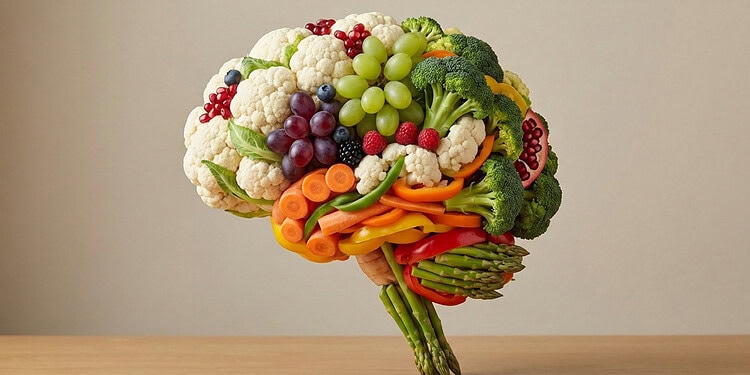

A new preclinical study suggests that a diet rich in fruits and vegetables may protect the brain from the damaging effects of a high-fat diet. Researchers found that mice fed a Western-style regimen retained their memory function if their food was supplemented with a powdered mixture of produce. These findings, published in Nutritional Neuroscience, offer early evidence that diet quality plays a specific role in preserving cognition during obesity.
The global rise in obesity has occurred alongside an increase in cognitive decline among older adults. Public health officials are concerned because obesity is a known risk factor for various forms of dementia. Much of this trend is driven by the consumption of energy-dense foods that are high in saturated fats.
When the body processes these high-fat foods, it can lead to a condition known as oxidative stress. This occurs when there is an imbalance between harmful molecules called free radicals and the body’s antioxidant defenses. Over time, this imbalance can damage cells and tissues throughout the body, including the brain.
Scientists have hypothesized that the antioxidants found naturally in plant-based foods could counteract this process. Previous research has often focused on single ingredients, such as blueberry extract or spinach. However, humans typically consume a variety of foods rather than single isolated nutrients.
To address this, a research team led by Weimin Guo investigated the effects of a mixed fruit and vegetable supplement. Guo is associated with the USDA Human Nutrition Research Center on Aging at Tufts University and the Boston University Chobanian & Avedisian School of Medicine. The team aimed to see if a broad combination of produce could mitigate the cognitive problems associated with a high-fat diet.
The researchers utilized male C57BL/6 mice for this experiment, a strain commonly used in metabolic studies. The animals were six weeks old at the start of the trial. They were randomly assigned to one of five different dietary groups.
The first group served as a control and was fed a standard low-fat diet. The remaining four groups were fed a high-fat, Western-style diet designed to induce obesity. These high-fat diets were supplemented with varying amounts of a freeze-dried fruit and vegetable powder.
The powder contained a mix of common items, including apples, bananas, berries, grapes, citrus fruits, spinach, carrots, broccoli, and tomatoes. The researchers added this mixture at concentrations of zero, five, ten, or fifteen percent of the diet by weight. These amounts were calculated to roughly correspond to human intake levels.
The fifteen percent supplementation level is approximately equivalent to a human eating eight or nine servings of fruits and vegetables daily. The lower doses corresponded to roughly three or five to seven daily servings. This design allowed the researchers to check for a dose-dependent response.
The dietary intervention lasted for a total of twenty weeks. The researchers monitored the body weight of the mice throughout this period to track the development of obesity. As expected, the mice on the unsupplemented high-fat diet gained a substantial amount of weight.
During the seventeenth week of the study, the team administered a behavioral assessment called the novel object recognition test. This test relies on a rodent’s natural tendency to explore new things. It is a standard method for evaluating learning and memory in mouse models.
In the first phase of the test, a mouse is placed in a cage with two identical objects. The animal is allowed to explore these objects for ten minutes to become familiar with them. The mouse is then returned to its home cage.
One hour later, the mouse is placed back in the testing arena. This time, one of the familiar objects has been replaced with a new, novel object. If the mouse remembers the original object, it will spend more time sniffing and inspecting the new one.
If the mouse has memory deficits, it will likely spend equal time with both objects. This indicates that it does not recognize the familiar object as something it has seen before. The researchers timed how long each mouse spent with the novel versus the familiar items.
The results showed a clear distinction between the diet groups. The mice fed the low-fat control diet displayed a strong preference for the novel object. This confirmed that their cognitive functions remained intact.
In contrast, the mice fed the high-fat diet without any produce supplements showed signs of impairment. They spent less time exploring the new object compared to the control group. Their inability to distinguish between the objects suggested a decline in recognition memory.
However, the mice that received the fruit and vegetable supplements performed better. The improvement correlated directly with the amount of powder in their food. The group receiving the five percent supplement showed some improvement over the non-supplemented group.
The benefits were most pronounced in the group receiving the fifteen percent supplement. These mice performed nearly as well as the mice on the healthy low-fat diet. This suggests that the highest dose of fruits and vegetables effectively shielded the animals from diet-induced memory loss.
The researchers also observed differences in weight gain among the groups. The five and ten percent supplementation levels did not prevent the mice from becoming obese. However, the fifteen percent level did result in lower body weight gain compared to the unsupplemented high-fat group.
To understand the biological mechanism behind these behavioral changes, the team analyzed liver tissue samples. They specifically looked for malondialdehyde, or MDA. MDA is a marker of lipid peroxidation, which is the degradation of fats by oxygen.
Elevated levels of MDA indicate high levels of systemic oxidative stress. The analysis revealed that the high-fat diet caused a spike in hepatic MDA levels. This confirms that the Western-style diet placed the animals under considerable metabolic stress.
The addition of the fruit and vegetable powder blunted this effect. Mice in the supplemented groups had lower levels of MDA in their livers. This suggests that the antioxidants in the diet successfully reduced systemic oxidative stress.
The authors propose that this reduction in oxidative stress is a likely reason for the preserved cognitive function. By reducing the overall burden of free radicals, the bioactive compounds in the produce may have protected neural pathways. This aligns with the theory that oxidative balance is essential for brain health.
The study does have certain limitations that affect how the results should be interpreted. It was a pilot study with a relatively small number of animals. Additionally, the researchers only used one type of behavioral test to assess cognition.
Furthermore, the team measured oxidative stress markers in the liver rather than the brain. While liver health impacts the whole body, direct measurements of brain tissue would provide stronger evidence of neuroprotection. The specific molecular pathways in the brain that benefited from the diet remain to be fully mapped.
The researchers also note that the exact components of the fruit and vegetable powder responsible for the benefit are unknown. It is unclear if specific vitamins, minerals, or polyphenols are the primary drivers. Future research would need to isolate these variables.
Despite these caveats, the study provides a foundation for future investigations. It suggests that dietary interventions could be a viable strategy for managing obesity-related cognitive issues. The results reinforce current dietary guidelines that encourage high consumption of plant-based foods.
The team recommends that follow-up studies include a wider battery of cognitive tests. They also suggest investigating specific brain regions, such as the hippocampus, for signs of oxidative damage. Eventually, clinical trials will be necessary to see if these protective effects translate to humans.
The study, “Dietary fruits and vegetables mitigate cognitive impairment in mice with high-fat diet-induced obesity: a pilot study,” was authored by Weimin Guo, Barbara Shukitt-Hale, Dayong Wu, Lijun Li, and Simin Nikbin Meydani.