Subscribe
The latest psychology and neuroscience discoveries.
My Account
  • Mental Health
  • Social Psychology
  • Cognitive Science
  • Psychopharmacology
  • Neuroscience
  • About
No Result
View All Result
PsyPost
PsyPost
No Result
View All Result
Home Exclusive Social Psychology

It is hard to get entitled people to follow instructions, study finds

by Eric W. Dolan
January 29, 2018
in Social Psychology
(Photo credit: pathdoc)

(Photo credit: pathdoc)

Share on TwitterShare on Facebook

If you believe that you’re just more deserving than others, you’re probably not too fond of following instructions. People with a greater sense of entitlement are less likely to follow instructions than less entitled people, according to new research published in Social Psychological and Personality Science.

“I have done some other research projects in which I examined people’s sense of entitlement. It seemed like I was having difficulty testing my hypotheses in some studies because the highly entitled participants were not following my instructions,” explained study author Emily M. Zitek of Cornell University.

“This observation also seemed to fit with the comments of some managers and professors about their employees and students–their entitled subordinates ignored their instructions and then had a lot of complaints about it later. (It seems like the subordinates would have been better off if they had followed the instructions from the beginning–so why didn’t they?) After these observations, I wanted to empirically test whether entitled people are indeed more likely to ignore instructions and, if so, why this is the case.”

In a series of six studies, which included a total of 1,259 participants, the researchers found that entitled people were more likely to blow off instructions. More entitled people were also more likely to say they would ignore instructions from others in hypothetical scenarios.

The studies attempted to convince entitled people to follow instructions in a variety of ways. But none worked.

“One of the main things I learned is that it is hard to get entitled people to follow instructions to the same degree as less entitled individuals,” Zitek told PsyPost. “We tried various things that didn’t work–making the instructions seem less personally costly to follow, making the instructions seem optional, and emphasizing the likelihood of punishment–but nothing worked.”

“It seemed like entitled people weren’t following instructions because they believed the instructions were an unfair imposition on them. Future research should examine how to get entitled individuals to follow instructions.”

The researchers noted that things tend to run more smoothly when people are willing to follow instructions.

“It would be good to try to figure out how to make instructions seem fairer and see if, as I am proposing, this will get entitled individuals to be more likely to follow instructions,” Zitek said. “Of course, authority figures don’t want to cater to the entitled individuals too much by justifying all instructions — this could just make the entitled individuals even more entitled down the line. But in general, people are more likely to follow instructions that seem legitimate, and maybe this is especially true for entitled people.”

“When entitled individuals fail to follow instructions, they will likely get punished. They will probably see that punishment as unjust, and this could cause them to feel even more entitled in the future (as my other research shows that unjust treatment causes people to have an even higher sense of entitlement).”

The study, “Psychological Entitlement Predicts Failure to Follow Instructions“, was co-authored by Alexander H. Jordan.


RELATED

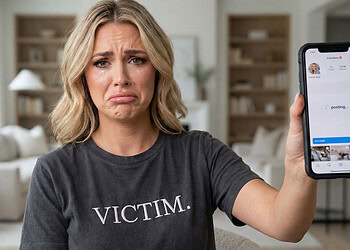
The tendency to feel like a perpetual victim is strongly tied to vulnerable narcissism
Psychopathy

Primary psychopathy linked to lower morning cortisol levels

January 26, 2026
The tendency to feel like a perpetual victim is strongly tied to vulnerable narcissism
Racism and Discrimination

Researchers find biological evidence of the toll colorism takes on young adults

January 26, 2026
The tendency to feel like a perpetual victim is strongly tied to vulnerable narcissism
Narcissism

The tendency to feel like a perpetual victim is strongly tied to vulnerable narcissism

January 26, 2026
Female Trump supporters exhibit slightly elevated subclinical psychopathy, study finds
Donald Trump

New research reveals the policy recall gap that gave Donald Trump a hidden edge

January 25, 2026
Psychologists pinpoint a subtle sign of relationship quality
Relationships and Sexual Health

Free-choice and arranged marriages do not differ in their love scores, study finds

January 24, 2026
Husbands of employed wives report greater happiness and self-esteem
Relationships and Sexual Health

New research maps the psychological pathway from body appreciation to relationship satisfaction

January 24, 2026
Can music heal emotional wounds? New research suggests it might
Music

Popular lyrics keep getting darker and dumber, but there was a surprising shift during the first Trump presidency

January 24, 2026
Donald Trump weaponizes humor through “dark play” to test boundaries
Donald Trump

Donald Trump weaponizes humor through “dark play” to test boundaries

January 24, 2026

PsyPost Merch

STAY CONNECTED

LATEST

Chia seeds may help the brain regulate appetite and inflammation

Primary psychopathy linked to lower morning cortisol levels

Researchers find biological evidence of the toll colorism takes on young adults

Comfort with genital terminology predicts sexual self-efficacy and satisfaction

Common air pollutants associated with structural changes in the teenage brain

The tendency to feel like a perpetual victim is strongly tied to vulnerable narcissism

High body mass index identified as a direct cause of vascular dementia

New research reveals the policy recall gap that gave Donald Trump a hidden edge

RSS Psychology of Selling

  • New research links faking emotions to higher turnover in B2B sales
  • How defending your opinion changes your confidence
  • The science behind why accessibility drives revenue in the fashion sector
  • How AI and political ideology intersect in the market for sensitive products
  • Researchers track how online shopping is related to stress
         
       
  • Contact us
  • Privacy policy
  • Terms and Conditions
[Do not sell my information]

Welcome Back!

Login to your account below

Forgotten Password?

Retrieve your password

Please enter your username or email address to reset your password.

Log In

Add New Playlist

Subscribe
  • My Account
  • Cognitive Science Research
  • Mental Health Research
  • Social Psychology Research
  • Drug Research
  • Relationship Research
  • About PsyPost
  • Contact
  • Privacy Policy