Donald Trump’s New York accent has subtly shifted over the past five decades
Acoustic analysis of Donald Trump’s speech from 1980 to 2023 reveals that while he largely maintained his classic New York accent, he steadily shifted his pronunciation of stigmatized vowels.
Read moreDetails
Trump’s 2020 pivot on face masks changed Republican behavior but not their medical beliefs
When Donald Trump unexpectedly praised face masks in 2020, his supporters began wearing them more frequently without actually believing they prevented disease. This unusual behavioral split reveals how trusted leaders can shape public habits during acute health crises.
Read moreDetails
Trump’s anti-free speech rhetoric increases support for censorship among his voters
A new study published in PNAS reveals that Trump’s recent calls for censorship successfully swayed his voters to support restricting speech. Meanwhile, the same rhetoric caused non-Trump voters to become even stronger advocates for free expression.
Read moreDetails
Democrats rejected Trump’s speaking style more than Republicans rejected Harris’s
During the 2024 election, Democrats overwhelmingly rejected the way Donald Trump communicates. In contrast, Republicans were much more likely to tolerate Kamala Harris's speaking style.
Read moreDetails
Listening to Joe Rogan was a stronger predictor of a Trump vote than watching Fox News
A new two-part study maps how The Joe Rogan Experience evolved from a comedy podcast into a highly influential civic platform, finding that tuning in was a stronger predictor of a 2024 Trump vote than basic party affiliation.
Read moreDetails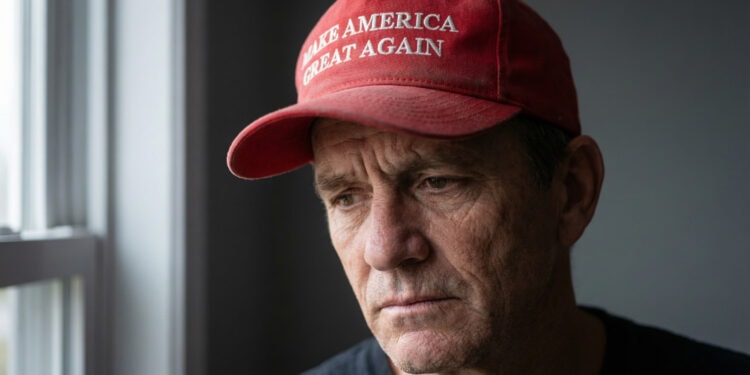
Cognitive dissonance helps explain why Trump supporters remain loyal, new research suggests
A new study explores how supporters of Donald Trump maintain their loyalty despite serious allegations. The findings suggest psychological discomfort drives voters to deny accusations, prioritize political policies, or claim other politicians act similarly.
Read moreDetails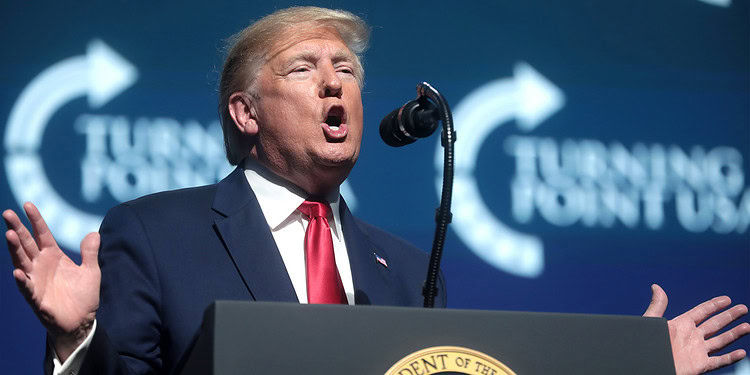
Texas migrant buses boosted Donald Trump’s vote share in targeted cities
A recent study shows that transporting migrants to cities far from the border amplified voters' fears about crime. This localized policy increased conservative turnout and pushed swing voters toward Donald Trump during the 2024 election.
Read moreDetails
Black employees struggle to thrive under managers perceived as Trump supporters
A new study published in the Human Resource Management Journal shows that Black employees feel less included and less able to excel when their managers support Donald Trump. This effect is especially strong for younger workers.
Read moreDetails
Donald Trump gained 2024 votes in areas where inflation was worse, study finds
A new analysis bypasses subjective voter surveys to examine objective, county-level economic data. The research reveals that localized price increases for everyday necessities closely correlated with a shift toward the Republican candidate, especially in lower-income areas.
Read moreDetails
Donald Trump’s 2024 election win increased the social acceptability of prejudice, study suggests
A new study published in the Personality and Social Psychology Bulletin reveals that Donald Trump's 2024 election coincided with changing social norms. Specifically, negative campaign rhetoric predicted a growing public acceptance of prejudice toward targeted minority groups.
Read moreDetails
Trump support in 2024 linked to White Americans’ perception of falling to the bottom of the racial hierarchy
New data from the 2024 election reveals a specific profile of Trump supporters: White Americans who believe they are in a "tight race" for status with Black and Hispanic Americans, regardless of their actual wealth.
Read moreDetails
Donald Trump is fueling a surprising shift in gun culture, new research suggests
A new study suggests that the 2024 presidential election prompted Black adults and liberals to change their firearm habits. These groups reported stronger urges to carry weapons and store them for quick access due to safety concerns.
Read moreDetails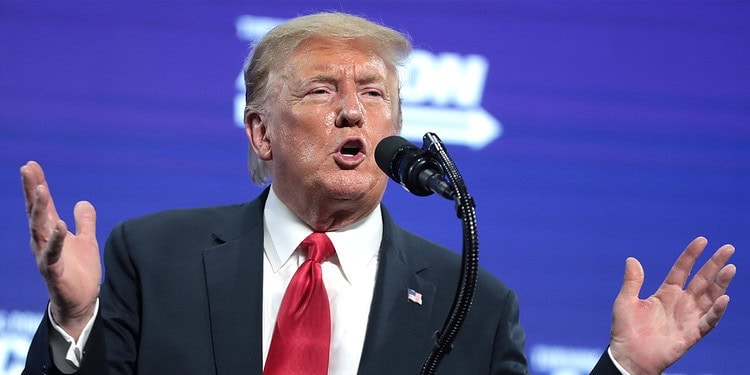
Trump-related search activity signals a surprising trend in the stock market
A new study suggests that online attention paid to Donald Trump helps predict optimism on Wall Street. Researchers found that spikes in Google searches for the president tend to precede increases in bullish sentiment among individual investors.
Read moreDetails
New research reveals the policy recall gap that gave Donald Trump a hidden edge
While Hillary Clinton had a detailed platform, it didn't stick. A new study finds that nearly 40% of Democrats in 2016 couldn't name a single Clinton policy they felt would help them, while Trump’s base clearly understood his promises.
Read moreDetailsDonald Trump weaponizes humor through “dark play” to test boundaries
Humor has evolved into a tool for political aggression and deception, according to new research. The analysis reveals how Trump and Ocasio-Cortez weaponize comedy to attack opponents and mask controversial ideas.
Read moreDetails