A few years ago I climbed over a gate and found myself gazing down at a valley. After I’d been walking for a few minutes, looking at the fields and the sky, there was a shift in my perception. Everything around me became intensely real. The fields and the bushes and trees and the clouds seemed more vivid, more intricate and beautiful.
I felt connected with my surroundings. What was inside me, as my own consciousness, was also “out there”. Within me, there was a glow of intense wellbeing.
This is an example of a higher state of consciousness – or, in my preferred term, an awakening experience. Awakening experiences are a temporary expansion and intensification of awareness that transforms our perception of the world.
As a psychologist, I have been studying such experiences for more than 15 years. Awakening experiences are sometimes viewed as mysterious and random, but I have found that, to a large degree, they can be explained.
My research has found that they have three main triggers.
The most common trigger may seem counter-intuitive. Around one-third of awakening experiences are linked to psychological distress, such as stress, depression and loss. For example, a man described to me, as part of my research, how he went through inner turmoil due to confusion about his sexuality, which led to the breakdown of his marriage.
But amid this turbulence, he experienced an awakening experiences in which, he said: “Everything just ceased to be. I lost all sense of time. I lost myself. I had a feeling of being totally at one with nature, with a massive sense of peace. I was a part of the scene. There was no ‘me’ anymore.”
Second, around one-quarter of the experiences are induced by the beauty and stillness of nature. A woman reported an awakening experience to me that occurred when she was swimming in a lake.
She said she “felt completely alone, but part of everything. I felt at peace… All my troubles disappeared and I felt in harmony with nature.” These types of experiences were often described by poets such as Wordsworth and Shelley.
The third most significant trigger (with a similar proportion to contact with nature) is spiritual practice. This primarily means meditation but also includes prayer and psycho-physical practices such as yoga or tai chi.
Perhaps surprisingly, I haven’t found that psychedelics are a major trigger of higher states. It may be that this is because my samples have been drawn from the general population, and not so many people have tried psychedelics. And psychedelics by no means always induce awakening experiences. They may simply induce perceptual distortions, or a state of dissociation.
Causes of awakening experiences
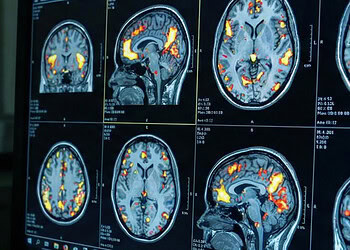
Some neuroscientists have suggested that awakening experiences are the result of stimulation of the temporal lobes (one of the most important parts of the brain, associated with memory, language comprehension and emotion). This is partly because some reports of higher states of consciousness come from people who suffer from temporal lobe epilepsy.
Another theory is that experiences of oneness arise when the part of our brain responsible for our awareness of boundaries (the superior posterior parietal cortex) is less active than normal.
However, such theories have been criticised by other researchers for a lack of control groups and successful replication. While some people who suffer from temporal lobe epilepsy may have awakening-type experiences, they are more likely to experience anxiety and disorientation.
In fact, other studies show no connection between seizures and higher states of consciousness. Other neuroscientists dispute the claim that spatial awareness is associated with the posterior parietal cortex.
Perhaps it makes more sense to explain awakening experiences in psychological rather than neurological terms.
Many awakening experiences are related to relaxation and mental quietness, induced by meditation or contact with nature. Normally, our awareness switches off to familiar objects and surroundings, as a way of saving energy.
But in moments of inner quietness, we expend less mental energy than normal. As a result, mental energy may intensify, generating more vivid awareness.
But how can we explain awakening experiences linked to psychological turmoil? A sense of shock and loss may bring a deconstruction of normal psychological processes.
In most states of turmoil, this may only cause further distress. But occasionally this may cause a transcendence of familiar modes of perception, and even a dissolution of our normal sense of ego, causing a sense of oneness.
Awakening experiences really are “higher states.” We tend to assume that our normal way of seeing the world is reliable and objective, offering a “true” vision of reality. But higher states teach the opposite: that our typical consciousness is limited and filtered.
We are normally trapped in a familiarised automatic perception of the world. This is why higher states carry a strong sense of revelation – because they reveal a wider reality to us.
As a result, even though awakening experiences typically only last from a few moments to a few hours, they often have a life-changing effect. Many people in my research described an awakening experience as the most significant moment of their lives.
In a study of 90 awakening experiences, my colleague Krisztina Egeto-Szabo and I found that the most significant after-effect was a positive shift, with increased trust in life, confidence and optimism. For example, one person reported that: “To know that it’s there (or here, I should say) is a great liberation.”
It would be a stretch to say that we can induce higher states of consciousness. However, we can create the conditions that make them more likely to occur. We do know that many are linked to relaxation and inner quietness. So we can create try to try to cultivate a still and relaxed state of mind – for example, through meditation and contact with nature. In doing so, we might find ourselves awakening to a wider and deeper reality.
This article is republished from The Conversation under a Creative Commons license. Read the original article.