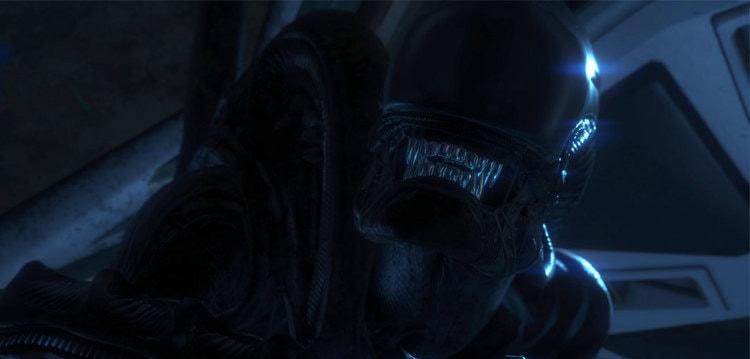

Why play horror-themed videogames designed to shock and scare? As with horror films or novels, they provide a means to indulge in the pleasure of frightening ourselves. Freakish, monstrous characters programmed to challenge and destroy the player gratifies the fear-induced thrill-seeking that drives gamers to immerse themselves in such virtual worlds.
Until now there had been no investigation into how the immersive nature of survival horror games frightens us, and how our individual traits can affect the degree to which they scare us. Researchers Teresa Lynch and Nicole Martins from Indiana University published a study of fear response in 269 college students playing popular survival horror games such as Resident Evil, Left 4 Dead, the Dead Space and Silent Hill series, and the formidable Amnesia: The Dark Descent. They applied a method used to measure viewer perception of fear in film and television to survival horror games.
Participants were asked questions about the games they played and how often, their perception of survival horror games, and how sound, image and presence influenced the fear they felt. Over half of the gamers experienced fear during play and just over forty percent reported that they enjoyed this fear. The study is a fascinating enquiry as to why we play video games, and how they make us feel and what they make us feel.
The role of empathy
Empathy is when we share the thoughts and feelings of others; when we see someone scared or upset that evokes the same emotional response in us. This allows us to sympathise with others and be compassionate. Lynch and Martins found that overall, players with low empathy were more likely to play and enjoy horror games than those with high empathy levels. Those that can relate to negative emotions in others such as fear may seek to avoid feeling those negative emotions in fear-induced games. Fear and anxiety may be increased in empathetic individuals so they feel helpless and overwhelmed and are less able to disengage in the real world.
While men and women players experienced the same frequency of fear and felt scared at the same times in a game, as shown by the monitor readings, men were less likely to admit to being frightened. Instead men emphasised how much they enjoyed playing horror games, putting on a brave front. Women were more likely to describe how scared they felt, being less rational and stoic about their fear-response. Lynch and Martins concluded that this may be due to typical gender stereotyping.
Presence and realism
The element of unexpected, ghastly surprise heightened the fear experience, especially when the player felt immersed in that unpredictable environment. Participants described panic at their lack of control, as if they were a hunted animal desperately trying to escape their predators.
The effect of presence, the immersive feeling of being “in the game”, was a factor in how scared people were because the player is the decision maker, unlike a film when the viewer only passively observes the action unfold. Rather than simply watching a person being chased by mutant zombies, the player was the person pursued, their life in their own hands, and consequently the outcome relies on their skill and quick thinking.
The level of detail and realism of the enemies the player faced increased player fear – the more realistic the appearance and behaviour of a (for example) zombie assailant, the more frightened players felt. These uncanny representations of realistic, non-human zombies enhanced the fear factor as a morbid reminder of death. This fills players with dread as they frantically try to escape their own demise and mortality.
Lynch and Martin’s findings offer some support for the significant amounts of money and time invested by game developers in creating virtual life-like worlds and populating them with life-like characters that allow the player to suspend their disbelief. As for the future, the exponential increase in computer processing power and improving rendering techniques for creating game graphics, alongside ever more convincing interactivity with characters suggest that video games will continue feeding players the frights they’re looking for.

By Angela Tinwell, University of Bolton
Angela Tinwell is Senior Lecturer and Researcher in Games and Creative Technologies at University of Bolton.
This article was originally published on The Conversation.
Read the original article.