
A recent study published in the Atlantic Journal of Communication investigated how media consumption habits are linked to beliefs in unidentified flying objects. The findings provide evidence that consuming certain types of media, such as paranormal documentaries, reality television, Fox News, YouTube, and the Joe Rogan Experience podcast, is associated with a higher likelihood of believing that alien spacecraft are visiting Earth.
The researchers undertook this study to better understand the societal factors contributing to the public’s growing interest in UFOs. The release of the United States government’s report on “unidentified aerial phenomena” in June 2021 sparked widespread media coverage and public discussion about the topic. This disclosure, which acknowledged the existence of unexplained sightings by credible sources such as military pilots, brought UFOs into mainstream discourse. Against this backdrop, the researchers sought to examine whether certain media platforms and genres influenced public beliefs in UFOs.
Media plays a powerful role in shaping how people interpret and understand the world, especially when dealing with phenomena that lack definitive explanations. The researchers recognized that different types of media—ranging from entertainment-focused paranormal documentaries to news outlets and social media platforms—vary widely in their portrayal of UFOs.
Some media sources emphasize mystery and excitement, while others frame UFOs within larger discussions of science, government transparency, or conspiracy theories. This variability led the researchers to question whether exposure to specific types of media could correlate with stronger beliefs in UFOs.
“The senior advisor on the project, Paul Brewer, introduced me to this line of research. Investigating how media impacts belief has always been an important part of communication studies. For me, my mom always watched Ghost Hunters shows, and my grandfather was a firm believer in UFOs, so this made it feel close to home,” said study author Robert Stise, a PhD candidate at the University of Delaware.
To investigate the relationship between media consumption and belief in UFOs, the researchers analyzed data from a nationally representative survey conducted two months after the release of the United States government’s report on “unidentified aerial phenomena.” This timing allowed them to assess public opinion while interest in the topic was still heightened due to media coverage. The survey included 1,035 participants, providing a large and diverse sample representative of the general population in terms of age, gender, and other demographic factors.
Participants were asked detailed questions about their media consumption habits, focusing on specific genres, platforms, and outlets. In addition to media consumption, participants answered questions about their beliefs in UFOs. These questions assessed whether respondents believed UFOs might be evidence of extraterrestrial life.
The study found that general television consumption and viewership of traditional network news were unrelated to belief in extraterrestrial UFOs. This indicates that simply watching TV is not inherently linked to these beliefs; rather, the specific content consumed matters. Viewing paranormal documentaries and reality television emerged as the strongest predictors of belief in extraterrestrial UFOs. Fox News viewership was also positively associated with belief in UFOs.
When examining social media platforms, the researchers found no significant association with belief in extraterrestrial UFOs except for YouTube. Platforms like Facebook, Twitter, and Instagram did not show measurable effects on UFO beliefs. This might be due to the diverse range of content on these platforms, which dilutes the impact of any single topic, or the fact that UFO-related discussions on these platforms are less algorithmically curated compared to YouTube.
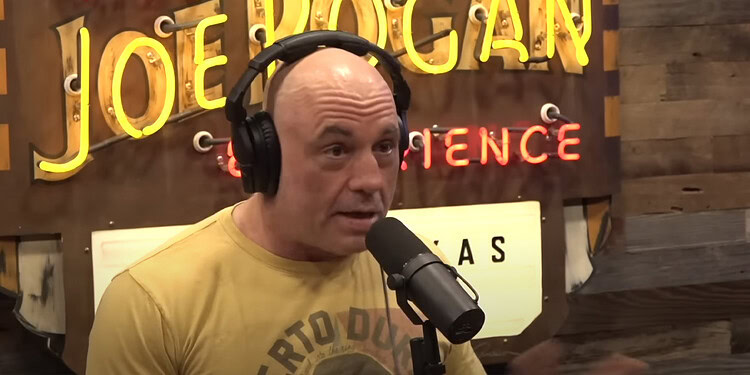
While listening to podcasts in general was unrelated to belief in extraterrestrial UFOs, listening to the Joe Rogan Experience podcast emerged as the second strongest predictor of belief in UFOs. The podcast, known for hosting long-form discussions with a variety of guests, often features conversations about UFOs, alien encounters, and other unconventional topics. The casual, conversational tone of these discussions may lend credibility to such ideas among listeners.
“Media does not determine beliefs, but it can influence us,” Stise told PsyPost. “The media we consume and that our neighbors consume matters. To me, this is even more interesting with the rise of media personalities like Joe Rogan, who are focused on getting ideas out there and making episodes that are intentionally or inadvertently lending credence and legitimacy to topics that we might label pseudoscience.”
“The association with Joe Rogan was what we expected to find, but it is still my favorite finding and has birthed a number of follow-up studies the team is working on,” he added.
The researchers controlled for a number of factors to isolate the impact of specific media genres, platforms, and outlets on UFO beliefs. These included age, gender, race/ethnicity, education level, income level, region of residence, urban vs. rural location, overall media consumption, news media consumption frequency, political orientation, religious beliefs, and prior interest in paranormal topics. But as with all research, there are limitations.
“The standard caveat is that correlation is not causation,” Stise noted. “This paper has identified a potential relationship between consuming certain kinds of media and belief in UFOs. I think there are good theoretical reasons for why these relationships exist, but further research is needed to verify these relationships and demonstrate causal connections.”
For instance, while it is plausible that listening to the Joe Rogan Experience increases the likelihood of believing in extraterrestrial UFOs, it is equally plausible that individuals who already believe in UFOs are naturally drawn to the content Joe Rogan provides, regardless of his show’s UFO-related content. Future studies could address this by conducting longitudinal research to track changes in beliefs over time and using experimental designs to test how exposure to specific types of media impacts beliefs.
The study, “Cultivating paranormal beliefs: how television viewing, social media use, and podcast listening predict belief in UFOs,” was authored by Robert Stise, James Bingaman, Aysha Siddika, Wyatt Dawson, Ashley Paintsil, and Paul R. Brewer.