Subscribe
The latest psychology and neuroscience discoveries.
My Account
  • Mental Health
  • Social Psychology
  • Cognitive Science
  • Neuroscience
  • About
No Result
View All Result
PsyPost
PsyPost
No Result
View All Result
Home Exclusive Cognitive Science

‘Master switch’ for myelination in human brain stem cells is identified

by University at Buffalo
June 30, 2014
in Cognitive Science
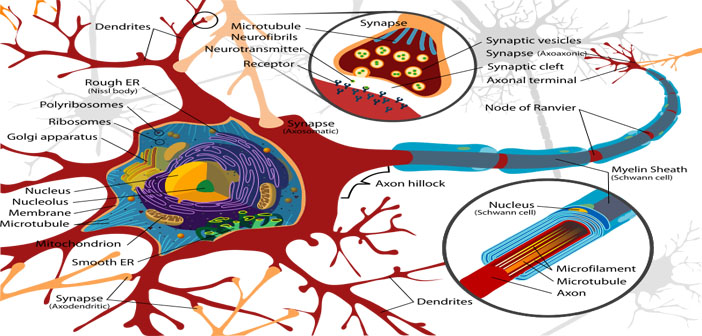
Photo credit: Mariana Ruiz Villarreal

Photo credit: Mariana Ruiz Villarreal

Share on TwitterShare on Facebook

Scientists at the University at Buffalo have identified the single transcription factor or “master switch” that initiates the critical myelination process in the brain. The research will be published online in Proceedings of the National Academy of Sciences (PNAS) on June 30.

The identification of this factor, SOX10, in human brain cells, brings researchers closer to the goal of treating multiple sclerosis (MS) by transplanting into patients the brain cells that make myelin.

“Now that we have identified SOX10 as an initiator of myelination, we can work on developing a viral or pharmaceutical approach to inducing it in MS patients,” says Fraser Sim, PhD, senior author on the paper and assistant professor in the UB Department of Pharmacology and Toxicology in the School of Medicine and Biomedical Sciences.

“If we could create a small molecule drug that would switch on SOX10, that would be therapeutically important,” he adds.

Stem cell therapy is seen as having dramatic potential for treating MS, but there are key obstacles, especially the length of time it takes for progenitor cells to turn into oligodendrocytes, the brain’s myelin-making cells.

Using currently available methods, Sim explains, it can take as long as a year to generate a sufficient number of human oligodendrocyte cells to treat a single MS patient.

That’s partly because there are so many steps: the skin or blood cell must be turned into induced pluripotent stem cells, which can differentiate into any other type of cell and from which neural progenitor cells can be produced. Those progenitor cells then must undergo differentiation to oligodendrocyte progenitors that are capable of ultimately producing the oligodendrocytes.

“Ideally, we’d like to get directly to oligodendrocyte progenitors,” says Sim. “The new results are a stepping stone to the overall goal of being able to take a patient’s skin cells or blood cells and create from them oligodendrocyte progenitors,” he says.

Google News Preferences Add PsyPost to your preferred sources

Using fetal (not embryonic) brain stem cells, the UB researchers searched for transcription factors that are absent in neural progenitor cells and switched on in oligodendrocyte progenitor cells.

While neural progenitor cells are capable of producing myelin, they do so very poorly and can cause undesirable outcomes in patients, so the only candidate for transplantation is the oligodendrocyte progenitor.

“The ideal cell to transplant is the oligodendrocyte progenitor cell,” Sim says. “The question was, could we use one of these transcription factors to turn the neural progenitor cell into an oligodendrocyte progenitor cell?”

To find out, they looked at different characteristics, such as mRNA expression, protein and whole gene expression and functional studies.

“We narrowed it down to a short list of 10 transcription factors that were made exclusively by oligodendrocyte progenitor cells,” says Sim.

“Among all 10 factors that we studied, only SOX10 was able to make the switch from neural progenitor to oligodendrocyte progenitor cell,” says Sim.

In addition, the UB researchers found that SOX10 could expedite the transformation from oligodendrocyte progenitor cell to differentiation as an oligodendrocyte, the myelin-producing cell and the ultimate treatment goal for MS.

“SOX10 facilitates both steps,” says Sim.

That’s tantalizing, he says, because one of the biggest problems with MS is that cells get stuck in the step between the oligodendrocyte progenitor cell and the oligodendrocyte.

“In MS, first the immune system attacks the brain, but the brain is unable to repair itself effectively,” explains Sim. “If we could boost the regeneration step by facilitating formation of oligodendrocytes from progenitor cells, then we might be able to keep patients in the relapsing remitting stage of MS, a far less burdensome stage of disease than the later, progressive stage.”

Sim is also an investigator with other scientists at UB and the University of Rochester on the $12.1 million New York State Stem Cell Science award led by SUNY Upstate Medical Center. The research will test the safety and effectiveness of implanting stem cells that can reproduce myelin into the central nervous system of MS patients.

Previous Post

This is why some urban legends go viral

Next Post

Cocaine addiction: Phase-specific biology and treatment?

RELATED

A surprising body part might provide key insights into schizophrenia risk
Cognitive Science

Brain scans reveal how a woman voluntarily enters a psychedelic-like trance without drugs

April 4, 2026
Schemas help older adults compensate for age-related memory decline, study finds
Cognitive Science

Your body exhibits subtle physiological changes when you engage in self-deception

April 3, 2026
Psychotic delusions are evolving to incorporate smartphones and social media algorithms
Cognitive Science

Brain scans shed light on how short videos impair memory and alter neural pathways

April 3, 2026
Cannabis intoxication broadly impairs multiple memory types, new study shows
Cannabis

Cannabis intoxication broadly impairs multiple memory types, new study shows

April 3, 2026
ChatGPT acts as a “cognitive crutch” that weakens memory, new research suggests
Artificial Intelligence

ChatGPT acts as a “cognitive crutch” that weakens memory, new research suggests

March 30, 2026
Verbal IQ predicts political participation and liberal attitudes twice as strongly as performance IQ
Cognitive Science

Trying harder on an intelligence test does not actually improve your score

March 27, 2026
Brain rot and the crisis of deep thought in the age of social media
Cognitive Science

Massive analysis of longitudinal data links social media to poorer youth mental health

March 27, 2026
High meat consumption may protect against cognitive decline in people with a specific Alzheimer’s gene
Cognitive Science

Asking complex questions improves creative project scores but hurts multiple-choice exam grades

March 26, 2026

STAY CONNECTED

RSS Psychology of Selling

  • What today’s shoppers really want from salespeople, and what drives them away
  • The salesperson who competes against themselves may outperform the one trying to beat everyone else
  • When sales managers serve first, salespeople stay longer and sell more confidently
  • Emotional intelligence linked to better sales performance
  • When a goal-driven boss ignores relationships, manipulative employees may fight back

LATEST

Higher testosterone linked to increased suicide risk in depressed teenage boys

Brain scans reveal how a woman voluntarily enters a psychedelic-like trance without drugs

The hidden mental cost of emotional rigidity in young adults

Hostile sexism is linked to higher rates of social sabotage and gossip among young adults

Can a psychedelic journey change what you value most?

Family dynamics predict whether parents and children agree on choosing a romantic partner

Job seekers mask their emotions and act more analytical when evaluated by artificial intelligence

Your body exhibits subtle physiological changes when you engage in self-deception

PsyPost is a psychology and neuroscience news website dedicated to reporting the latest research on human behavior, cognition, and society. (READ MORE...)

  • Mental Health
  • Neuroimaging
  • Personality Psychology
  • Social Psychology
  • Artificial Intelligence
  • Cognitive Science
  • Psychopharmacology
  • Contact us
  • Disclaimer
  • Privacy policy
  • Terms and conditions
  • Do not sell my personal information

(c) PsyPost Media Inc

Welcome Back!

Login to your account below

Forgotten Password?

Retrieve your password

Please enter your username or email address to reset your password.

Log In

Add New Playlist

Subscribe
  • My Account
  • Cognitive Science Research
  • Mental Health Research
  • Social Psychology Research
  • Drug Research
  • Relationship Research
  • About PsyPost
  • Contact
  • Privacy Policy

(c) PsyPost Media Inc