![[Adobe Stock]](https://sp-ao.shortpixel.ai/client/to_webp,q_glossy,ret_img,w_750,h_375/https://www.psypost.org/wp-content/uploads/2024/07/hippocampus-750x375.jpg)
A study of young adults in Spain found that those who engage in moderate to vigorous physical activity tend to have larger volumes in the CA2/CA3 region of the hippocampus—a part of the brain crucial for memory and spatial navigation. The findings were published in the journal Brain Imaging and Behavior.
The hippocampus is a small, curved structure located deep within the brain. It plays a central role in forming, organizing, and retrieving memories. As part of the limbic system, it helps consolidate information from short-term memory into long-term memory and supports spatial memory, which enables us to navigate the world around us.
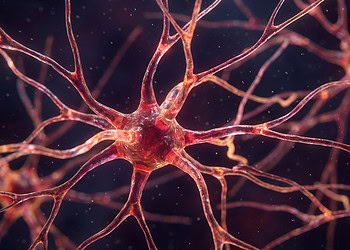
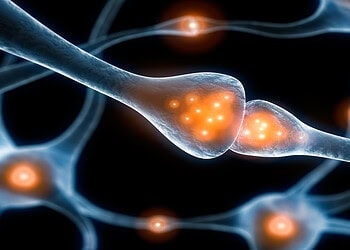
For many years, it was believed that the brain stopped producing new neurons after childhood. However, more recent research has shown that neurogenesis—the creation of new neurons—continues into adulthood, particularly in the hippocampus. This phenomenon is known as adult hippocampal neurogenesis.
Estimates suggest that adult humans produce roughly 700 new neurons per day in each hemisphere of the hippocampus. However, the survival of these new neurons depends on whether they are successfully integrated into existing brain circuits. If they are not incorporated soon after forming, they typically die off. In humans, successful incorporation appears to depend on learning—especially effortful learning. Animal studies, such as those involving mice, have shown that running can stimulate hippocampal neurogenesis, suggesting that physical activity may promote the growth of new neurons and help maintain existing ones.
In this study, lead author Anastasia Cherednichenko and her colleagues set out to explore the relationship between physical activity and hippocampal gray matter volume in two key subregions: CA2/CA3 and CA4/dentate gyrus (DG). They also investigated whether self-reported versus objectively measured physical activity was more closely linked to hippocampal volume, and examined the potential role of personality traits—specifically punishment sensitivity and anxiety-proneness.
Gray matter volume refers to the volume of neuron cell bodies in a given brain region. The CA2/CA3 and CA4/DG subfields of the hippocampus are involved in memory formation and spatial navigation. The CA2/CA3 region facilitates the creation of new synaptic connections that underpin learning, while the CA4/DG plays a critical role in neurogenesis and the integration of new memories.
The study included 84 healthy young adults (43 women) with an average age of 23. Participants were recruited from the student population at Universitat Jaume I in Castellón de la Plana, Spain, through posters, social media, and word of mouth.
To objectively measure physical activity, participants wore a GENEActiv accelerometer on their non-dominant wrist for seven consecutive days. These wrist-worn devices continuously recorded movement, allowing researchers to assess time spent in light, moderate, and vigorous physical activity, as well as sedentary behavior. After the seven-day monitoring period, participants underwent a high-resolution MRI scan to assess hippocampal volume. They also completed the Global Physical Activity Questionnaire (GPAQ) to self-report their typical activity levels, and filled out personality questionnaires, including the Behavioral Inhibition System/Behavioral Activation System (BIS/BAS) scales.
The results showed that participants who engaged in moderate to vigorous physical activity, as measured by the accelerometer, had significantly larger volumes in the CA2/CA3 subregion of the hippocampus. There was also a smaller, marginally significant increase in CA4/DG volume associated with MVPA. Additionally, participants who engaged in light physical activity showed slightly higher CA2/CA3 volumes, although this effect was weaker and did not reach statistical significance after correcting for multiple comparisons.
In contrast, self-reported physical activity levels were not associated with hippocampal volume in any region. However, self-reported activity levels were linked to personality traits: individuals who reported higher physical activity levels tended to have lower sensitivity to punishment and lower anxiety-proneness, as indicated by lower BIS scores. Similarly, participants who spent less time in sedentary behavior (according to the accelerometer) also scored lower on anxiety-proneness, particularly among men.
“The current study showed that objectively measured PA [physical activity] is positively associated with hippocampal CA2/CA3 volume in young adults. The pattern of relationships between PA and punishment sensitivity revealed a negative relationship between both variables when using self-reported measures of PA, but an inverse relationship with accelerometry derived sedentarism measure,” the study authors concluded.
The study sheds light on the links between hippocampal volume and physical activity. However, it should be noted that the study was conducted on a small group of (primarily) university students. Results on other demographic groups might not be the same. Additionally, the design of the study does not allow any causal inferences to be derived from the results.
The paper, “Physical activity and hippocampal volume in young adults,” was authored by Anastasia Cherednichenko, Anna Miró-Padilla, Jesús Adrián-Ventura, Irene Monzonís-Carda, Maria Reyes Beltran-Valls, Diego Moliner-Urdiales, and César Ávila.