Scientists have discovered that watching everyday mother-infant interactions can trigger similar brain activity patterns across different mothers. This neural synchrony, observed particularly in contexts showcasing mother-child bonding, highlights the profound impact of such primary attachments on our brains. The study, published in The Journal of Neuroscience, sheds new light on the neural underpinnings of human social connections.
Human brains are incredibly adept at processing and responding to social cues, a skill essential for survival and social interaction. Researchers have long been fascinated by how our brains can synchronize when exposed to the same experiences, especially dynamic ones like movies or stories. This phenomenon, known as brain synchronization, is believed to play a critical role in how we connect, communicate, and empathize with others.
Recognizing the deep-rooted nature of the mother-infant bond, scientists were particularly interested in exploring whether this bond could activate shared brain responses across different individuals. This study aimed to delve into these shared neural responses, offering insights into the very fabric of human sociality and connectivity.
“I have been studying synchrony for nearly three decades as a fundamental process that underpins human sociality, adaptation, and resilience,” said study author Ruth Feldman, the Simms/Mann Chaired Professor in Social Neuroscience and director of the Center for Developmental Social Neuroscience at Reichman University, and an adjunct professor at the Yale University Child Study Center.
“My theoretical model on biobehavioral synchrony proposes, on the basis of much research, that we connect to others in brain and other biological systems during social contact. We also suggest that the mother-infant context is where human infants, like any mammalian young, acquire the capacity for synchrony and that the primary attachment is a good context to study the topic.”
“But until now, we (and others) studied synchrony between brain between two individuals – and mothers and infants – during social interactions,” Feldman explained. “This is the first study that uses reminders of the primary attachment – videos of mothers and infants (a stimuli that is immediately understood without words) to see how (and where) this very primary stimuli creates synchrony across multiple brains, potentially serving as a basis for social uniformity and the aggregation of individuals into social groups.”
“I believe Christianity used this intuitively very well, by using the mother-infant bond as its central icon to induce uniformity and social cohesion, which is a very good setting for faith and a sense of unity with the group.”
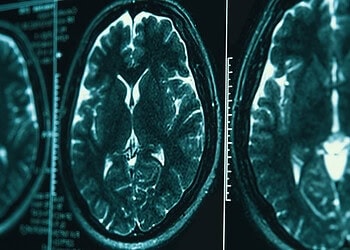
The study involved a carefully selected group of 35 postpartum mothers, recruited through online parenting forums. After a thorough screening process for suitability and mental health, 24 participants were finalized for the study. These mothers underwent two magnetic resonance imaging (MRI) brain scanning sessions, where they were shown naturalistic films of mother-infant interactions. These films included both scenes of unfamiliar mothers with their infants and tailored footage of the participants with their own children.
The scenarios depicted varied from ‘social’ contexts, where mother and child were together, to ‘alone’ contexts, where each was shown individually. The uniqueness of this study was heightened by its crossover design: before each scan, participants were administered either oxytocin – a hormone linked to social bonding – or a placebo, in a randomized, double-blind manner.
When participants watched videos of mother-infant interactions, certain areas of the brain showed synchronized activity across different individuals. Remarkably, this synchrony occurred in large portions of the brain, with about 44% of the brain regions examined responding to these attachment cues.
This synchrony was particularly pronounced in scenarios where mothers interacted with their infants, as opposed to when they were shown alone. Key brain regions involved in this synchronization included those associated with emotional processing and social cognition, such as the anterior cingulate cortex and insula.
The findings indicate “that we are wired to connect to others neutrally and that some situations or stimuli create greater cross-brain synchrony and induce greater uniformity among brains,” Feldman told PsyPost. “Reminders of the primary attachment work in our brains to create a template for the coordination of individuals into social groups.”
Surprisingly, the administration of oxytocin did not significantly alter the patterns of brain synchronization observed. This suggests that the naturalistic mother-infant bonding cues themselves were potent enough to trigger shared brain responses, independent of additional hormonal influences.
Furthermore, the study revealed a fascinating correlation between observed behavioral synchrony – the coordinated interactions between mother and infant in the videos – and the degree of brain synchronization among the viewers. In other words, moments of closer, more harmonious interaction between mother and child in the videos were mirrored by more synchronized brain activity among the participants.
“The moment-by-moment variability in cross-brains synchrony tracks the moment-by-moment changes in the degree of synchrony in the presented stimulus,” Feldman explained. “When participants saw a highly-synchronized moment between mom and baby in the video, they increase their synchronized response. This really shows how neural synchrony is couched within behavioral coordination, the main tenet of our biobehavioral synchrony conceptual model.”
While the study’s findings are groundbreaking, they come with certain limitations. The participant pool was relatively homogenous – all were postpartum mothers, which raises questions about how these findings might generalize to other groups, such as fathers, non-parents, or individuals with different sociocultural backgrounds.
Furthermore, the study focused on positive mother-infant interactions. Exploring how the brain responds to a broader range of social cues, including negative or distressing ones, could provide a more comprehensive understanding of our social brain’s workings.
Another avenue for future research lies in exploring how these findings apply to individuals with social dysfunction, such as those with autism or depression. Understanding whether these conditions affect the brain’s response to social cues like mother-infant bonding could open new doors for therapeutic interventions.
“Future studies should examine whether individuals with pathologies involving social dysfunctions, such as autism, depression, PTSD or schizophrenia, are not able to enter into synchrony with others when attachment (or other social) stimuli are presented (and what parts of the brain aren’t synchronized in each pathology),” Feldman said. “I believe this may stand at the root of the social dysfunction and induces a sense of loneliness and inability to comprehend others.”
“For instance, while healthy individuals will synchronize nearly half of their brain activation when viewing a video of mom and infant playing, how would be the cross-brains synchrony of an autistic individual?”
The study, “Attachment Reminders Trigger Widespread Synchrony across Multiple Brains“, was authored by Ortal Shimon-Raz, Yaara Yeshurun, Adi Ulmer-Yaniv, Ayelet Levinkron, Roy Salomon, and Ruth Feldman.