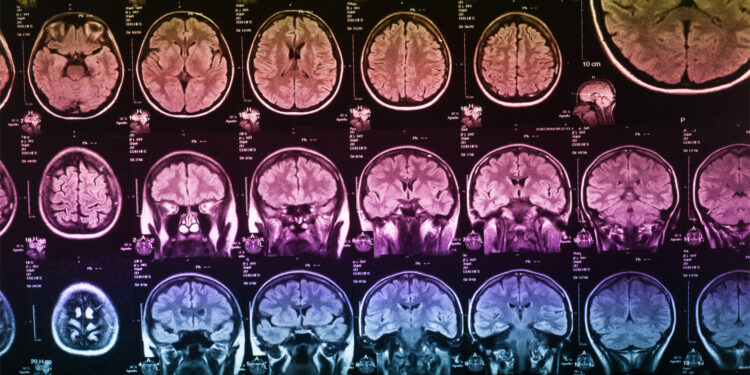
An analysis of data from the Adolescent Brain Cognitive Development (ABCD) Study found that preteens living in neighborhoods with high levels of fine particulate matter or ozone showed less neurocognitive maturation over two years than demographically similar peers in low-pollution areas. Compared with their peers, they showed smaller gains in cognitive task performance, less maturation of brain network organization, and less of the cortical thinning that normally occurs with development. The paper was published in Developmental Cognitive Neuroscience.
Adolescence is a period of rapid brain development during which the ability to maintain attention, process relevant information, and exercise cognitive control continues to improve. At the same time, the cerebral cortex undergoes major structural and functional changes, including cortical thinning and increasing specialization of communication between brain networks.
Air pollution has attracted growing concern as a possible environmental influence on these developmental processes. Fine particulate matter, or PM2.5, is especially concerning because its particles are smaller than red blood cells and can travel through the bloodstream, while some toxic components may reach the brain through the nasal cavity and the olfactory system. Ozone, a gas found in smog, may harm nerve cells through chronic oxidative stress, and inflammation in the brain has been proposed as another pathway by which pollutants could affect development.
Neuroimaging studies have linked exposure to PM2.5, ozone, and nitrogen oxides with differences in cortical thickness, brain volume, surface area, and functional connectivity in children and adolescents. However, the direction and meaning of these associations have been inconsistent, with some findings suggesting delayed maturation and others appearing to suggest more advanced developmental patterns. Few studies have also examined whether these brain differences are reflected in children’s thinking abilities.
One difficulty is that pollution exposure is closely intertwined with socioeconomic and neighborhood factors, making it challenging to determine whether observed brain differences are caused by pollutants themselves or by other characteristics of the environments in which children live.
Study author Omid Kardan of the University of Michigan and his colleagues set out to isolate the effects of exposure to high levels of PM2.5 and ozone in pre- and early adolescence on brain development and cognitive performance. They hypothesized that high exposure to either pollutant would be associated with slower neurocognitive maturation.
The researchers analyzed data from the ABCD Study, an ongoing longitudinal study of 11,868 children across 21 sites in the U.S. who were enrolled between the ages of 9 and 10.9. The analysis used data from the start of the study and from a follow-up two years later.
The data included resting-state functional magnetic resonance imaging (fMRI) scans, which show how brain regions communicate, structural brain scans, and cognitive tasks measuring attention, working memory, inhibitory control, processing speed, memory, vocabulary, and reading. A total of 3,645 participants had usable data at both time points.
The researchers estimated each child’s exposure from modeled air pollution levels in the 1 km2 area around their primary residence at the start of the study. They used U.S. Environmental Protection Agency standards to define high exposure: an annual average above 9 µg/m³ for PM2.5 and a peak ozone level above 70 parts per billion. Low-exposure comparison groups were drawn from children living with less than 7 µg/m³ of PM2.5 or less than 60 parts per billion of ozone.
No participants met the threshold for high exposure to nitrogen dioxide, so that pollutant was not analyzed. The researchers also excluded 40 children who were exposed to high levels of both PM2.5 and ozone, to separate the effects of the two pollutants.
Because pollution exposure is tied to family income and neighborhood, the researchers compared each high-pollution group with a control group matched on household income, parental education, race and ethnicity, sex, and age. The final samples included 348 children with high PM2.5 exposure and 279 matched controls, and 355 children with high ozone exposure and 324 matched controls. The analyses also adjusted for factors including puberty, mental health symptoms, and neighborhood disadvantage.
The researchers combined three measures into a single index of neurocognitive maturation: cognitive task performance, average cortical thickness, and a measure of how closely the organization of a child’s brain networks resembled that of adults rather than infants. Cortical thinning is a normal part of brain maturation in this age range, so greater thinning indicates more maturation.
Children in the low-pollution control groups showed a statistically reliable increase on this maturation index over the two years, but children in the high-PM2.5 and high-ozone groups did not. In other words, the controls showed greater gains in cognitive performance, more maturation of brain network organization, and more cortical thinning than their peers in high-pollution areas. The differences were small, and they held up when the researchers accounted for exposure to the other pollutant.
“As healthy cognitive development is central to multiple domains of resilience and academic achievement, more effort should be directed toward reduction of these pollutants in residential and school areas,” study authors concluded.
The study contributes to the scientific knowledge about environmental factors affecting cognitive development. However, the study was observational, and the air pollution data were based on ambient air pollution in the 1 km2 area around each participant’s home, which may not fully reflect their actual exposure. Pollution was also measured only at the start of the study, so the data may not capture moves during the study or exposure earlier in life, including before birth.
In addition, the ozone measure was based on the highest level recorded in a year rather than the EPA’s standard calculation, which may have overstated how many children had high exposure. To create well-matched groups, the researchers also had to exclude 35 children with high PM2.5 exposure who had no demographically similar peers in low-pollution areas, which limits how representative the findings are.
The paper, “Neighborhood air pollution is associated with attenuated neurocognitive maturation over early adolescence,” was authored by Omid Kardan, Chacriya Sereeyothin, Kathryn E. Schertz, Mike Angstadt, Alexander S. Weigard, Marc G. Berman, Mary M. Heitzeg, and Monica D. Rosenberg.
