
A child’s neighborhood and socioeconomic background appear to shape the function and structure of their developing brain more powerfully than any other behavioral or environmental factor. Brain activity patterns previously thought to represent innate intelligence are actually a reflection of socioeconomic status, likely driven by environmental stressors like sleep deprivation, according to findings published in the journal Science.
For years, neuroscientists have mapped single human traits to brain imaging data. Researchers typically look for the biological basis of a specific cognitive ability, such as intelligence quotient, or a clinical symptom, like anxiety. They compare these traits against physical brain measurements to find overlapping physiological patterns.
However, the environment in which a person grows up exerts an enormous influence on their physical and cognitive development. A team led by Scott Marek, a researcher at Washington University School of Medicine in St. Louis, wanted to evaluate how a vast array of different lifestyle, environmental, and cognitive variables relate to brain biology simultaneously. By looking at hundreds of factors at once, the researchers could determine which aspects of a child’s life are most strongly tied to brain organization.
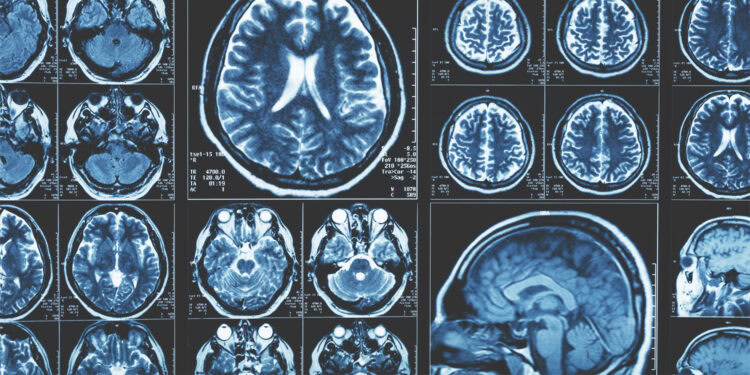
The researchers utilized data from the Adolescent Brain Cognitive Development Study. This massive project tracked the development of thousands of nine and ten year old children across the United States. The team analyzed two common brain measurements taken via magnetic resonance imaging, or MRI.
The first measurement was resting-state functional connectivity, which maps how different regions of the brain communicate. It works by tracking spontaneous blood flow while a person is resting, revealing which brain networks naturally fire together. The second measurement was cortical thickness, which measures the physical depth of the brain’s outer layer of gray matter.
The team took these brain scans and compared them against 649 different non-imaging variables, evaluating the strength of the association for each one. These variables spanned a dozen categories, including physical health, parenting, personality, substance use, and social adjustment.
Out of all 649 variables, socioeconomic measures exhibited the strongest and most reliable associations with the children’s brain data. The single most powerful association was linked to the socioeconomic opportunities afforded by the child’s home zip code. This metric captures neighborhood-level factors like school quality, environmental toxins, and access to resources.
Other highly ranked variables included sleep duration and the amount of time children spent on screens. Traditional metrics of cognition and overall mental health symptoms ranked much lower on the list.
The researchers then mapped out exactly where these socioeconomic associations appeared in the physical brain. They found that socioeconomic status was strongly linked to differences in the primary motor and sensory regions. These are areas of the brain that process physical movement and immediate sensory input.
To understand what this specific biological pattern meant, the team compared it to established reference maps of the brain. They looked at positron emission tomography scans tracking neurotransmitters, brainwave recordings monitoring sleep patterns, and imaging that captured the physical effects of task-based reasoning.
The socioeconomic brain pattern closely matched the biological signatures of physiological arousal, sleep deprivation, stress, and the effects of stimulant medications. The pattern did not map onto the frontal and parietal cortices. These are the associative regions of the brain known to handle higher-order cognitive tasks, such as logic, mathematics, and complex thought.
The team noticed an unexpected similarity when they looked at the brain map for intelligence quotient, or IQ. The physical pattern associated with IQ scores was nearly identical to the socioeconomic pattern. It was concentrated in the exact same motor and sensory regions, completely bypassing the brain areas actually responsible for complex reasoning.
Suspecting a mathematical overlap, the researchers adjusted their data to remove the statistical influence of socioeconomic status from the test scores. After this adjustment, the strong associations between the brain and IQ scores largely vanished. The faint pattern that remained shifted away from the sensory and arousal regions and looked slightly more aligned with known cognitive networks.
The researchers tested this overlap further using multivariate analysis, an advanced machine learning technique. They trained computer models to predict a child’s IQ score based entirely on their brain connectivity patterns. The team manipulated the data fed into the models, restricting some training sets to only include children from high socioeconomic backgrounds.
When the models were trained exclusively on affluent children, they completely failed to predict test scores in a new, separate group of participants. The predictive models only worked when the training data included children from neighborhoods with lower socioeconomic status. The researchers concluded that the algorithm was engaging in shortcut learning.
Shortcut learning happens when a computer model relies on a secondary, background variable instead of the intended target. In this case, the algorithm was not detecting a biological signature for intelligence. It was simply detecting the socioeconomic status of the child, which happened to correlate with their test scores.
These population-level associations observe data across large groups at a single moment in time. Group averages cannot predict the future outcomes or cognitive potential of an individual child. Socioeconomic opportunity only explained about 16 percent of the total differences seen across the children’s brain scans, meaning many other biological and environmental factors contribute to human development.
The findings do challenge the notion that IQ scores measure a fixed, essentialized biological trait. The results suggest that past studies linking brain networks to intelligence were likely documenting the physiological toll of environmental stressors.
Future longitudinal research is needed to track these developmental pathways as children age. Researchers might also investigate whether interventions focused on sleep quality and stress reduction can positively influence brain development in under-resourced communities.
The study, “Patterns of brain-wide associations reflect socioeconomics,” was authored by Scott Marek, Meghan Rose Donohue, Nicole R. Karcher, Caroline P. Hoyniak, Roselyne J. Chauvin, Ashley C. Meyer, John Miller, Andrew N. Van, Anxu Wang, Noah J. Baden, Vahdeta Suljic, Kristen M. Scheidter, Julia Monk, Forrest I. Whiting, Nadeshka J. Ramirez-Perez, Samuel R. Krimmel, Athanasia Metoki, Sarah E. Paul, Aaron J. Gorelik, Timothy J. Hendrickson, Stephen M. Malone, Rebecca F. Schwarzlose, Carlos Cardenas-Iniguez, Megan M. Herting, Steven E. Petersen, Joan Luby, Anita C. Randolph, Michael J. Shanahan, Eric Turkheimer, Benjamin P. Kay, Evan M. Gordon, Timothy O. Laumann, Deanna M. Barch, Damien A. Fair, Brenden Tervo-Clemmens, and Nico U. F. Dosenbach.