A new study published in PNAS Nexus has found that specific patterns of brain activity can predict the success of persuasive messages across a wide variety of contexts. By analyzing neuroimaging data from over 500 individuals, researchers identified that neural responses in regions associated with reward and social processing are consistent indicators of how effective a message will be. These findings suggest that the human brain utilizes a common set of mechanisms to evaluate persuasive content.
Diverse fields such as marketing, political science, and public health rely heavily on the ability to influence attitudes and behaviors through mass media. Practitioners and scientists have long sought to understand exactly what makes a message persuasive enough to change a mind or prompt an action.
Previous research on this topic has typically been isolated within specific disciplines, preventing the development of a unified theory that applies across different topics. This fragmentation makes it difficult to know if the psychological drivers behind a successful anti-smoking ad are the same as those driving a popular movie trailer. The authors of the current study aimed to bridge this gap by applying a standardized analytical framework to a large collection of existing datasets.
“Persuasive messages—like those used in marketing, politics, or public health campaigns—play a key role in shaping attitudes and influencing behavior. But what exactly makes these messages effective, and do the same processes apply across different contexts? We don’t fully know, because research on persuasion tends to stay within individual disciplines, with little cross-talk,” explained the corresponding authors, Christin Scholz, Hang-Yee Chan, and Emily B. Falk.
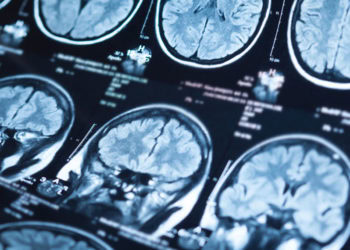
“If we could identify common processes, different fields could work together more efficiently to understand what really drives persuasion. In this study, we examine neuroimaging data collected in response to a variety of persuasive messages. MRI brain images offer a way to observe and compare patterns of brain activity across different contexts. By conducting a mega-analysis of 16 datasets, we aimed to uncover broader patterns in how the brain responds to persuasive messages—patterns that individual studies might overlook.”
The research team conducted a mega-analysis, which differs from a traditional meta-analysis by aggregating and re-processing the raw data from multiple studies rather than simply summarizing their published results. They pooled functional magnetic resonance imaging (fMRI) data from 16 distinct experiments conducted by the co-authors. This combined dataset included 572 participants who were exposed to a total of 739 different persuasive messages.
The scope of the messages was broad, covering topics such as public health promotion, crowdfunding projects, commercial products, and video, text, or image-based advertisements. The total dataset comprised 21,688 individual experimental trials. In each of the original studies, participants lay inside an MRI scanner while viewing the messages. The scanner recorded changes in blood flow to various parts of the brain, which serves as a proxy for neural activity.
After viewing the content, the participants provided their own evaluations of the messages. They typically answered survey questions about how much they liked the message or whether they intended to change their behavior. The researchers categorized these self-reported measures as “message effectiveness in individuals.”
To assess the real-world impact of the content, the team also gathered data on how independent, larger groups of people responded to the same messages. These measures were termed “message effectiveness at scale.” This category included objective behavioral metrics like click-through rates on web banners, the amount of money donated to a campaign, or total view counts on video platforms.
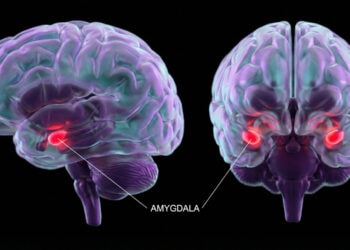
The researchers then used linear mixed-effects models to test if brain activity in specific regions could predict both the individuals’ ratings and the large-scale behavioral outcomes. They focused their analysis on two primary neural systems: the reward system and the mentalizing system. The reward system is involved in anticipating value and pleasure, while the mentalizing system helps individuals understand the thoughts and feelings of others.
The statistical analysis revealed that activity in brain networks associated with reward processing was positively linked to message effectiveness. When participants showed higher engagement in the ventral tegmental area and nucleus accumbens, they were more likely to rate the messages as effective. These regions are deep structures in the brain that are typically involved in processing personal value and motivation. The study indicates that this neural signal of value is a consistent predictor of how well a message is received by the viewer.
The researchers also identified a strong connection between message success and activity in the brain’s mentalizing system. This network includes the medial prefrontal cortex and the temporal poles. These areas are active when people think about themselves or attempt to interpret the mental states of other people. The analysis showed that messages triggering this social processing network were more likely to be effective both for the person watching and for larger audiences.
A significant finding emerged when the researchers compared brain data to the real-world success of the messages at the population level. They found that neural activity in the mentalizing system predicted population-level outcomes, such as how often a video was shared. This predictive power held true even after accounting for the participants’ stated opinions in surveys. This suggests that the brain registers social relevance in ways that individuals may not consciously articulate.
The study refers to this phenomenon as “neuroforecasting.” This concept posits that neural activity in a small group of people can forecast the behavior of a much larger population. The findings support the idea that specific brain responses are more generalizable to the public than subjective self-reports. While people might say they like a message, their neural activity related to social processing appears to be a better indicator of whether that message will resonate with others.
“On average, the specific brain activity we tracked explained a small but robust portion of why messages were effective, roughly translating to what researchers call a small effect size (Cohen’s d = 0.22) at the population level,” the researchers told PsyPost. “We found this effect when looking at our large set of over 700 diverse messages as a whole. You could understand these neural markers as a ‘common currency’ that helps explain persuasion across many different real-world domains. However, the effect sizes also vary across message domains. Explaining that variance is an important task for the field going forward.”
“In a way, it is surprising that we were able to find any commonality in the neural processes related to message effectiveness across the messages we included. These messages did not only vary in their persuasive goals (from selling products, to recruiting volunteers, to promoting smoking cessation), but also in their format (videos, text, and more), and in the way their effectiveness was evaluated (click-through rates of online campaigns, self-report surveys, etc.).”
“This introduces a lot of noise in the analysis. Yet, we were still able to pick up on some common, underlying processes that support persuasion. This suggests that the ways in which we change our minds and behavior are, at least in part, similar across a variety of domains.”
Beyond the initial hypotheses regarding reward and social processing, an exploratory review of the whole brain uncovered additional patterns. Activity in regions linked to language processing and emotion also correlated with message success at scale. This implies that successful messages tend to engage the brain’s linguistic and emotional centers more deeply than less effective content. These exploratory findings suggest that emotion may play a larger role in mass-market success than previously identified in smaller studies.
“While we hypothesized that reward and social systems would be central, we were surprised to find through exploratory analysis that language processing and emotional brain responses also played significant roles in message success,” Scholz, Chan, and Falk said.
“Interestingly, our results suggested that neural signals related to emotion were particularly strong indicators of message effectiveness at scale—meaning for large groups—rather than just for individuals. We also found it notable that social processing activity in the brain provided ‘hidden&’ information about a message’s success that participants didn’t realize they were feeling or mention in their self-reports.”
As with all research, there are some limitations. Most of the data came from participants in Western, Educated, Industrial, Rich, and Democratic societies. Cultural norms heavily influence communication and social processing, so these neural markers might differ in other populations. The study is also correlational, meaning it observes associations but cannot prove that brain activity directly causes the messages to be effective.
Technical differences between the original studies also presented challenges for the analysis. The sixteen datasets used varied scanning parameters, equipment, and experimental protocols. While the mega-analysis approach helps smooth out some noise, these inconsistencies make it difficult to identify specific factors that might strengthen or weaken the observed effects.
“These neural markers should be seen as a first step toward experimental work,” the researchers noted. “We need more work, for instance, to interpret the exact psychological and thought processes that are responsible for creating the neural patterns we observed. A brain scanner is not a ‘mind-reading’ tool.”
Future work is needed to move from prediction to explanation. The researchers propose designing experiments that specifically manipulate message content to target the identified brain regions. Such studies could verify whether activating the reward or social processing systems intentionally leads to better outcomes.
“A major goal is to move from observing these brain patterns to conducting experiments that specifically design messages to activate these reward and social mechanisms to see if they become more effective,” Scholz, Chan, and Falk explained. “We also need to diversify our samples to include a broader range of global populations to ensure our findings apply to everyone. Finally, we hope to coordinate as a field to standardize how neuroimaging data is collected across different domains to make future large-scale collaborations even more powerful.”
“This project was a massive collaborative effort involving 16 functional MRI datasets, over 500 participants, and more than 700 unique messages. Because we believe in the importance of open science, we have made our data and analysis code publicly available so other researchers can build on these findings. We hope this study serves as a bridge between neuroscience, communication, and public policy to create more effective and beneficial messaging for society.”
The study, “Brain activity explains message effectiveness: A mega-analysis of 16 neuroimaging studies,” was authored by Christin Scholz, Hang-Yee Chan, Jeesung Ahn, Maarten A. S. Boksem, Nicole Cooper, Jason C. Coronel, Bruce P. Doré, Alexander Genevsky, Richard Huskey, Yoona Kang, Brian Knutson, Matthew D. Lieberman, Matthew Brook O’Donnell, Anthony Resnick, Ale Smidts, Vinod Venkatraman, Khoi Vo, René Weber, Carolyn Yoon, and Emily B. Falk.