

Could specialized cells in our brain hold secrets to understanding and potentially treating neurological disorders? A recent study led by neuroscientists at the University of Zurich unveils how a particular type of cell, crucial for insulating nerve fibers, plays a pivotal role in brain function. The findings have been published in Nature Neuroscience.
The team discovered that these cells, known as oligodendrocytes, not only detect electrical signals from nerve fibers but also respond by ramping up their energy intake, thereby fueling the brain’s complex network of signals. This finding could have far-reaching implications for understanding diseases like multiple sclerosis and Alzheimer’s.
Brain cells communicate through electrical signals that travel along axons, extensions of nerve cells insulated by a fatty layer called myelin. Myelin is produced by oligodendrocytes, which ensure signals are transmitted swiftly and efficiently.
Disruptions in this process can lead to neurological diseases. By focusing on oligodendrocytes, the researchers aimed to understand better how these cells support the high-energy demands of active nerve fibers, potentially opening new pathways to treat various brain disorders.
The researchers focused on the mouse optic nerve, a prime model for studying electrical activity in myelinated axons. They employed innovative techniques, including tiny biosensors, to monitor how oligodendrocytes react to electrical signals from nerve fibers.
These biosensors allowed for the detection of molecular changes in real-time, providing a window into the cellular processes at play. They further explored this interaction by examining genetically modified mice lacking specific potassium channels in their oligodendrocytes, revealing the vital role these channels play in maintaining nerve fiber health.
The key discovery was that oligodendrocytes are not passive insulators; they actively sense the electrical firing of axons and respond by ramping up their glucose consumption. This increased energy intake enables them to supply energy-rich molecules to the active axons, catering to their heightened energy needs. The trigger for this rapid response was identified as potassium, released by axons during electrical activity, signaling the oligodendrocytes to kick into high gear.
“We found that oligodendrocytes not only detect the signals from active nerve fibers, but also respond to them by immediately accelerating their consumption of glucose, a primary energy source,” said study author Aiman Saab of the Institute of Pharmacology and Toxicology at the University of Zurich.
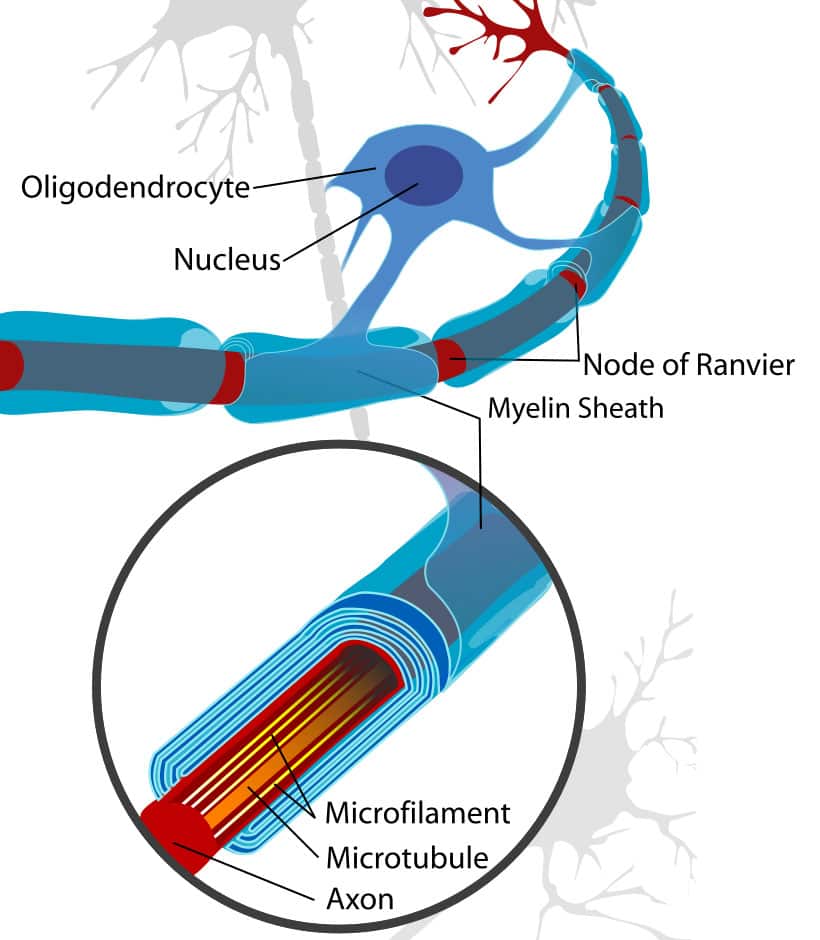
Further investigation revealed a specific potassium channel, Kir4.1, as a vital mediator in this process. The team observed that mice lacking these channels in their oligodendrocytes showed signs of nerve fiber distress, including reduced levels of lactate (a key energy source) and significant axon damage over time. This pointed to the essential role of Kir4.1 channels in maintaining the health and functionality of nerve fibers.
“Using a variety of chemicals and inhibitors, we were able to show that potassium, released by axons during firing, is the key signal that activates the oligodendrocytes,” explained Zoe Looser, the first author of the study.
This groundbreaking work highlights the importance of oligodendrocytes in supporting the brain’s intricate network of neurons. The researchers underscore that disruptions in this energy supply mechanism could lead to nerve damage, aging, and diseases such as multiple sclerosis and Alzheimer’s. The findings pave the way for new research directions, focusing on how these cellular interactions influence brain health and disease progression.
However, the study is not without its limitations. The research was conducted on mice, and while these findings provide valuable insights, further research is needed to confirm their applicability to humans. Additionally, the study opens up new questions regarding how these mechanisms vary across different brain regions and in the context of various neurological disorders. Future research will need to explore how oligodendrocytes’ regulation of glucose metabolism affects specific brain functions and their health during aging and in disease states.
This study marks a significant step forward in our understanding of brain function and the critical role of oligodendrocytes in supporting the brain’s electrical signaling system. By shedding light on the metabolic interactions between nerve fibers and their insulating cells, it opens new avenues for research into treatments for neurodegenerative diseases, offering hope for millions affected by these conditions worldwide.
The study, “Oligodendrocyte–axon metabolic coupling is mediated by extracellular K+ and maintains axonal health,” was authored by Zoe J. Looser, Zainab Faik, Luca Ravotto, Henri S. Zanker, Ramona B. Jung, Hauke B. Werner, Torben Ruhwedel, Wiebke Möbius, Dwight E. Bergles, L. Felipe Barros, Klaus-Armin Nave, Bruno Weber, and Aiman S. Saab.