Dopamine seems to be having a moment in the zeitgeist. You may have read about it in the news, seen viral social media posts about “dopamine hacking” or listened to podcasts about how to harness what this molecule is doing in your brain to improve your mood and productivity. But recent neuroscience research suggests that popular strategies to control dopamine are based on an overly narrow view of how it functions.
Dopamine is one of the brain’s neurotransmitters – tiny molecules that act as messengers between neurons. It is known for its role in tracking your reaction to rewards such as food, sex, money or answering a question correctly. There are many kinds of dopamine neurons located in the uppermost region of the brainstem that manufacture and release dopamine throughout the brain. Whether neuron type affects the function of the dopamine it produces has been an open question.
Recently published research reports a relationship between neuron type and dopamine function, and one type of dopamine neuron has an unexpected function that will likely reshape how scientists, clinicians and the public understand this neurotransmitter.
Dopamine neuron firing
Dopamine is famous for the role it plays in reward processing, an idea that dates back at least 50 years. Dopamine neurons monitor the difference between the rewards you thought you would get from a behavior and what you actually got. Neuroscientists call this difference a reward prediction error.
Eating dinner at a restaurant that just opened and looks likely to be nothing special shows reward prediction errors in action. If your meal is very good, that results in a positive reward prediction error, and you are likely to return and order the same meal in the future. Each time you return, the reward prediction error shrinks until it eventually reaches zero when you fully expect a delicious dinner. But if your first meal was terrible, that results in a negative reward prediction error, and you probably won’t go back to the restaurant.
Dopamine neurons communicate reward prediction errors to the brain through their firing rates and patterns of dopamine release, which the brain uses for learning. They fire in two ways.
Phasic firing refers to rapid bursts that cause a short-term peak in dopamine. This happens when you receive an unexpected reward or more rewards than anticipated, like if your server offers you a free dessert or includes a nice note and smiley face on your check. Phasic firing encodes reward prediction errors.
By contrast, tonic firing describes the slow and steady activity of these neurons when there are no surprises; it is background activity interspersed with phasic bursts. Phasic firing is like mountain peaks, and tonic firing is the valley floors between peaks.
Dopamine functions
Tracking information used in generating reward prediction errors is not all dopamine does. I have been following all the other jobs of dopamine with interest through my own research measuring brain areas where dopamine neurons are located in people.
About 15 years ago, reports started coming out that dopamine neurons respond to aversive events – think brief discomforts like a puff of air against your eye, a mild electric shock or losing money – something scientists thought dopamine did not do. These studies showed that some dopamine neurons respond only to rewards while others respond to both rewards and negative experiences, leading to the hypothesis that there might be more than one dopamine system in the brain.
These studies were soon followed by experiments showing that there is more than one type of dopamine neuron. So far, researchers have identified seven distinct types of dopamine neurons by looking at their genetic profiles.
A study published in August 2023 was the first to parse dopamine function based on neuron subtype. The researchers at the Dombeck Lab at Northwestern University examined three types of dopamine neurons and found that two tracked rewards and aversive events while the third monitored movement, such as when the mice they studied started running faster.
Dopamine release
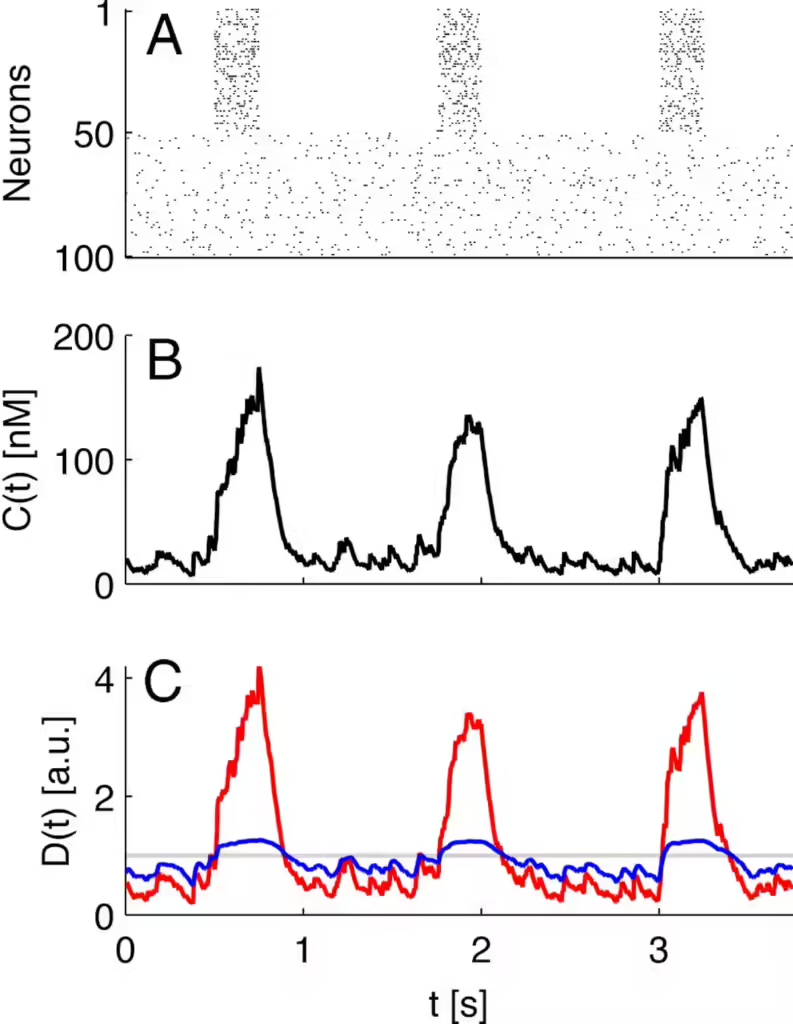
Recent media coverage on how to control dopamine’s effects is based only on the type of release that looks like peaks and valleys. When dopamine neurons fire in phasic bursts, as they do to signal reward prediction errors, dopamine is released throughout the brain. These dopamine peaks happen very fast because dopamine neurons can fire many times in less than a second.
There is another way that dopamine release happens: Sometimes it increases slowly until a desired reward is obtained. Researchers discovered this ramp pattern 10 years ago in a part of the brain called the striatum. The steepness of the dopamine ramp tracks how valuable a reward is and how much effort it takes to get it. In other words, it encodes motivation.
The restaurant example can also illustrate what happens when dopamine release occurs in a ramping pattern. When you have ordered a meal you know is going to be amazing and are waiting for it to arrive, your dopamine levels are steadily increasing. They reach a crescendo when the server places the dish on your table and you sink your teeth into the first bite.
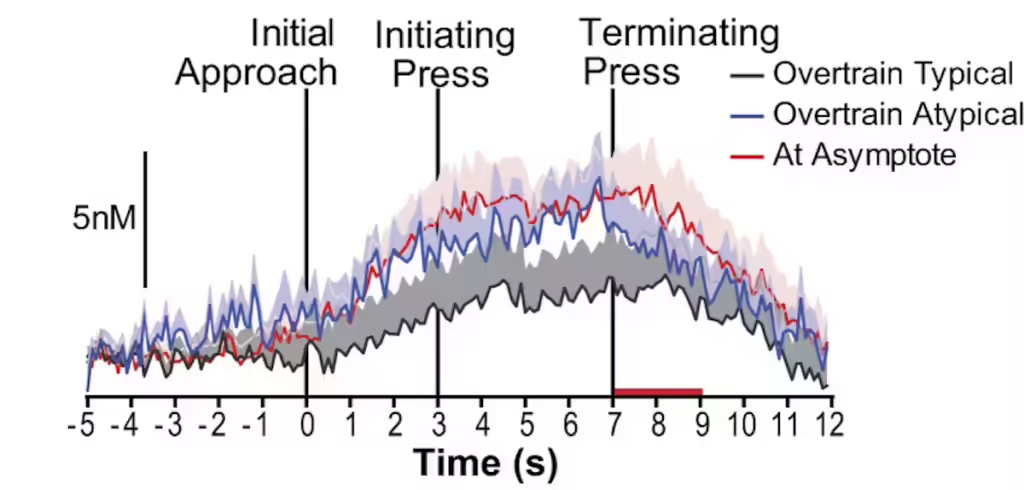
(Collins et al. 2016/Scientific Reports, CC BY)
How dopamine ramps happen is still unsettled, but this type of release is thought to underlie goal pursuit and learning. Future research on dopamine ramping will affect how scientists understand motivation and will ultimately improve advice on how to optimally hack dopamine.
Dopamine(s) in disease and neurodiversity
Though dopamine is known for its involvement in drug addiction, neurodegenerative disease and neurodevelopmental conditions like attention-deficit/hyperactivity disorder, recent research suggests how scientists understand its involvement may soon need updating. Of the seven subtypes of dopamine neurons that are known so far, researchers have characterized the function of only three.
There is already some evidence that the discovery of dopamine diversity is updating scientific knowledge of disease. The researchers of the recent paper identifying the relationship between dopamine neuron type and function point out that movement-focused dopamine neurons are known to be among the hardest hit in Parkinson’s disease, while two other types are not as affected. This difference might lead to more targeted treatment options.
Ongoing research untangling the diversity of dopamine will likely continue to change, and improve, our understanding of disease and neurodiversity.
This article is republished from The Conversation under a Creative Commons license. Read the original article.