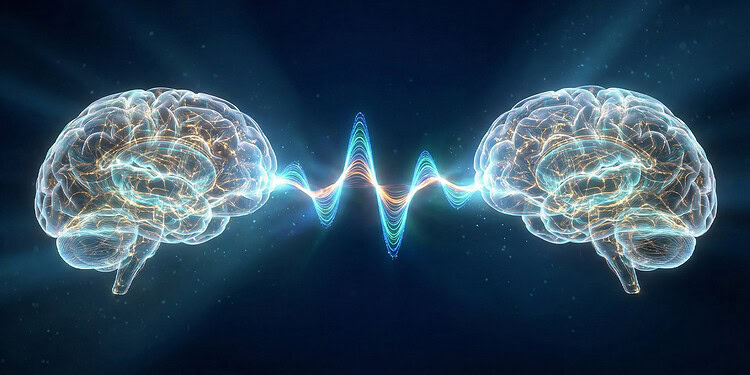

The ability to synchronize brain activity with others may serve as a protective shield against the psychological fallout of trauma, according to new research. Individuals whose brains naturally aligned with a conversation partner’s brain showed fewer mental health symptoms following exposure to a terrorist attack, even when their exposure to danger was high. These findings were published in the journal Translational Psychiatry.
Traumatic events often leave deep psychological scars. Exposure to life-threatening situations frequently results in conditions such as post-traumatic stress disorder (PTSD), depression, and anxiety. Mental health professionals have observed that reactions to such events vary significantly from person to person. While some individuals develop chronic debilitating symptoms, others recover relatively quickly.
Social support is known to buffer against these negative effects. Having a strong network of friends and family can mitigate the impact of stress. The specific neural mechanisms that facilitate this protection remain partially understood. The authors of the current study sought to investigate “interbrain synchrony” as a potential factor. This concept refers to the timing of brain activity between two interacting people.
Interbrain synchrony is thought to be a biological marker of social connection. It reflects how well two people are attending to one another and predicting each other’s responses. Previous research suggests that this synchronization helps facilitate emotional regulation. The researchers hypothesized that people who have a natural tendency to synchronize with others might possess a higher capacity for social adaptation. This capacity could, in theory, make them more resilient when facing severe adversity.
“Most previous studies have focused either on individual biological factors or on social factors separately. Our motivation was to bridge this gap by examining a biological marker of social interaction, interbrain synchrony, that captures how two people align at the neural level,” said study author Oded Mayo of the University of Haifa.
“This is, to our knowledge, one of the first studies to show that such a biological–social marker can predict adaptation in times of stress. In the long term, this opens the possibility of developing interventions, such as neurofeedback, aimed at enhancing synchrony and potentially strengthening resilience.”
To test their hypothesis, the research team utilized a unique opportunity to examine pre-existing neural data. The study involved 98 adults who had participated in a laboratory experiment roughly one and a half years prior to the conflict in Israel. During that initial session, participants were paired with a stranger they had never met. They were asked to engage in a free conversation for five minutes.
While the participants spoke, the researchers recorded their brain activity using functional near-infrared spectroscopy (fNIRS). This technology uses a specialized cap fitted with light sensors. It measures changes in blood oxygen levels in the brain. These changes serve as an indicator of neural activity in real time. The team specifically looked for interbrain synchrony. This phenomenon occurs when the neural patterns of two interacting people rise and fall in time with one another.
Following the attack on Israel on October 7, 2023, the researchers contacted these same individuals. The participants completed a series of online questionnaires. These surveys assessed their level of exposure to the attacks. Questions covered experiences such as hiding in shelters, witnessing harm to property, or fearing for their lives.
The participants also completed standard psychological assessments. These included the PTSD Checklist to measure symptoms of post-traumatic stress. They also filled out the Beck Depression Inventory and the Brief Symptom Inventory. These tools allowed the researchers to gauge the severity of depression and general psychiatric distress.
The researchers found that participants who reported higher levels of exposure to the attacks generally reported more severe mental health symptoms. This aligns with standard psychological understanding of trauma. As the intensity of the threat increased, so did the reported levels of anxiety and depression.
The data showed that interbrain synchrony played a moderating role. For participants who had displayed high levels of neural synchronization during their earlier conversation with a stranger, the link between trauma exposure and mental health symptoms was weaker. High exposure did not lead to severe symptoms as consistently for these individuals as it did for those with low synchrony.
This protective effect was specific to certain brain regions. The researchers observed the strongest moderation effect in the left premotor cortex. This area of the brain is involved in planning movements. It is also part of a network that activates both when we perform an action and when we watch someone else perform it.
Neuroscientists often refer to this as the observation-execution system. It is believed to play a role in empathy and understanding the intentions of others. The findings imply that the ability to naturally align with another person’s neural rhythms reflects a form of social resilience. This capacity appears to function independently of how close a person feels to their social circle.
“One surprising finding was that the most prominent effects emerged in the premotor cortex,” Mayo told PsyPost. “This region is part of the neural system involved in emotional empathy. It suggests that ‘feeling with’ others, sharing emotional states and embodied experiences, may contribute to a sense of shared fate and togetherness, which can be protective under stress. Notably, empathy has long been considered a protective factor against PTSD, and our findings offer a possible neural mechanism for this link.”
The researchers also measured “perceived interpersonal closeness” using a separate scale. They found that while feeling close to others was beneficial, it was a separate factor from brain synchrony. The neural alignment provided a unique contribution to resilience that could not be explained by self-reported social support alone. This suggests that the biological capacity to connect may be just as important as the subjective feeling of having friends.
“Our findings suggest that being ‘in sync’ with others during social interactions may help buffer the psychological impact of traumatic experiences,” Mayo explained. “This highlights the importance of meaningful, attuned social connections, not just support in general, but the quality of interaction. In simple terms, how deeply we connect with others may shape how we cope with adversity.”
As with all research, there are some limitations. The sample size was relatively small and consisted mostly of young adults. The participants were also from a specific cultural context during a unique national crisis. These factors may limit how well the findings apply to other populations or types of trauma.
The study design was correlational. While the brain scans occurred before the trauma, the researchers cannot definitively prove that synchrony caused the resilience. Other unmeasured factors, such as personality traits or prior history of trauma, could have influenced the results.
The researchers suggest that future studies should examine these dynamics over longer periods. They also recommend investigating whether interventions could enhance this synchrony. Techniques such as biofeedback might theoretically help individuals improve their ability to align with others. If this is possible, it could offer a new avenue for preventing PTSD and other trauma-related disorders.
“Our long-term goal is to examine whether these findings can be translated into interventions, such as neurofeedback, that enhance people’s ability to synchronize with others, and in doing so, potentially strengthen psychological resilience,” Mayo said.
“More broadly, this work reflects a growing shift toward understanding mental health as something that emerges not only within individuals, but between people. Studying these interpersonal dynamics may open new avenues for prevention and intervention.”
The study, “Interbrain synchrony and its potential role in modulating the impact of traumatic events,” was authored by Oded Mayo, Yael Molcho-Fisher, Yarden Avnor, and Simone Shamay-Tsoory.