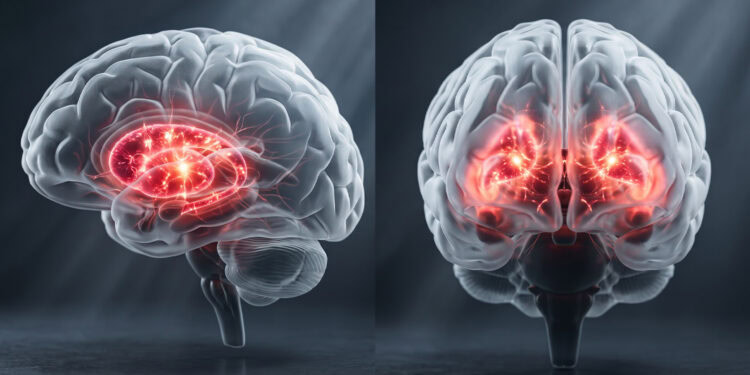

A study published in the journal Social Cognitive and Affective Neuroscience provides evidence that the brain’s reward system drives a powerful urge to seek information about “what might have been,” even when that information causes emotional pain. The findings suggest that the human brain treats the satisfaction of curiosity as an internal reward that can outweigh the negative feelings of regret. This research helps explain why people often feel an uncontrollable need to explore alternative realities, such as checking the price of a house they did not buy or a stock they did not invest in.
Humans possess a unique ability to reflect on their decisions and imagine different outcomes. Scientists refer to this as counterfactual thinking. While this ability helps people learn from their mistakes, it often leads to regret when a person discovers that an unchosen option was better than the one they picked. The researchers conducted this study to understand why people are so driven to seek out this information even when it serves no practical purpose and is likely to make them feel worse.
“After making a choice, people often reflect on the outcome of their choice as well as possible alternative outcomes (i.e., counterfactual reality), even though it induces negative emotions (e.g., regret). The main motivation behind our study is to examine the mechanisms behind humans’ desires to find out counterfactual alternatives–‘counterfactual curiosity,'” said study author Michiko Sakaki, a tenure-track professor at the Hector Research Institute of Education Sciences and Psychology at the University of Tübingen.
Curiosity is often seen as a positive force that encourages learning and growth. However, it can also manifest as a strong motivational urge that people find difficult to resist. This urge is sometimes called incentive salience, which is a term for the “wanting” or “craving” sensation that draws a person toward a reward. The scientists wanted to investigate if the brain regions that handle physical rewards, such as food or money, are the same ones that generate the urge to satisfy counterfactual curiosity.
To investigate this, the researchers recruited 41 participants from the University of Reading. After removing data from individuals who moved too much during the scans or provided incomplete ratings, the final group consisted of 38 participants. This group included 12 men and 26 women with an average age of approximately 21 years. Most of these participants were university students from various academic levels.
The participants performed a specific task while inside a functional magnetic resonance imaging scanner, often called an fMRI. An fMRI is a machine that measures changes in blood flow within the brain. This allows scientists to see which specific brain areas are becoming active during different activities. This method is a standard tool for mapping how the human mind processes emotions and decisions.
The task used in the study was a modified version of the Balloon Analogue Risk Task. In this game, a participant sees a virtual balloon and must decide how many pumps to give it. Each pump increases the number of points the participant can earn for that round. However, every balloon has a hidden “pop point” that is randomly determined for each trial. If the participant chooses a number of pumps that exceeds this limit, the balloon explodes and they earn zero points.
If the balloon remains intact, the trial is called a “bank” trial because the participant successfully banked their points. After each round, the participants rated their current emotional state on a scale ranging from a sad face to a happy face. This initial rating provided a baseline for how they felt about the immediate outcome of their choice.
Following this, the participants entered a choice phase. They were asked if they wanted to see the actual limit of the balloon for that specific round. Seeing this limit would tell them exactly how many more pumps they could have made to earn more points. To get this information, the participant had to agree to a “cost,” which was a waiting period of up to six seconds at the end of the trial.
The researchers emphasize that this information had no practical use. Because the pop point for each balloon was completely random for every trial, knowing the previous balloon’s limit could not help the participant predict the next one. After the participants either saw the limit or chose not to see it, they provided a second emotional rating. This helped the researchers measure how their feelings changed after receiving the counterfactual information.
The behavioral results showed that participants chose to see the balloon’s limit in 52 percent of the bank trials. They were more likely to seek this information when the point value of each pump was high and the waiting cost was low. As the researchers expected, looking at the information frequently led to negative emotions. When participants saw that they could have earned significantly more points, their happiness decreased and they experienced feelings consistent with regret.
The study provides evidence that this “useless” information also influenced future behavior. When participants discovered a large missed opportunity, they tended to pump the balloon more times in the following round. This suggests that the brain uses counterfactual information to adjust behavior, even when that information is not logically relevant to future success. The emotional impact of regret seems to push the individual to take more risks in an attempt to avoid missing out again.
“Behaviorally, we found robust effects of counterfactual curiosity that are consistent with previous studies,” Sakaki told PsyPost. “For example, participants sought counterfactual information more when the counterfactual reality was expected to be better than the reality. Participants also felt significantly more negative after seeking counterfactual information than after not seeking the information.”
The brain imaging results focused on a group of structures called the striatum. The striatum is located deep within the brain and is known to be essential for processing motivation and rewards. The researchers specifically examined two parts of the striatum: the caudate and the nucleus accumbens. They also looked at the substantia nigra and the ventral tegmental area, which are regions that produce dopamine. Dopamine is a chemical that helps the brain signal the desire for a reward.
During the choice phase, the caudate and the dopamine-producing regions showed higher levels of activity when participants decided to seek the counterfactual information. This activity occurred even after the scientists accounted for the waiting time and the point values. The findings suggest that these brain regions generate a “wanting” signal for information. The brain appears to treat the satisfaction of curiosity as an internal reward that is processed similarly to money or food.
Once the participants actually viewed the information, the brain activity shifted. The caudate and the nucleus accumbens showed increased activity in response to the size of the missed opportunity. Larger gaps between the participant’s choice and the balloon’s actual limit triggered stronger responses in these areas. This suggests that the striatum is involved in both the initial urge to know the truth and the later processing of the regret that the truth brings.
“External motivators, such as money and food, are known to change our behavior due to the reward network in the brain,” Sakaki explained. “In our study, we found that the same brain region is also relevant to our choice to seek information out of counterfactual curiosity.”
The researchers noted some limitations and directions for future study. The study primarily focused on young adults in a university setting, so it is not yet certain if these findings apply to older populations. Additionally, the brain regions studied did not show perfectly consistent activity across all phases of the experiment. For instance, the nucleus accumbens was highly active when feedback was revealed but did not show the same level of activity during the initial choice to seek that feedback.
Future research could investigate how these brain circuits function in people with different personality traits or psychological conditions. The scientists also suggest that further work is needed to understand the specific roles of each sub-region within the striatum. It remains to be seen if these same brain patterns appear in real-world situations where the stakes involve significant life choices rather than small game points. The long-term goal is “to understand lifelong development and its implications,” Sakaki said.
The study, “Role of the striatum in counterfactual information seeking,” was authored by Johnny King L. Lau, Michiko Sakaki, Lily FitzGibbon, Jasmine A. L. Raw, and Kou Murayama.