![[Adobe Stock]](https://sp-ao.shortpixel.ai/client/to_webp,q_glossy,ret_img,w_750,h_375/https://www.psypost.org/wp-content/uploads/2024/02/neurons-1-750x375.jpg)
Have you ever wondered why certain foods, especially those high in fats and sugars, seem irresistible, no matter how hard we try to resist them? Recent research from the Monell Chemical Senses Center provides a fascinating answer.
By studying the neural mechanisms that drive our cravings for fats and sugars, scientists have uncovered separate pathways in our brain that make foods rich in these macronutrients particularly appealing. Even more intriguing, they found that when these pathways are activated together, they supercharge our desire to eat more than we normally would, highlighting a possible internal struggle that undermines conscious dieting efforts.
The findings were recently published in Cell Metabolism.
Previous research has shown that while the taste of food can influence our food choices, the nutritional value of what we consume plays a more significant role in our eating behaviors. The team at Monell sought to decipher the neural circuits involved in the reward we get from eating fats and sugars, delving into the gut-brain connection mediated by the vagus nerve.
“My lab specializes in the neurobiology of feeding, aiming to unravel the mechanisms behind our food choices and the amount we consume,” said lead author Guillaume de Lartigue, an associate member of Monell Chemical Senses Center and associate professor of neuroscience at the Perelman School of Medicine. “This is particularly important given the alarming rise in obesity, particularly linked to processed foods rich in fat and sugar. The motivation of this work was to explore why we choose to eat unhealthy options despite knowing that they are bad for us.”
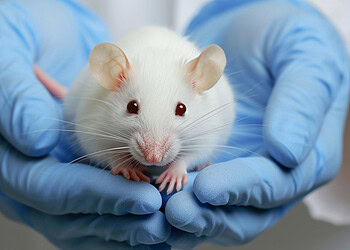
The researchers conducted a series of experiments using adult mice with specific genetic modifications (FosTRAP mice) that allowed for precise targeting of neuronal populations activated by dietary fats or sugars. They conducted detailed genetic validation and controlled for variables such as age, sex, and environmental conditions. The experiments were designed to identify whether fats and sugars activate different populations of vagal neurons and how these signals influence dopamine release.
The researchers identified distinct populations of neurons within the vagus nerve, which is responsible for transmitting signals from the gut to the brain. By using specific genetic tools, they were able to trace how these neurons reacted to the ingestion of fats or sugars directly infused into the stomach, bypassing the taste sensors in the mouth. This method allowed them to observe the immediate post-ingestive effects of these nutrients on brain activity.
Fats and sugars were found to stimulate separate sets of neurons, which in turn activated different brain circuits responsible for the rewarding feelings associated with eating. Intriguingly, when fats and sugars were combined, the effect on the brain was not just additive but synergistic, leading to a significantly heightened response. This suggests that our brains are “wired” to find the combination of fats and sugars especially rewarding, which could be a key factor driving the consumption of highly palatable, calorie-dense foods.
“A key take away from this work is to understand that both fats and sugars are inherently rewarding to our brains, driving us to eat,” de Lartigue told PsyPost. “We find that fat and carbohydrate reward comes from the gut activating two separate gut-brain pathways that each cause release of dopamine. Highly processed foods that combine fats and sugars are particularly tempting because they activate both reward pathways simultaneously, leading to more dopamine release and overeating. This knowledge could be used to develop treatments for obesity in the future.”
Further exploring these neural pathways, the researchers demonstrated that these distinct circuits converge in the striatum, a central hub for the dopamine system, which plays a critical role in reward and motivation. Dopamine is a neurotransmitter often referred to as the “feel-good” chemical, and its release in response to eating is a major component of food’s reinforcing properties. The study showed that both fats and sugars trigger dopamine release, but through their unique neural routes.
Moreover, the study revealed that the neurons responsible for sensing fats and sugars not only have different targets but also lead to different behavioral outcomes. For example, eliminating the neurons responsive to fat diminished the preference for flavors associated with fat but had no effect on those associated with sugar, and vice versa. This finding underscores the specificity of the neural circuits involved and their crucial role in dictating our food preferences and eating behaviors.
“I was particularly stricken by the finding that deleting the gut-brain pathway for sugar reward abolished the reinforcing value of sugar to the animal without affecting fat reinforcement,” de Lartigue explained. “This suggests that we form preferences for specific nutrient because of our gut, which suggests that our food choices are often influenced by subconscious factors, rather than by our conscious awareness of what is good for us.”
“We learn to associate the sight, smell and taste of food with the subconscious nutritive reward that we derive from it. This system ensures that we eat foods because of the nutrients that they contain, not because it tastes good. It explains why we are susceptible to advertisements and the smell of food to tempt us into eating foods that we understand are not healthy options.”
Despite these significant advances, the research is not without its limitations. The study was conducted on mice, and while the basic principles of nutrient sensing and brain function are likely to be similar in humans, direct comparisons are challenging. The precise ways in which these mechanisms translate to human behavior and the impact on obesity and metabolic health remain areas for future investigation.
“The current study sheds light on the gut-brain pathways for fat and sugar rewards in mice,” de Lartigue told PsyPost. “A major caveat is that we can’t be entirely sure the same reward circuits exist identically in humans. However, there are reasons to be cautiously optimistic about potential human relevance. Previous research has shown that humans, like mice, exhibit increased motivation for foods combining fats and sugars and activate similar brain regions during decision-making about such foods. This hints at the possibility that similar reward circuits might be at play in both species.”
Looking ahead, the researchers aim to further dissect these neural pathways, exploring not only how they contribute to the appeal of fats and sugars but also how they might be manipulated to help curb overeating and obesity. The ultimate goal is to develop strategies or interventions that can target these specific brain circuits, potentially offering new avenues for treating obesity and other eating-related disorders.
“My long-term goals for this line of research can be divided into two main thrusts,” de Lartigue explained.
“1. Modulating food preferences through the gut-brain pathway. The goal will be to determine if activating the gut-reward pathways can increase preference for healthy foods and conversely, if inhibiting them can reduce preference for unhealthy, obesogenic diets. This would offer a potential intervention strategy for obesity by promoting healthier food choices through targeted manipulation of reward circuits.”
“2. Translating research to humans and developing treatments. The goal will be to identify specific receptors expressed on neurons in the gut-reward pathway. This knowledge could pave the way for developing drugs that can activate or inhibit this reward circuit, offering potential therapeutic options for managing obesity and related issues.”
“By combining these approaches, this future research holds the promise of not only understanding the underlying mechanisms for our attraction to unhealthy foods, but also translating that knowledge into practical solutions that could have a significant impact on public health,” de Lartigue concluded.
The study, “Separate gut-brain circuits for fat and sugar reinforcement combine to promote overeating,” was authored by Molly McDougle, Alan de Araujo, Arashdeep Singh, Mingxin Yang, Isadora Braga, Vincent Paille, Rebeca Mendez-Hernandez, Macarena Vergara, Lauren N. Woodie, Abhishek Gour, Abhisheak Sharma, Nikhil Urs, Brandon Warren, and Guillaume de Lartigue.