
A new study published in Nature Communications provides evidence that memory-like processes are not exclusive to brain cells but can occur in other types of human cells. Researchers demonstrated that two types of non-neural cells, when exposed to specific patterns of chemical stimuli, exhibited memory responses traditionally associated with neurons. This finding suggests that memory mechanisms may stem from fundamental cellular processes.
The research was conducted by scientists at the Center for Neural Science at New York University, led by Nikolay V. Kukushkin and Thomas Carew. The team set out to investigate whether the molecular mechanisms underpinning memory formation in neurons could also be present in non-neural cells. Building on previous research that identified memory-like processes in simplified neural systems, the researchers aimed to determine if non-neural cells might exhibit similar memory traits, such as the ability to differentiate between spaced and massed stimuli.
“Tom’s lab has been studying for many years how something seemingly intangible, like memory and learning, can boil down to changes in just a handful of brain cells — sometimes, in a single neuron,” explained Kukushkin, a clinical associate professor of life science and author of the upcoming book One Hand Clapping: The Origin Story of the Human Mind.
“So we knew that memory does not require all the complexity of the brain. It was a logical step to ask — does it require a brain at all?”
The research centered on the “massed-spaced effect,” a phenomenon well-documented in neuroscience and behavioral psychology. The effect demonstrates that information is retained more effectively when learning sessions are spaced out over time rather than compressed into a single intensive session. This principle, originally identified in neurons, has been observed across species and is considered a cornerstone of memory formation. The researchers hypothesized that similar dynamics might also apply to non-neural cells due to the conservation of certain signaling pathways across cell types.
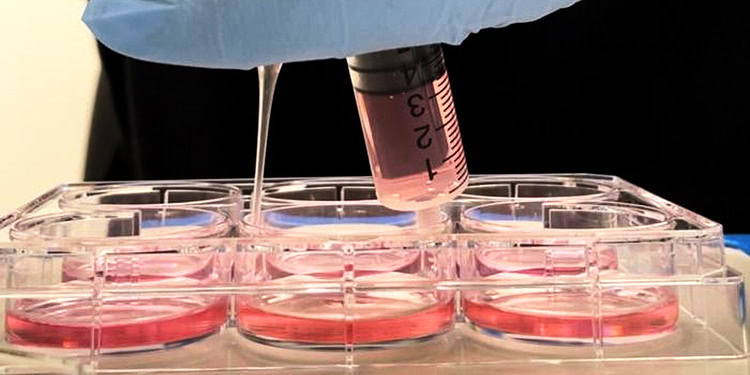
To test this hypothesis, the scientists engineered two types of human cell lines—one derived from nerve tissue and another from kidney tissue—to include a “reporter” system that produces a glowing protein in response to memory-related activity. This protein, a form of luciferase, is controlled by a promoter dependent on the cAMP response element-binding protein (CREB), a molecule known to play a key role in memory formation in neurons. By observing the production of the glowing protein, the researchers could track when and how the cells “remembered” specific patterns of chemical stimulation.
The team exposed the cells to pulses of two chemicals—forskolin and TPA—that activate key memory-related signaling pathways, mimicking how neurons respond to neurotransmitters during learning. These pulses were administered in various patterns, including single intensive bursts (massed training) and multiple shorter bursts spaced over time (spaced training). The researchers then measured the levels of the glowing protein after different intervals to assess the cells’ responses.
Both cell types exhibited stronger and more sustained responses when exposed to spaced stimuli compared to massed stimuli, mirroring the massed-spaced effect observed in neurons. Importantly, the cells retained these memory-like responses for over 24 hours, indicating that the spacing effect influenced not just the immediate strength of the response but also its longevity. This behavior aligns with key principles of memory, such as enhanced retention and reduced forgetting with repetition over time.
“It’s not news that non-brain cells can retain information,” Kukushkin told PsyPost. “What’s surprising is that non-brain cells can retain information about surprisingly specific time patterns — down to minutes — for days after you have stopped doing anything with them. I don’t think any of us expected kidney cells to be so clever.”
The researchers further investigated the molecular underpinnings of these memory-like processes. They found that the effects were associated with the activation of CREB and extracellular signal-regulated kinase (ERK), two molecules essential for memory formation in neurons. Spaced stimulation led to stronger and more sustained activation of these molecules compared to massed stimulation. By inhibiting the activity of CREB or ERK, the researchers were able to block the memory-like responses, confirming their critical role in the observed phenomena.
“To the cells of our body, anything that we do regularly — eating, exercising, taking medicine — is a pattern of chemicals in time,” Kukushkin explained. “These time patterns can change any cell in literally the same ways as learning for class changes brain cells, and as with brain cells, we don’t yet fully understand which time patterns do what. But in the future, we may be able to use this cellular learning, for example, to train a muscle cell to produce a healthy hormone, or to train a cancer cell to stop dividing.”
The study challenges the traditional view that memory is a feature unique to the brain and its neurons. However, the experiments were conducted under highly controlled laboratory conditions, which may not fully capture the complexity of real-world cellular environments. Additionally, the study focused on a narrow set of stimuli and cell types, leaving open questions about the generalizability of these findings to other cell types and signaling contexts. Future research will need to address these limitations by exploring how different cells respond to various stimuli and whether similar memory-like processes occur in living organisms.
“Our study is a simple proof of principle that generic, non-neural cells use the same basic toolkit for memory formation as brain cells,” Kukushkin noted. “But we don’t yet have a broad understanding of the process: what kinds of time patterns is the cell responsive to? What exactly changes throughout the cell depending on each pattern? We are working on these questions now.”
The researchers also plan to investigate the broader implications of their findings, including potential applications in medicine and artificial intelligence.
“The long-term goal that I hope to pursue in my own lab is interpreting and predicting the behavior of any cell in response to any time pattern,” Kukushkin said. “If this were achieved, it would have enormous implications for two reasons. In neuroscience, it would help treat mental health diseases and create realistic forms of memory in AI. Outside of neuroscience, it would lead to a new approach to health and disease: cellular modification, rather than chemical blockage, which is how most drugs work today.”
“There has been a lot of discussion of the word ‘memory’ in the context of our paper,” he added. “Some reporters have put the word into quotation marks and conditionalized the changes in our cells as ‘metaphorical’ memory. But I would say the main point of the paper is that this is not metaphorical memory — it is literally the same process with the same evolutionary roots and the same functional use.”
The study, “The massed-spaced learning effect in non-neural human cells,” was authored by Nikolay V. Kukushkin, Robert E. Carney, Tasnim Tabassum, and Thomas J. Carew.