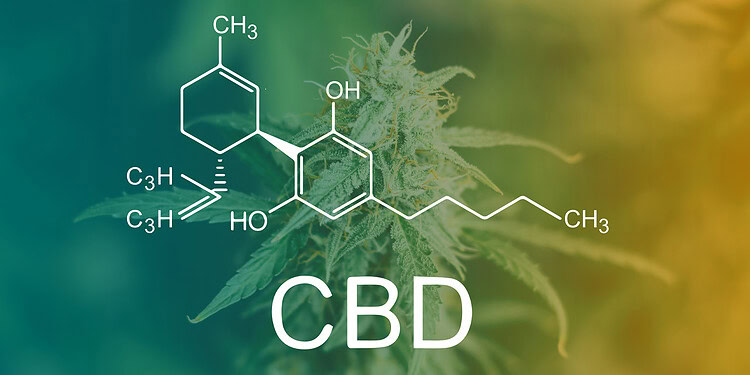

A new study has found that, contrary to expectations, pre-treatment with cannabidiol, or CBD, exacerbated the acute memory impairment and psychotic symptoms caused by cannabis in patients with schizophrenia. This research, which offers a more complex picture of how cannabinoids interact in this clinical population, was published in Neuropsychopharmacology.
Researchers have long observed that cannabis use can worsen symptoms and increase the risk of relapse in people diagnosed with schizophrenia. The adverse effects of cannabis are largely attributed to one of its main components, delta-9-tetrahydrocannabinol, or THC. Another major component of the cannabis plant is cannabidiol, or CBD.
While structurally similar to THC, CBD acts quite differently in the body and does not produce an intoxicating “high.” Its exact mechanism of action is still an area of active investigation, but it is thought to interact with the body’s endocannabinoid system in complex ways. One leading theory suggests CBD alters the function of the brain’s primary cannabinoid receptor, known as CB1, changing how it responds to THC and the body’s own cannabinoid molecules.
Because of these properties, CBD has been investigated as a potential treatment for psychosis. Several clinical trials have suggested that high doses of CBD can help reduce psychotic symptoms in people with schizophrenia. It also appears to have a favorable safety profile and is generally well-tolerated by patients, making it a promising candidate for a new therapeutic approach.
The question remained, however, whether CBD could also protect against the acute negative effects of THC. Previous experimental studies in healthy volunteers have produced mixed results. Some found that CBD could lessen THC-induced impairment, while others reported no effect or even an increase in some adverse effects. These discrepancies could be due to variations in dosage, the timing of administration, and whether the substances were inhaled or taken orally.
The new study was designed to clarify this relationship in a clinically relevant population: individuals with schizophrenia who also regularly use cannabis. The researchers hypothesized that a high dose of CBD given before cannabis use would protect against THC-induced memory problems and psychotic symptoms.
“Cannabis addiction is fairly common in people with schizophrenia and is linked to poor outcomes. I always encourage my patients to try and reduce their use, as this should improve their quality of life and risk of relapse, but there’s a large group of people who don’t want to stop,” said study author Edward Chesney, a clinical lecturer at King’s College London.
“Since CBD is being developed as a treatment for schizophrenia, and for cannabis addiction too, we designed this laboratory study to see if CBD could be used to prevent or reduce cannabis-induced psychosis. We therefore recruited people with schizophrenia who use cannabis, randomized them to treatment with a clinical dose of CBD or a placebo, and then gave them a large dose of vaporized cannabis.”
A randomized, double-blind, placebo-controlled, crossover trial is considered a robust method for testing interventions. Thirty participants, all diagnosed with schizophrenia or schizoaffective disorder and a co-occurring cannabis use disorder, completed the main part of the study. Each participant attended two separate experimental sessions.
In one session, they received a 1000 mg oral dose of CBD. In the other session, they received an identical-looking placebo capsule. The order in which they received CBD or placebo was random, and neither the participants nor the researchers knew which treatment was given on which day. Three hours after taking the capsule, to allow the CBD to reach its peak concentration in the body, participants inhaled a controlled dose of vaporized cannabis containing THC.
The researchers measured several outcomes. The primary measure of cognitive function was a test of delayed verbal recall, which assesses the ability to remember a list of words after a short delay. To measure psychotic symptoms, they used a standardized clinical interview called the Positive and Negative Syndrome Scale, focusing on the positive symptoms subscale which includes items like paranoia and disorganized thinking. The team also collected blood samples to measure the concentrations of THC and CBD in the participants’ systems.
The results of the experiment were the opposite of what the researchers had predicted. When participants were pre-treated with CBD, their performance on the memory test was worse than when they were pre-treated with the placebo. On average, they recalled about 1.3 fewer words after receiving CBD compared to the placebo condition.
Similarly, the psychotic symptoms induced by cannabis were more severe following CBD pre-treatment. The average increase in the psychosis rating scale score was 5.0 points after CBD, compared to an increase of 2.9 points after the placebo. The researchers noted that large increases in these symptoms were observed in seven participants in the CBD condition. Specifically, CBD appeared to heighten cannabis-induced conceptual disorganization and feelings of suspiciousness.
“The effects were very clear and clinically meaningful,” Chesney told PsyPost. “Almost all the large psychotic reactions we observed were in the CBD pre-treatment group. The results were completely unexpected. We thought CBD would reduce the effects of THC, but the opposite happened — CBD actually increased THC’s adverse effects.”
“Interestingly, CBD didn’t change how strong or long the high felt, nor did it affect anxiety levels. I had initially assumed that CBD had increased all the effects of the cannabis, but it seems to have specifically increased the psychotic and cognitive symptoms for reasons we don’t yet understand.”
To understand why this might be happening, the researchers examined the blood samples. They looked for a pharmacokinetic interaction, which would occur if CBD changed the way the body metabolizes THC, perhaps by increasing the levels of THC in the blood. They found no evidence for this. The plasma concentrations of THC and its main active metabolite, 11-hydroxy-THC, were not significantly different between the CBD and placebo conditions. This suggests the effect was likely pharmacodynamic, meaning it relates to how the two substances interact with receptors and systems in the brain, rather than how they are processed by the body.
The findings highlight “that cannabinoids and the endocannabinoid system are very complex,” Chesney said. “We didn’t observe a pharmacokinetic interaction between CBD and THC, so perhaps there’s something more interesting at play – perhaps there’s something different about the brains of people with schizophrenia, or heavy cannabis users, which makes them sensitive to the effects of CBD as well as THC.”
The study has some limitations. The findings apply to a specific population of patients with both schizophrenia and a cannabis use disorder, and the results may not generalize to people with schizophrenia who do not use cannabis regularly. The experiment used a single high dose of CBD, and the effects could be different at other doses. Also, the cannabis dose was fixed by the researchers, which differs from real-world scenarios where users can adjust their intake.
Future research could explore whether these effects are present in people with schizophrenia who do not have a cannabis use disorder, or in people with a cannabis use disorder who do not have schizophrenia. This would help determine if the observed interaction is specific to the combination of these two conditions.
Despite these limitations, the study provides important information about the complex interactions between cannabinoids, particularly in a vulnerable clinical population. The results suggest that for patients with schizophrenia who use cannabis, taking CBD may not be a safe strategy to mitigate the harms of THC and could potentially make them worse.
“I don’t think this makes it less likely that CBD will work as a treatment for schizophrenia,” Chesney added. “It’s just a single study, and we only used a single dose of CBD. With antidepressants, for example, you often see an initial increase in anxiety levels and restlessness before you start to see some benefit. The results of clinical trials of CBD, where patients have received treatment for several weeks, are still very encouraging. I still come across lots of people who think that CBD is just a placebo, the results of my study suggest that it is definitely doing something.”
The study, “Does cannabidiol reduce the adverse effects of cannabis in schizophrenia? A randomised, double-blind, cross-over trial,” was authored by Edward Chesney, Dominic Oliver, Ananya Sarma, Ayşe Doğa Lamper, Ikram Slimani, Millie Lloyd, Alex M. Dickens, Michael Welds, Matilda Kråkström, Irma Gasparini-Andre, Matej Orešič, Will Lawn, Natavan Babayeva, Tom P. Freeman, Amir Englund, John Strang, and Philip McGuire.