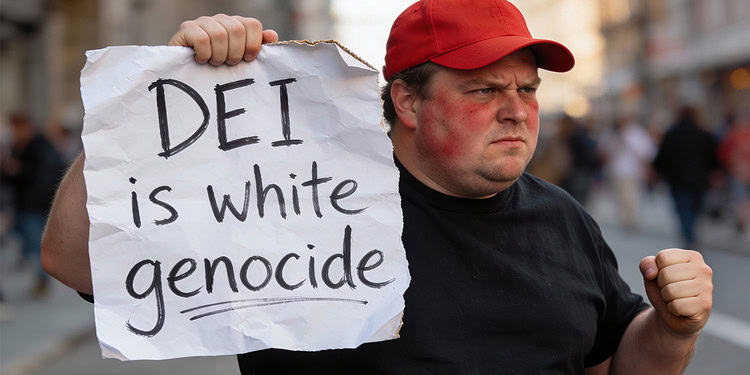
New research published in the Scandinavian Journal of Psychology provides evidence that identity-based political attitudes, often described colloquially as “woke,” are not exclusive to the political left. The study suggests that a parallel ideology exists on the political right, characterized by a focus on white identity grievance and a desire to regulate speech in favor of conservative values. These findings indicate that while the specific contents of these belief systems differ, they share a structural similarity in how they view group dynamics and societal control.
Oskari Lahtinen, a senior researcher at the INVEST Research Flagship Centre at the University of Turku, conducted the new study to address a gap in political psychology. While the concept of “woke” or critical social justice attitudes has been widely discussed and measured, Lahtinen observed that a similar phenomenon appeared to be emerging among right-wing populations.
He noted that media outlets and cultural commentators have increasingly used terms like “right-wing woke” or “the identitarian right” to describe this trend. Lahtinen sought to create a psychometrically valid tool to measure these specific right-wing attitudes. He also aimed to refine an existing scale for measuring left-wing critical social justice attitudes to allow for a direct comparison between the two ideological extremes.
“For years, ‘wokeness’ has been discussed almost exclusively as a left-wing phenomenon,” Lahtinen told PsyPost. “More recently, similar identity-based and speech-regulating politics have been emerging on the right, as noted by outlets like The New York Times, The Atlantic, and The Economist. In 2024, I developed a measure for critical social justice (often called ‘woke’) attitudes. In this study, I devised a psychometrically sound scale for critical right (‘woke right’) attitudes, to make it easier to empirically study current political polarization. I also revised the 2024 CSJAS scale for left-wing ‘woke’ attitudes.”
To conduct the research, Lahtinen recruited a sample of 626 Finnish adults through an online survey. The data collection occurred between March and June of 2025. The researcher used a convenience sampling method. To ensure enough participation from right-wing individuals, who might otherwise be underrepresented in academic surveys, the study link was distributed via the social media channels of politicians from the Finns Party and the National Coalition Party.
The participants completed two primary measures designed for this study. The first was the newly developed Critical Right Scale (CRS). This scale began with eighteen potential questions derived from right-wing political speeches, social media content, and forums.
Through statistical analysis, the researcher narrowed this down to a final five-item scale that showed high reliability. The items assessed beliefs regarding population replacement, the perception that society discriminates against white people, and the idea that conservative values should dictate permissible speech.
The second measure was the Revised Critical Social Justice Attitudes Scale (CSJAS-R). This was an updated version of a scale Lahtinen had developed in previous research. It consisted of six items designed to measure support for ideas such as structural racism, the necessity of safe spaces, and the inclusion of trans women in female sports categories. The survey also included questions about the participants’ political party affiliation, their self-placement on a left-right axis, and their views on the justification of political violence.
The results provided evidence that the Critical Right Scale and the Critical Social Justice Attitudes Scale measure two distinct, opposing constructs. The two scales had a strong negative correlation, meaning that individuals who scored high on one almost invariably scored low on the other. The statistical analysis showed that both scales were reliable and valid for use with both male and female participants.
“I was surprised by how neatly the two scales behaved psychometrically and how cleanly they divided into two constructs that share a strong negative correlation,” Lahtinen said.
Lahtinen found that high scores on the Critical Right Scale were strongly concentrated among voters for the Finns Party and the Christian Democrats. The specific beliefs driving these scores included the notion that a “great replacement” of the population is occurring and that a strong leader should break rules to protect national interests. These respondents also tended to agree that “regular people” know what is better for the country than experts do.
On the other side of the spectrum, high scores on the Critical Social Justice Attitudes Scale were found primarily among voters for the Left Alliance and the Greens. These participants endorsed views such as the idea that income disparities between white and black people are mostly due to racism. They also supported the concept that speech perceived as a “microaggression” should be actively challenged.
One significant finding related to the behavioral correlates of these attitudes. The study assessed whether participants believed that violence against “politically dangerous” people could be justified. The data showed that high scores on the left-wing Critical Social Justice scale had a small-to-moderate positive association with the justification of political violence. In contrast, the right-wing Critical Right Scale showed no meaningful statistical association with the approval of political violence in this specific dataset.
The research also explored the relationship between these political attitudes and personal well-being. Previous studies had suggested a link between critical social justice attitudes and lower mental well-being. This study found a very weak negative correlation between the left-wing scale and happiness. There was no correlation found between the right-wing scale and happiness.
The study also examined the psychological concept of “locus of control,” which refers to whether people feel they have control over their own lives or if outside forces dictate their outcomes. The results indicated that those with high critical social justice attitudes were much more likely to have an external locus of control, believing that structures or other people were responsible for their well-being. On the other hand, those with critical right attitudes tended to have an internal locus of control.
“The main takeaway is that identity-based ‘woke’ politics now exist on both the left and the right, but they take different forms,” Lahtinen told PsyPost. “On the left, ‘woke’ attitudes involved ideas like structural racism and the need for safe spaces, whereas on the right they were defined by beliefs about population replacement and perceived discrimination against white people. In this dataset, left-wing ‘woke’ attitudes showed a stronger association than before with the belief that violence against ‘politically dangerous’ people is justified.”
This research builds upon Lahtinen’s 2024 study, which initially attempted to operationalize “woke” attitudes. The current paper refines those original measures and expands the theoretical framework to include the political right.
The findings lend partial support to the “horseshoe theory” of politics, which suggests that the far-left and far-right may act in similar ways despite having opposite goals. Both groups in this study demonstrated a desire to regulate speech and emphasized identity-based grievances, though the specific identities they championed were diametrically opposed.
But as with all research, there are some limitations. The sample was not random, as it relied on self-selection and targeted recruitment through political channels. This means the results may not perfectly represent the general Finnish population. Additionally, the study was conducted solely in Finland. While American identity politics have influenced Northern Europe, the cultural context in Finland differs from that of the United States or the United Kingdom.
“The results should not be read as claims about entire populations or political parties,” Lahtinen noted. “The study does not say that ‘most people’ on the left or on the right support violence or conspiracy theories. It identifies patterns within a non-random sample and shows how certain attitudes cluster together.”
Future research could focus on validating the Critical Right Scale in other countries, particularly in the United States where these discourses often originate. It would also be beneficial to use larger, representative samples to confirm the prevalence of these attitudes in the general public. Longitudinal studies could help determine if these ideological clusters are stable over time or if they fluctuate with current events.
“The next step is replication in a larger sample and preferably in other countries,” Lahtinen said. “More broadly, my goal is to make novel political concepts measurable, even if they are culturally charged. I would also like to integrate novel methods into my research, like machine learning. Please see this study as an invitation for U.S. colleagues to pick this line of research up and validate the scale in the country where these attitudes originate from.”
The study, “Two Kinds of ‘Woke’ – Psychometric Validation of the Critical Right Scale and Revised Critical Social Justice Attitudes Scale,” was authored by Oskari Lahtinen.