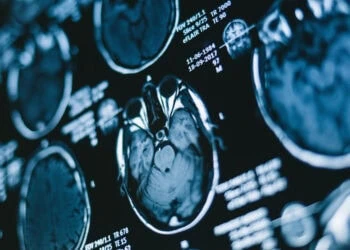
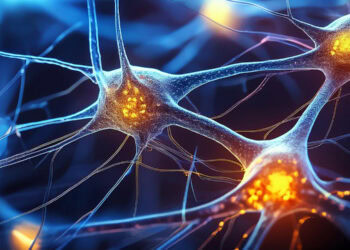
A region of the brain known as the nucleus accumbens appears to play a key role in the relationship between stress and depressive symptoms, according to new research published in Psychological Medicine. The findings provide new insight into the neural pathways that underlie these two common mental health challenges.
Depression, often characterized by persistent feelings of sadness and hopelessness, is a prevalent mental health condition affecting millions of individuals worldwide. Stressful life events, ranging from personal crises to challenging life changes, have long been recognized as potential triggers for depression. This research was motivated by a desire to unravel the intricate connection between these two phenomena: can stress lead to depression, or does depression itself make individuals more susceptible to stressful experiences?
Previous studies have hinted at a complex interplay between stressful life events and depression. However, understanding the neural underpinnings of this relationship has remained a challenge. This is where the latest study comes into play, aiming to better understand the dynamic between stress and depression and how it manifests in the human brain.
“The scientific community has known for a long time that stress is a major risk factor for depression,” said study author Yizhou Ma, a postdoctoral fellow at the University of Maryland Baltimore School of Medicine. “There is also knowledge that being depressed may lead one to have more stressful experiences. But the link between stress and depression in the brain is not well understood. The brain circuitry that is implicated in both stress and depression may serve as this link and helps us understand how stress leads to depression in the brain and vice versa.”
The researchers conducted their study using a large sample of community adults from the UK Biobank. The study included a total of 22,195 adults, with 52% of them being female. Data was collected from two assessment visits: the initial visit took place from 2006 to 2010, and the second visit with brain imaging occurred between 2014 and 2019. The participants’ ages ranged from 40 to 70 years during the initial visit, with an average age of 55.
Depressive symptoms were measured using four touchscreen questions. These questions assessed core depressive symptoms such as anhedonia, depressed mood, fatigue, and psychomotor agitation over the preceding 2 weeks. Participants rated their symptoms on a scale ranging from ‘not at all’ to ‘nearly every day.’
Stressful life events were measured by asking participants if they had encountered specific events in the last two years. These events included serious illness, injury, assault to oneself or close relatives, death of close relatives, marital separation/divorce, and financial difficulties.
Additionally, adverse childhood experiences, which might influence stressful life events, were reported by a subsample of participants (71.3%). These experiences included emotional neglect, physical neglect, emotional abuse, physical abuse, and sexual abuse in childhood.
In line with previous research, the study’s findings unveiled a significant bidirectional relationship between stressful life events and depressive symptoms. People who reported more stressful life events during the initial visit were more likely to experience depressive symptoms at the follow-up, while people who had greater depressive symptoms during the initial visit were more likely to report stressful life events at the follow-up. This suggests that not only can stress contribute to the development or worsening of depression, but depression itself can lead to more stressful experiences.
One crucial discovery was that more stressful life events were associated with three distinct imaging phenotypes. These included lower forceps major fractional anisotropy (FA), which indicates changes in white matter integrity. Disruptions in this part of the brain have been linked to stress and trauma. Additionally, stressful life events were associated with weaker resting-state functional connectivity (rsFC) between the left nucleus accumbens and the left orbitofrontal cortex (OFC). This region plays a central role in emotion regulation and decision-making.
The study also revealed that depressive symptoms were associated with a wide array of brain imaging phenotypes. These included cortical thinning in various regions of the brain, smaller volumes in subcortical structures, altered white matter microstructure, and higher total white matter hyperintensities. Notably, the strongest effects were observed in regions such as the left rostral anterior cingulate and medial orbitofrontal cortices, as well as the bilateral nucleus accumbens.
Perhaps the most intriguing discovery was the mediating role of the nucleus accumbens. This small but vital brain region emerged as a central player in the stress-depression relationship. The nucleus accumbens is part of the brain’s reward system and plays a central role in processing emotions, motivation, and decision-making. It receives inputs from various brain regions related to emotions and is heavily involved in how we perceive and respond to rewarding and pleasurable experiences.

The researchers found that depressive symptoms partially mediated the relationship between stressful life events and bilateral nucleus accumbens volume. Conversely, stressful life events also partially mediated the relationship between depressive symptoms and the volume of this brain region.
“Nucleus accumbens, a deep brain structure that is widely involved in the brain’s processing of reward, punishment, motivation, and emotion, may be particularly important to help us understand why people get depressed when they experience stress, or why people have stressful experiences as a result of their depression,” Ma explained to PsyPost.
“There are many potential links between stress and depression, such as the hippocampus, which is involved in memory processing, or the amygdala, which is involved in processing fearful emotions. However, the nucleus accumbens was the only region that showed associations with both stressful life experiences and depressive symptoms in this large population sample from the UK.”
While this study provides crucial insights into the relationship between stress, depression, and the brain, it also has some limitations. The use of self-reported measures for stress and depressive symptoms may introduce some degree of bias. In addition, brain imaging data was only collected at one point in time, limiting the ability to understand cause-and-effect relationships.
“It is important to keep in mind that this study did not show causal relationships between stressful life experiences, depression, and changes in the volume of the nucleus accumbens,” Ma said. “Our study used cross-sectional data, which means the findings were correlational. Future studies can use multiple measures over time to see if there are changes in the nucleus accumbens as one experiences a stressful life event, or as one experiences depression.”
The study, “Reciprocal relationships between stress and depressive symptoms: the essential role of the nucleus accumbens“, was authored by Yizhou Ma, Peter Kochunov, Mark D. Kvarta, Tara LeGates, Bhim M. Adhikari, Joshua Chiappelli, Andrew van der Vaart, Eric L. Goldwaser, Heather Bruce, Kathryn S. Hatch, Si Gao, Shuo Chen, Ann Summerfelt, Thomas E. Nichols and L. Elliot Hong.