Subscribe
The latest psychology and neuroscience discoveries.
My Account
  • Mental Health
  • Social Psychology
  • Cognitive Science
  • Neuroscience
  • About
No Result
View All Result
PsyPost
PsyPost
No Result
View All Result
Home Exclusive Mental Health

Nightmare sufferers may find relief through innovative therapy approach

by Viviana Greco
April 27, 2023
in Mental Health
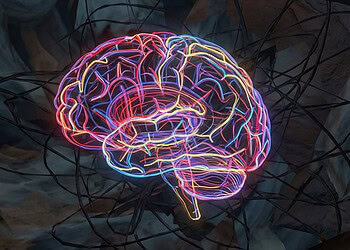
(Photo credit: Gerard Van der Leun)

(Photo credit: Gerard Van der Leun)

Share on TwitterShare on Facebook

A recent study published in Current Biology provides evidence that people suffering from nightmare disorder can experience an acceleration in the remission of their symptoms when treated with behavioral therapy and Targeted Memory Reactivation.

Nightmare disorder (ND) is a condition characterized by recurrent nightmares that significantly affect daytime functioning. Imagery Rehearsal Therapy (IRT) is the most recommended treatment for ND, whereby patients imagine a more positive outcome for their nightmare, and then recall the new dream. However, “approximately 30% of patients are unresponsive to this treatment,” the authors of the new study explained.

A growing body of evidence indicates that Rapid Eye Movement (REM) sleep can aid in decreasing negative emotions and consolidating the recall of positive emotional memories. With this in mind, the authors sought to investigate whether manipulating memory processing during REM could accelerate the remission of ND when combined with Imagery Rehearsal Therapy.

To this end, they employed Targeted Memory Reactivation (TMR), a widely used procedure for studying memory reactivation mechanisms. In a typical TMR experiment, a tone or an odor previously associated with a chosen task during awake learning is represented during sleep. Reactivated memories are typically better remembered than those not reactivated, suggesting that memory reactivation during sleep can enhance memory consolidation.

“There is a relationship between the types of emotions experienced in dreams and our emotional well-being,” explained senior author Lampros Perogamvros, a psychiatrist at the Sleep Laboratory of the Geneva University Hospitals and the University of Geneva.

“Based on this observation, we had the idea that we could help people by manipulating emotions in their dreams. In this study, we show that we can reduce the number of emotionally very strong and very negative dreams in patients suffering from nightmares.”

Thirty-six patients with ND received an initial session of IRT in which while imagining a positive ending to their nightmare, half of the patients received a sound (TMR group), while the other half did not (control group). During the following two weeks, all patients rehearsed the positive dream scenario before sleep. Additionally, they wore a sleep headband device at home that delivered the sound during REM sleep and filled in a dream diary every morning. At the end of the two weeks and after three months, nightmare intensity and frequency were evaluated.

By combining IRT with TMR, the study showed a clinical reduction in nightmare frequency compared to using IRT alone. The TMR group also exhibited a significant increase in positive emotional dreams compared to the control group. These findings can potentially lead to innovative approaches for promoting emotional well-being.

Google News Preferences Add PsyPost to your preferred sources

“We were positively surprised by how well the participants respected and tolerated the study procedures, for example performing imagery rehearsal therapy every day and wearing the sleep headband during the night,” Perogamvros said in a news release. “We observed a fast decrease of nightmares, together with dreams becoming emotionally more positive. For us, researchers and clinicians, these findings are very promising both for the study of emotional processing during sleep and for the development of new therapies.”

Despite this, there are limitations to note. For example, the study did not include a group of patients without stimulation, and it did not assess other possible effects of the sound stimulation since polysomnography was not recorded. Future research could take these limitations into account.

The study, “Enhancing imagery rehearsal therapy for nightmares with targeted memory reactivation“, was authored by Sophie Schwartz, Alice Clerget, and Lampros Perogamvros.

Previous Post

A psychology expert on advertising explains how social media can scatter your brain and empty your wallet

Next Post

New study on race, happiness, and parenting uncovers a surprising pattern of results

RELATED

Stimulant medications normalize brain structure in children with ADHD, study suggests
ADHD Research News

Long-term ADHD medication use does not appear to permanently alter the developing brain

March 5, 2026
Language learning rates in autistic children decline exponentially after age two
Anxiety

New neuroscience study links visual brain network hyperactivity to social anxiety

March 5, 2026
Narcissistic students perceive student-professor flirting as less morally troubling
Alzheimer's Disease

Simple blood tests can detect dementia in underrepresented Latin American populations

March 4, 2026
Scientists discover psychedelic drug 5-MeO-DMT induces a state of “paradoxical wake”
Developmental Psychology

Psychologists clash over the safety and effects of the cry it out parenting strategy

March 4, 2026
Dim morning light triggers biological markers of depression in healthy adults
Anxiety

Standard mental health therapies often fall short for autistic adults, study suggests

March 4, 2026
New study links early maltreatment to higher risk of teen dating violence
Addiction

Multiple childhood traumas linked to highly interconnected addictive behaviors in adulthood

March 2, 2026
War leaves most adults in Gaza with severe mental health conditions
Mental Health

War leaves most adults in Gaza with severe mental health conditions

March 1, 2026
Long-term benzodiazepine use linked to shrinkage in two brain regions
ADHD Research News

Childhood ADHD medication is linked to slight changes in adult height and weight

March 1, 2026

STAY CONNECTED

LATEST

Long-term ADHD medication use does not appear to permanently alter the developing brain

Using cannabis to cut back on alcohol? Your working memory might dictate if it works

Conservatives underestimate the environmental impact of sustainable behaviors compared to liberals

American issue polarization surged after 2008 as the left moved further left

Psychological network analysis reveals how inner self-compassion connects to outward social attitudes

New neuroscience study links visual brain network hyperactivity to social anxiety

Trump voters who believed conspiracy theories were the most likely to justify the Jan. 6 riots

Simple blood tests can detect dementia in underrepresented Latin American populations

PsyPost is a psychology and neuroscience news website dedicated to reporting the latest research on human behavior, cognition, and society. (READ MORE...)

  • Mental Health
  • Neuroimaging
  • Personality Psychology
  • Social Psychology
  • Artificial Intelligence
  • Cognitive Science
  • Psychopharmacology
  • Contact us
  • Disclaimer
  • Privacy policy
  • Terms and conditions
  • Do not sell my personal information

(c) PsyPost Media Inc

Welcome Back!

Login to your account below

Forgotten Password?

Retrieve your password

Please enter your username or email address to reset your password.

Log In

Add New Playlist

Subscribe
  • My Account
  • Cognitive Science Research
  • Mental Health Research
  • Social Psychology Research
  • Drug Research
  • Relationship Research
  • About PsyPost
  • Contact
  • Privacy Policy

(c) PsyPost Media Inc