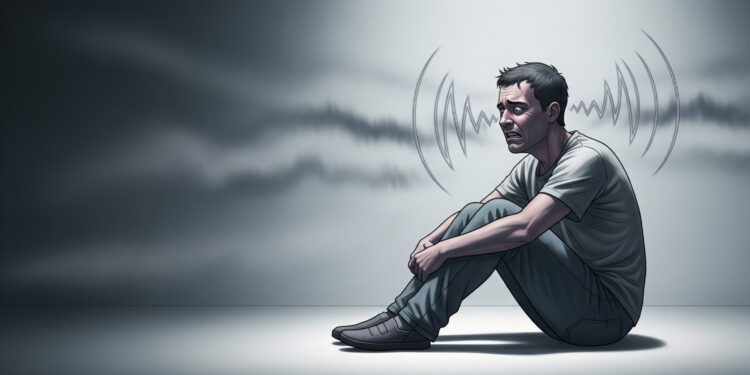

A new study published in the British Journal of Psychology has suggests that misophonia reflects broader psychological and cognitive traits rather than being limited to annoyance at specific noises. The research suggests that people with misophonia tend to struggle with switching attention in emotionally charged situations, show lower cognitive flexibility, and are more prone to rumination. These patterns indicate a more complex psychological profile that may affect how individuals experience and respond to emotional and cognitive challenges in daily life.
Misophonia is a condition in which specific sounds, such as chewing or pen clicking, trigger strong emotional reactions like anger, disgust, or anxiety. These reactions often lead to significant distress and social disruption. While this sensitivity may appear to be a behavioral quirk, mounting evidence points to deeper psychological components.
Previous studies have linked misophonia to emotional regulation difficulties and attentional control problems. People with this condition often hyperfocus on specific sounds and struggle to shift attention away from them, even when they try. They also report high levels of distress in situations that involve their “trigger” sounds, sometimes resulting in avoidance behaviors or emotional outbursts.
The new study set out to explore whether these challenges relate to more general difficulties in switching attention, particularly when emotions are involved—a quality known as affective flexibility. The researchers also investigated cognitive flexibility more broadly and looked at whether people with misophonia tend to ruminate, meaning they repeatedly think about distressing situations or emotions.
“For a long time, I’ve thought that misophonia might be more than just a sound-sensitivity condition. Instead of sound sensitivity being the root cause, it might actually be just one symptom of a broader, more complex disorder,” said study author Mercede Erfanian of the ESSCA School of Management.
“If that’s true, then we should see differences in people with misophonia even when no triggering sounds are present. Previous research has identified the anterior insula cortex (AIC) as an important brain region in misophonia. The AIC regulates emotion, bodily awareness, salience detection, and other functions. We wanted to test whether some of those other functions, specifically, mental flexibility, might also be impaired in misophonia.”
For their study, the researchers recruited 140 adults to complete a set of psychological tasks and self-report questionnaires. About one-quarter of participants met the threshold for clinically significant misophonia, based on a validated scale called the S-Five. Participants completed a computerized task called the Memory and Affective Flexibility Task (MAFT), which measures how well people can shift between different types of mental tasks, especially in response to emotional stimuli. For example, they were asked to switch between remembering images and identifying whether new images were emotionally positive or negative.
The main focus was on how accurately and quickly participants could switch tasks, especially during emotionally charged trials. Participants also completed questionnaires that assessed cognitive flexibility, rumination tendencies, and the severity of their misophonia symptoms.
The researchers found that people with higher misophonia severity performed worse on the affective flexibility task, specifically in terms of accuracy. They made more errors when switching to emotion-related tasks, although their response times were not significantly different. This suggests that their difficulty lies more in adjusting mental strategies than in processing speed.
Crucially, this reduced performance was not just due to general inflexibility. When researchers accounted for broader cognitive flexibility—how easily participants adapt their thinking in general—the link between misophonia and lower affective flexibility remained. This indicates that the emotional aspect of the task was especially challenging for those with misophonia.
The researchers also found that misophonia severity was tied to lower self-reported cognitive flexibility. People who reported being more rigid in their thinking also tended to have more intense misophonia symptoms. However, this self-reported cognitive inflexibility was not linked to performance on the affective task, implying these may reflect separate psychological processes.
“We examined two types of flexibility: cognitive flexibility (measured by self-report questionnaires) and affective flexibility (measured with a behavioral task similar to a game),” Erfanian told PsyPost. “Both were linked to misophonia severity, but surprisingly, they were not linked to each other. However, this is consistent with prior research showing that questionnaires and behavioural tasks can measure the same mental capacity on different levels, and they don’t always align perfectly.”
Another notable finding involved rumination. Participants who reported higher levels of misophonia also tended to ruminate more, especially in the forms of brooding and anger-related thinking. These tendencies were consistent across different types of rumination. Furthermore, people who ruminated more also reported greater cognitive inflexibility, although their task performance on the MAFT was not related to their rumination levels.
“Our results suggest that misophonia is not simply a ‘quirk’ or pet peeve, it’s a complex ‘disorder,'” Erfanian explained. “Sound sensitivity may only be the visible tip of the iceberg. People with misophonia often show other psychological differences, even in the absence of auditory or visual triggers. Recognizing this complexity can help refine treatment approaches and reduce stigma.”
Finally, statistical models suggested that the link between cognitive inflexibility and misophonia might be partly explained by rumination. In other words, people who struggle to adapt their thinking may be more prone to misophonia in part because they also tend to get stuck in negative thought patterns.
While the findings offer insight into the psychological mechanisms that may be involved in misophonia, the study has some limitations. It relied partly on self-report measures, which can be influenced by subjective bias. Although the researchers used a behavioral task to assess affective flexibility, they did not include a comparable non-emotional task. This limits conclusions about whether the observed difficulties were specific to emotional situations or reflect broader switching problems.
“Each study on misophonia is like a piece of a larger puzzle,” Erfanian said. “On its own, a single finding may seem modest, but when connected with past and future studies, it contributes significantly to a more complete understanding of the disorder. Together, these findings will help move us toward more personalized and effective treatments.”
Despite the caveats, the results contribute to a growing view that misophonia is not merely a reaction to bothersome sounds but may reflect deeper patterns of rigidity in both thought and emotion. The researchers suggest that future work could investigate how brain regions related to emotional processing and cognitive control contribute to these difficulties.
“Misophonia is a real, disabling disorder, not simply an overreaction to annoying sounds,” Erfanian said. “It is not caused by a problem with the ears or hearing. Proper diagnosis requires expertise, since it is complex and multifaceted. Importantly, sound sensitivity may be just one outward symptom, pointing to a broader set of psychological differences, similar to autism or obsessive-compulsive disorder OCD.”
“While many colleagues are investigating different aspects of misophonia, I’m particularly interested in exploring the role of the anterior insula cortex more deeply. My next step is to study social cognition and theory of mind in people with misophonia, since these mental processes are also linked to the AIC. If the AIC functions differently in misophonia, we may also expect to see difficulties in these domains. This is also important since misophonia is context-related and mostly occurs in interaction with other people.”
“This study was a team effort and collaboration of different institutes with fundings from University of California, Berkeley and SoQuiet, a non-profit charity, offering advocacy, support, and resources for people whose lives are affected by misophonia,” Erfanian added.
“If you know someone struggling with misophonia, please share research findings like these with them. Awareness is crucial, it can help people feel understood and encourage them to seek support. Severe misophonia can disrupt relationships, education, and careers, significantly affect mental health, and in some cases even increase suicide risk. Raising awareness can quite literally save lives.”
The study, “Misophonia symptom severity is linked to impaired flexibility and heightened rumination,” was authored by Vivien K. Black, Kenneth J. D. Allen, Hashir Aazh, Sheri L. Johnson, and Mercede Erfanian.