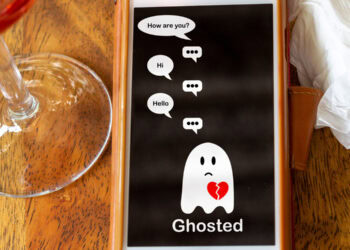
According to new research published in PLOS One, dating apps may not deserve the bad rap they receive. A large Swiss study found that relationships that were initiated through dating apps were just as satisfying as those initiated offline, and featured couples who were actually more inclined toward moving in together.
The popularity of online dating surged in the 2010s with the emergence of smartphones and dating applications. Dating apps have simple interfaces, are easy to use, and highly accessible, making this new form of matchmaking increasingly popular. Along with this widespread use, criticism has surfaced suggesting that dating apps produce lower quality connections and emphasize casual dating.
Gina Potarca, the study’s author and an Ambizione research fellow at the University of Geneva, said there was little concrete evidence that relationships introduced through dating apps were any different from those initiated offline.
“My point of departure for this study were the alarmist stories circulating in the media in the last few years about the potentially damaging effects of using dating apps on the type of relationships formed within this online partner market (e.g., low commitment levels, poor quality),” Potarca explained to PsyPost. “I wanted to put these hypotheses, which tie to this more general moral panic about the social impact of new technologies, to empirical test, using nationally representative data on how couples met (in Switzerland).”
Potarca set out to explore differences among these two types of relationships, using a large, nationally representative sample of Swiss adults.
Potarca procured data from a 2018 survey of Swiss households, focusing on a final sample of 3,245 adults who had met their partners within the past 10 years. The participants had completed interviews where they were asked how they had met their current partner, as well as a multitude of questions regarding their intentions with their current relationship and their current relationship satisfaction.
In her analysis, Potarca distinguished between different forms of online dating. A total of 104 participants had met their partner through a dating app, 264 had met their partner using a dating website, and 125 had met them via other online methods.
The results showed that respondents who met their partner through a dating app showed no significant differences in marital intentions, desire for children, or intentions to have children than those who met their partner offline. However, those who met their partner through a dating app showed stronger intentions to move in with their partner than those who had met their partner offline. Moreover, women who met their partner using a mobile app reported a greater desire for children and a greater intention to have children in the next three years.
Those who met their partner online also reported relationship satisfaction and life satisfaction that was comparable to those who had met their partner offline. Interestingly, when looking at the sub-group of respondents who were not living with their partners, those who met their partner on a dating website reported greater relationship satisfaction than those who met their match using a dating app.
Additionally, relationships that began on dating apps were more educationally diverse — these couples were more likely to involve one member with post-secondary education and one without, compared to relationships initiated offline. This was largely observed among highly educated women “partnering down”. The findings suggest that dating apps may be replacing the local networks through which people typically meet potential partners.
“The main message is that relationships formed on dating apps are no different from other relationships when it comes to relationship satisfaction. These couples are also not at all short-term oriented as it might have been predicted before, on the contrary, they seem to be more interested in living together and especially women, in becoming parents in the near future,” Potarca explained.
“The finding that couples who met on dating apps have stronger cohabiting intentions than others could have to do with the fact that the two partners most often don’t share a common social network (at least in the beginning) and may need to put their relationship to test. Also, one might conclude that the same pragmatic approach that makes people use dating apps (it is essentially a very objective-focused way of searching for a partner) may also drive them to take intermediary steps before committing to marriage.”
The study only offered insight into relationships that were already well-established, and was not able to capture casual meet-ups or connections that never progressed into relationships.
“With the data at hand, which only provided a snapshot into established couples at a certain point in time (2018, the year of the survey), I could not examine actual transitions into and out of partnerships. For instance, I could not investigate whether couples formed on dating apps transition into marriage faster than other, or whether they break up more often than other,” Potarca said.
“Also, I could not refute the hypotheses that on dating apps, there may be a large category of people that engage only in casual/ sexual connections, which never get official (so they could not be captured by the data). Nevertheless, using a different data source looking at the intentions of singles using dating apps in Switzerland revealed that even in the dating stage, users of mobile apps are more interested in long-term family formation (especially becoming parents) than the non-users. But the context of Switzerland needs to be taken into account, where cultural emphasis on long-term relationships and marriage is still quite strong. We therefore also need replication with data from other countries.”
The study, “The demography of swiping right. An overview of couples who met through dating apps in Switzerland”, was authored by Gina Potarca.