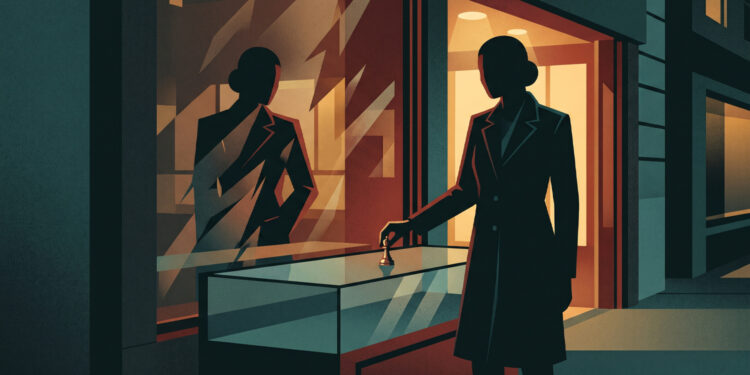
If you’ve ever watched a company quietly delete critical comments, exploit sustainability trends just for profit, or mistreat its workers, you probably assume the angriest shoppers are the ones most likely to strike back. You might also figure that people with a self-serving streak of their own would shrug that behavior off, or even respect the hustle.
Neither assumption holds up. Recent consumer psychology research points to a colder, more direct reaction: people high in manipulative and self-centered traits actually feel less moral outrage toward shady brands than everyone else, yet when irritation does register, they’re more willing to retaliate directly against the company. Instead of complaining to friends, they lean toward cutting ties, seeking revenge, or even lying to get a refund.
Why a brand can feel like someone you dislike
Part of what drives that pushback is how personally people read corporate behavior. When a company silences critics or cuts ethical corners, shoppers don’t just tally up bad policies. They form a gut impression of the company’s character.
In psychology, three overlapping self-serving traits (narcissism, Machiavellianism, and psychopathy) are grouped together as the Dark Triad. Shoppers can project those exact qualities onto a business, reading a brand as arrogant, calculating, or uncaring.
Don’t miss the next big psychology finding
Every morning, PsyPost sends a short briefing on the most interesting new peer-reviewed research in psychology and neuroscience.
“Consumers do not simply evaluate what brands do, they also form impressions of who brands are,” noted Silvia Blas Riesgo and Andrea Giuffredi-Kähr at the University of Zurich, along with Lucia Malär at the University of Bern. “They can see brands as arrogant, manipulative, or lacking empathy, much like they would judge another person.”
For decades, marketing wisdom held that matching a shopper’s personality builds loyalty. Shouldn’t a ruthless shopper at least forgive a ruthless brand? Riesgo, Giuffredi-Kähr, and Malär wanted to know whether that warmth flips when the shared traits are dark ones.
Less outrage, sharper payback
To test the idea in a paper published in the Journal of Business Research, the researchers ran three experiments across Europe and the United States. Participants completed personality measures, read descriptions portraying fictional or real-world brands as either ethical or manipulative and uncaring, and rated how willing they’d be to retaliate.
The pattern held across every scenario, including a study of 600 American participants evaluating real companies. Shoppers scoring higher on Dark Triad traits weren’t any more forgiving of a toxic brand, and even people who simply felt the shady brand’s personality resembled their own reacted more harshly.
What surprised the team was the emotional engine behind that reaction. “Consumers high in Dark Triad traits actually experienced less moral outrage, meaning feelings of anger and indignation about perceived wrongdoing, toward dark brands than other consumers,” the researchers explained. “However, when they did experience moral outrage, they were much more likely to act on it.”
In the real-world brand experiment, that cooler willingness to strike back went along with a 10 percent bump on the study’s measurement scale. Just as revealing was what those shoppers didn’t bother doing. Their dark traits were linked to wanting revenge, walking away, and considering unethical payback, yet didn’t make them any more eager to complain about the company to other people.
If you want to see how all three studies unfolded, including the specific fictional and real companies tested, the full set of retaliation scores, and the authors’ interview comments on why brand similarity backfires, PsyPost’s in-depth report on the study lays out the complete methodology and caveats.
What really lingers after a corporate misstep
The study contributes to the scientific understanding of how consumer personality shapes reactions to unethical brands. However, the experiments relied on controlled, written scenarios to introduce each company’s personality, and overall willingness to punish stayed low across participants.
Still, the findings shift how everyday brand backlash looks from the outside. The researchers noted that reactions hinged less on one isolated misstep and more on the sense that a brand carries an enduring dark streak.
Sometimes the sharpest pushback doesn’t come from the loudest voice in the room. It comes from shoppers who barely seem outraged at all, and recognizing a familiar ruthless streak in a company doesn’t buy that brand any loyalty—it can simply make it an easier target for payback.
