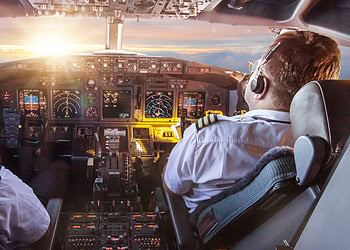
A recent psychological analysis suggests that a pilot’s inherent personality traits may predict their stress levels during in-flight emergencies more accurately than their professional experience does. The findings indicate that pilots with a natural disposition toward anxiety experience heightened stress during simulated hazards, regardless of how many hours they have flown. This research was published in the journal Aviation Psychology and Applied Human Factors.
Commercial aviation maintains an exceptional safety record, yet accidents involving a loss of control in-flight remain a primary concern for the industry. These catastrophic events often begin with an unexpected disruption, such as a sudden system failure or a severe weather event. When a pilot encounters such a threat, the immediate human reaction is often a physiological startle response.
This reflex can be followed by a cognitive state known as surprise. Surprise occurs when there is a mismatch between what a pilot expects the aircraft to do and what is actually happening. This mental disconnect can impair a pilot’s ability to process information and execute the correct procedures.
Airlines typically select pilots based on their emotional stability and ability to handle pressure. Researchers aimed to determine if subtle individual differences within this highly selected group still influence performance during critical moments. Jiayu Chen, a researcher at the Delft University of Technology in the Netherlands, led the investigation.
Chen worked alongside colleagues to better understand how specific personality profiles interact with sudden cockpit crises. The team sought to identify whether a pilot’s baseline anxiety or their ability to regulate emotions could predict their reaction to a startle. They also investigated whether the accumulation of flight hours provided a buffer against the psychological shock of an emergency.
To answer these questions, the researchers compiled and analyzed data from four separate experiments. These studies were conducted in high-fidelity, motion-based flight simulators. The combined dataset included eighty-nine licensed commercial airline pilots.
Before entering the simulator, each pilot completed a series of standardized psychological questionnaires. The researchers used these surveys to assess “trait anxiety.” This psychological concept describes a stable behavioral disposition to perceive a wide range of situations as threatening.
The team also measured a trait known as “action orientation.” This metric assesses a person’s capacity to stay focused on a goal and regulate their emotions under pressure. It distinguishes between individuals who can detach from irrelevant concerns and those who tend to dwell on a problem.
Pilots also provided their total flight hours to allow the researchers to gauge their experience levels. Once the preliminary data was collected, the pilots entered the simulator to perform routine flight tasks. During these flights, the researchers introduced a variety of startling and surprising scenarios.
The simulated hazards included engine failures, malfunctions with the rudder, or erroneous readings on the airspeed indicators. These events were designed to be unpredictable and jarring. After handling each emergency, the pilots rated their subjective experiences on several scales.
Participants scored how startled and surprised they felt during the specific event. They also rated their acute stress levels and the amount of mental workload required to manage the situation. The researchers then used statistical methods to look for correlations between the pilots’ personality traits and their reported reactions.
The analysis revealed a specific link between a pilot’s inherent anxiety levels and their physiological reaction to the hazards. Pilots with higher scores in trait anxiety reported feeling higher levels of stress during the simulated emergencies. This suggests that a baseline disposition toward anxiety makes an individual more sensitive to the pressure of an unexpected crisis.
This correlation held true even though the participants were professional pilots who had passed rigorous industry selection processes. The study supports the idea that personality traits interact with the environment to amplify acute stress. A pilot prone to anxiety appears to experience the “fight-or-flight” response more intensely when things go wrong.
The study produced results regarding flight experience that contradict common assumptions. The data showed that the number of hours a pilot had flown did not possess a statistically significant correlation with their reported levels of startle, surprise, or stress. A veteran captain was just as likely to feel overwhelmed by a sudden malfunction as a pilot with much less time in the cockpit.
This finding implies that familiarity with routine flying does not necessarily blunt the physiological shock of a startling event. The novelty of the hazard affects experienced and novice pilots in a similar fashion. This challenges the notion that experience alone is a sufficient shield against the cognitive effects of surprise.
The researchers also looked for effects related to action orientation. They hypothesized that pilots who are naturally better at regulating their emotions would report lower stress or startle. The data did not provide evidence to support this prediction.
There were no statistically significant effects of action orientation on how the pilots perceived the startle or workload. This lack of correlation might be due to the nature of the pilot population. The participants generally possessed high levels of action orientation, making it difficult to distinguish effects based on this trait.
The study did find strong internal connections between the different sensations the pilots reported. If a pilot felt a high level of mental workload, they were very likely to also report high levels of stress and surprise. This suggests these cognitive and emotional responses feed into one another.
When a pilot struggles to understand a confusing situation, the mental effort required rises. This increased demand appears to drive up their acute stress levels. The findings highlight the complex mental environment a pilot must navigate when a routine flight turns dangerous.
There are several limitations to this analysis that provide context for the results. The pilots involved in the study were a relatively uniform group who volunteered for the research. They generally possessed lower anxiety and better emotional regulation than the general population.
This lack of diversity in the sample might have masked the influence of certain personality traits. Additionally, the study relied on the pilots to rate their own feelings after the fact. Self-reported data can sometimes be less accurate than physiological measurements taken in real-time.
The simulated scenarios were also flown manually in a specific aircraft model. This setup might not perfectly replicate the highly automated environment of a modern airliner cruising at high altitude. The workload in the study was generated by manual flying rather than complex system management.
Chen and the team suggest that future research should incorporate physiological sensors to track stress markers like heart rate. They also recommend testing these dynamics in scenarios that require crew collaboration. Understanding these individual differences is necessary for designing better training programs.
The study, “The Effect of Personality Traits and Flight Experience on Pilots’ Cognitive and Affective Responses to Simulated In-Flight Hazards,” was authored by Jiayu Chen, Annemarie Landman, Olaf Stroosma, M. M. van Paassen, and Max Mulder.