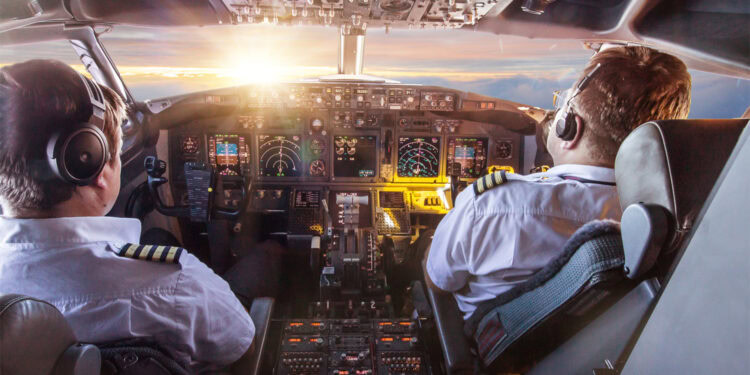

Decision-making can mean the difference between safety and disaster in aviation. New research published in Ergonomics investigates the cognitive and experiential factors that influence how pilots make decisions in simulated emergencies. The findings reveal how flight experience, analytical thinking, and task workload shape decision-making performance, offering valuable insights for enhancing pilot training and aviation safety.
Decision-making is a vital skill for pilots, particularly in complex and unpredictable situations. While standardized procedures and checklists provide essential guidance, pilots must often adapt to unique challenges beyond the scope of these tools. Errors in decision-making have been linked to aviation accidents, underscoring the need for enhanced pilot training to improve cognitive flexibility and reduce reliance on rigid rule-based processes.
Previous research has extensively focused on acute stress and intuitive decision-making models, but there has been little investigation into the roles of general workload and cognitive skills, such as reflective thinking, in real-world scenarios. This study aimed to bridge that gap by examining how cognitive reflection, flight experience, and workload affect pilots’ decision-making performance in simulated emergency scenarios.
“We became interested in this topic because human errors in decision-making can lead to serious accidents in aviation, despite improvements in technology,” said study author Boban Simonovic, a senior lecturer in psychology at the University of Derby. “We wanted to understand how factors like a pilot’s experience, their ability to think critically, and the stress they feel can affect their decisions during flights. By studying these aspects, we hope to find ways to improve pilot training and ultimately enhance safety in the skies.”
For their new study, the researchers recruited 104 active commercial pilots from an international airline. Participants, including both captains and first officers, represented a wide range of flight experience, with hours logged spanning from 3,000 to 27,000. Before participating, pilots completed a perceived stress scale to measure their baseline stress levels.
In the simulation phase, pilots were presented with two high-fidelity scenarios developed by experts from the airline’s recurrent training program. Both scenarios took place in a full-motion simulator and mimicked real-world operational challenges. The first involved an engine failure, while the second simulated a loss of instrumentation at a high-altitude airport. These scenarios required pilots to make critical decisions, such as whether to continue the flight, divert to an alternate airfield, or return to the original airport. Each pilot’s decision-making performance was evaluated by trained examiners using a standardized grading system based on observable behaviors and task outcomes.
After completing the simulations, pilots took additional assessments, including the Cognitive Reflection Test, a NASA Task Load Index, and a metacognition scale. The Cognitive Reflection Test measured their ability to override intuitive, automatic responses in favor of analytical reasoning. The NASA index assessed the pilots’ perceived workload during the simulation across dimensions such as mental and physical demand, effort, and frustration. The metacognition scale captured the pilots’ self-reported ability to monitor and regulate their thought processes during complex tasks. These data, alongside performance evaluations from the examiners, were analyzed to identify patterns and relationships among the variables.
The researchers found that cognitive reflection was a significant predictor of decision-making performance. Pilots who scored higher on this test demonstrated better outcomes in the simulated scenarios, highlighting the importance of analytical thinking in high-pressure environments. Flight experience also positively influenced decision-making, though this effect was moderated by cognitive reflection. For pilots with lower cognitive reflection scores, additional flight hours had a stronger impact on performance, suggesting that experience can partially compensate for weaker analytical reasoning skills.
“The key message is that a pilot’s ability to think critically and their experience in flying significantly affect how well they make decisions during flights,” Simonovic told PsyPost. “Our study found that pilots who are better at cognitive reflection—essentially, thinking about their thinking—tend to make better decisions as they gain more flying experience. This suggests that focusing on developing these skills in pilots can help prevent mistakes and improve safety during flights.”
Task load emerged as another critical factor, with moderate workload levels associated with optimal decision-making. However, when task demands became excessive, decision-making performance declined, likely due to cognitive overload. Interestingly, however, neither perceived stress nor self-reported metacognition significantly predicted decision-making performance.
“One surprising finding was that stress, and metacognition did not show significant relationships with decision-making performance in our study,” Simonovic said. “This contrasts with some previous research and highlights the complex nature of decision-making in high-pressure aviation scenarios.”
The researchers suggested that the simulated environment, while realistic, may not have replicated the stress levels of real-world emergencies, limiting the observed impact of stress on performance. Similarly, the reliance on self-reported metacognitive ability may have introduced biases that reduced the accuracy of this measure.
But as with all research, there are some limitations. “A major caveat is that our study was conducted with pilots from a single airline,” Simonovic noted. “Future research should expand to multiple airlines and address gender balance to enhance the generalisability of the findings. Additionally, incorporating direct measures of metacognitive monitoring could provide more robust insights into the role of metacognition in pilots’ decision-making processes.”
“Our long-term research goals include developing a more comprehensive understanding of decision-making processes across high-stress environments. We aim to investigate how cognitive reflection, stress, and critical thinking interact to influence performance in complex decision-making scenarios. Specifically, we want to explore strategies for enhancing individual cognitive flexibility, developing training programmes that improve metacognitive skills, and understanding how people can better manage cognitive resources under challenging conditions. By examining these factors across different professional domains, we hope to create more robust frameworks for understanding and improving human decision-making performance.”
“This study builds upon our previous work (Simonovic et al., 2017; 2018) on cognitive reflection and decision-making under stress,” Simonovic added. “It emphasises the importance of considering individual differences in cognitive abilities when designing training programmes for pilots and other professionals in high-stakes environments.”
The study, “Examining flight time, cognitive reflection, workload, stress and metacognition on decision making performance for pilots during flight simulation,” was authored by Aoife Mohan, Boban Simonovic, Katia C. Vione, and Edward Stupple.